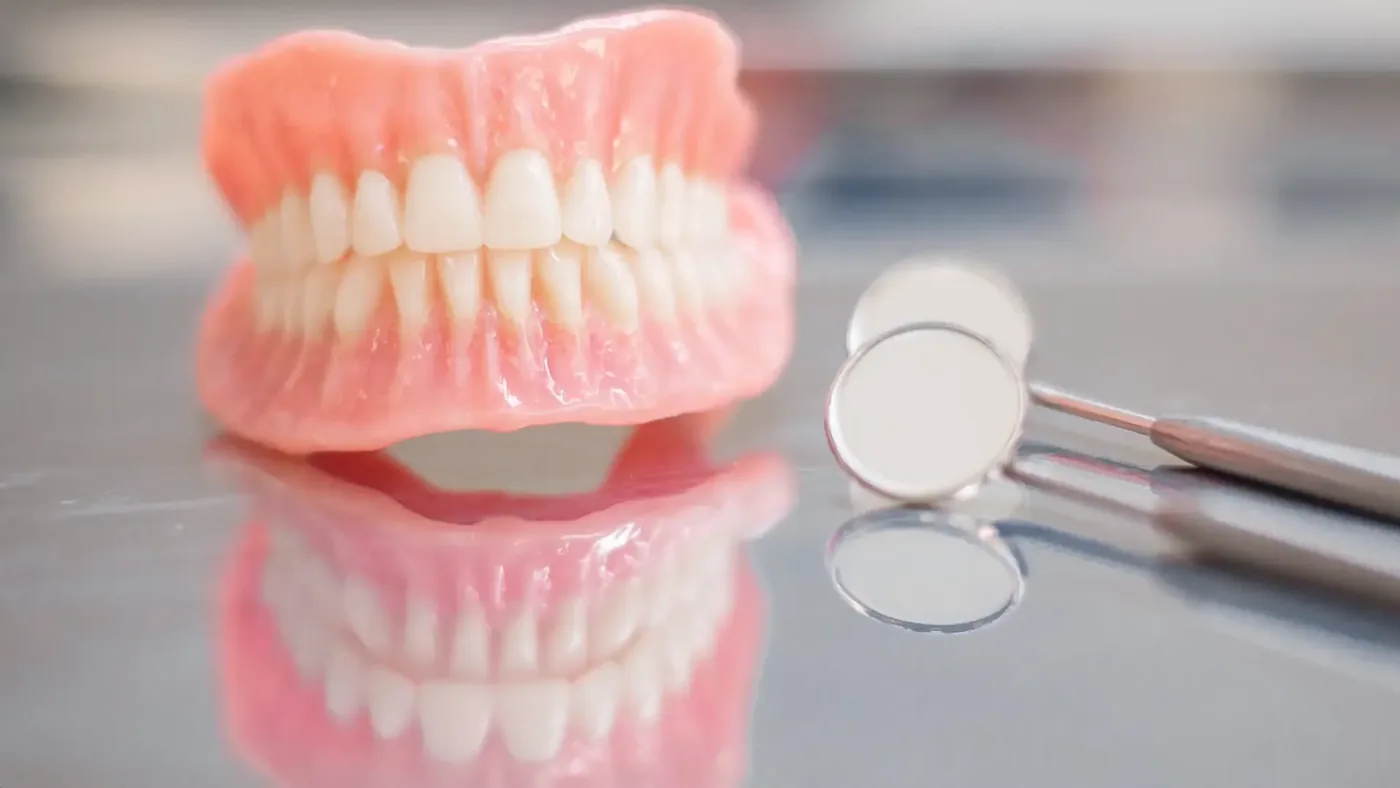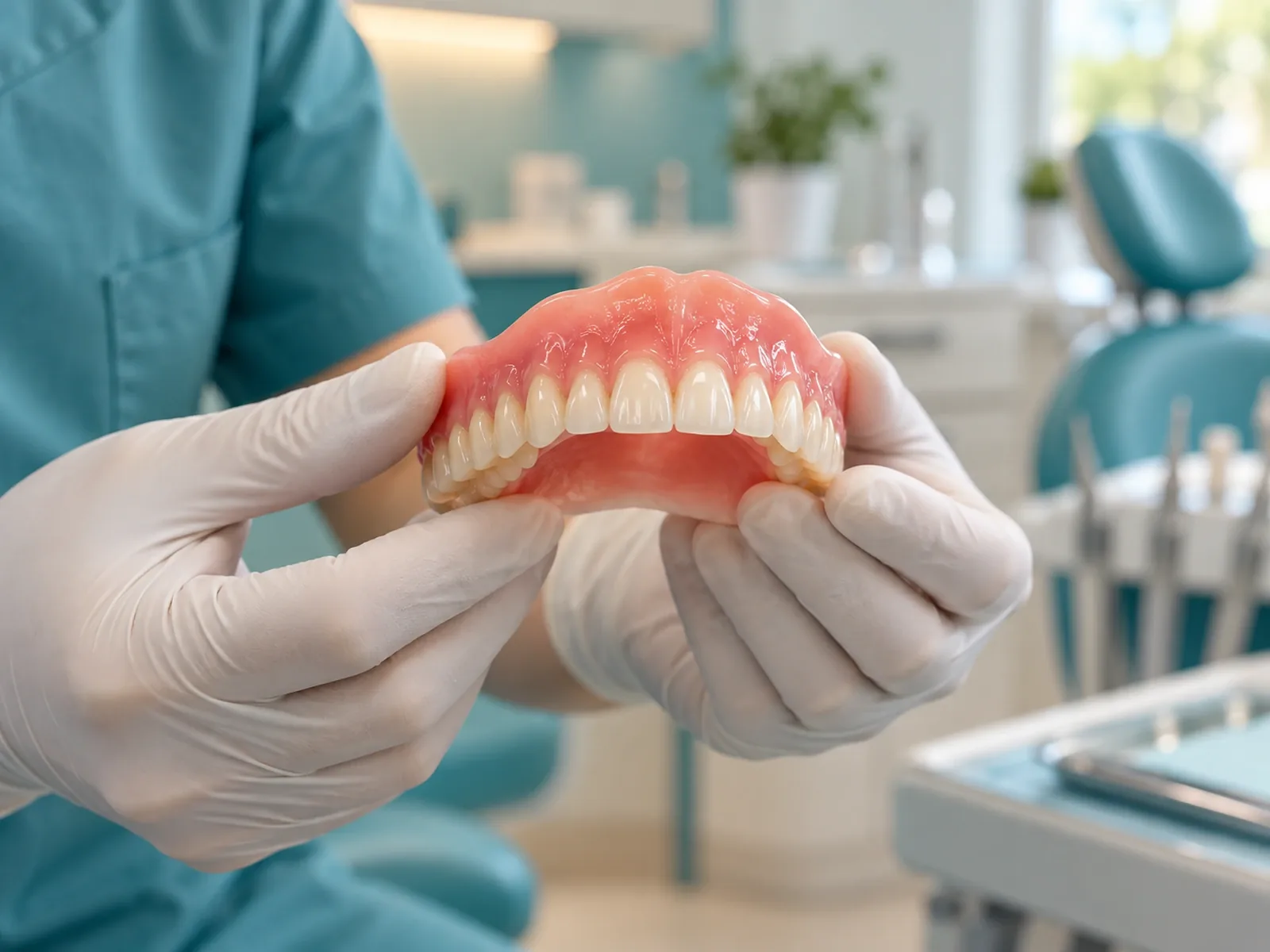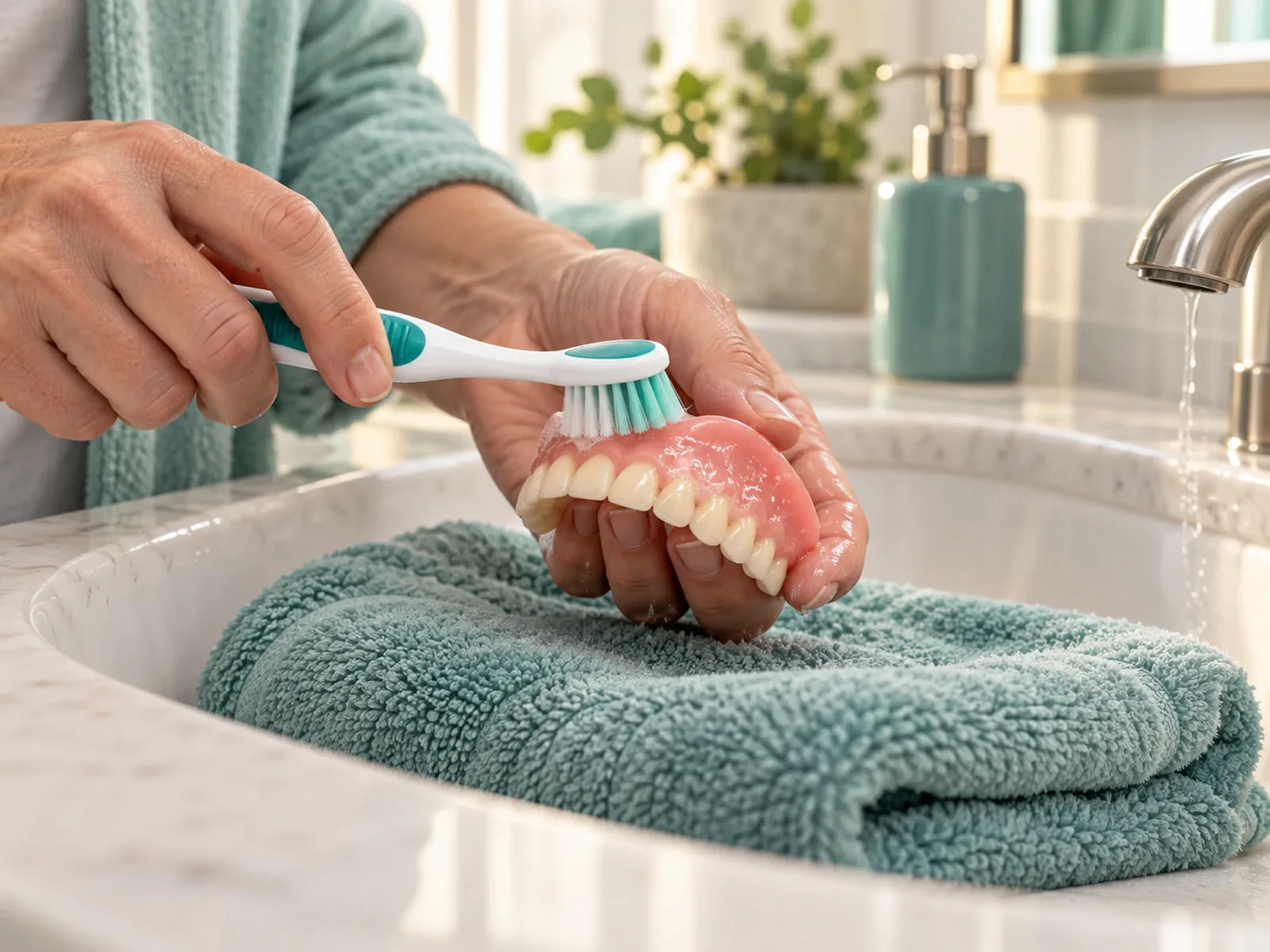

A new denture is a new shape in a very sensitive place. Your tongue, cheeks and lips have spent years working around your old teeth or your old denture, and now they have to learn something different. Speech sounds odd for a while, saliva increases, chewing feels clumsy, and the whole thing can seem bigger than it looks in the mirror. Almost all of that improves with practice.
What should not be waited out is pain that is getting worse, a sore that stays in one spot, or a denture that simply will not stay put. Those are fit and bite problems, and more practice does not fix them. A short adjustment visit usually does. Knowing which category your experience falls into is the whole point of this guide.
Below you will find what to expect with eating and speaking, how to handle sore spots, why the type of denture changes the timeline, and what to write down so your follow-up visit at our Cleburne office is as useful as possible. If you are still choosing a denture, our overview of denture options is the place to start.
What is normal in the first weeks
| Expected and improves with practice | Should be reported |
|---|---|
| Extra saliva for the first days | Pain that increases day by day |
| Feeling of fullness or bulk | A sore spot that stays in one place after a few days |
| Lisping on "s" and "th" sounds | Denture drops when you talk or laugh |
| Mild, general tenderness of the gums | Cannot manage the recommended soft diet |
| Awkward, slow chewing | Bleeding, swelling, or a sore that is not healing |
| Occasional slipping until the muscles learn | Clicking teeth you cannot control |
If you had teeth removed at the same time, your surgical instructions take priority in the first week. Our guide to recovering after an extraction explains what to expect from the healing sites themselves.
Eating with new dentures, step by step
Chewing with a denture is a skill, and like any skill it is learned in stages.
- Start soft. Yogurt, eggs, cooked vegetables, soft fish, pasta, oatmeal. Cut everything small so you are not biting through anything.
- Chew on both sides at once. This is the single most useful habit. Chewing on one side tips a denture; chewing on both keeps it balanced.
- Avoid biting with the front teeth for now. Tearing a sandwich with your front teeth levers an upper denture off the palate. Cut food and place it toward the back.
- Take small bites and go slowly. Eating takes longer at first. Hot foods feel different because the denture covers the palate, so test temperature before you commit.
- Add firmer foods gradually. Over the following weeks, move toward raw vegetables, meat and bread. Very hard, sticky or chewy foods stay demanding for most denture wearers.
If the denture lifts every time you chew, or you are weeks in and still limited to soft food, tell us. That is a fit or bite question, not a practice question.
Speech and the feeling of bulk
A denture changes the shape of your palate and the position of your teeth, which is exactly what speech depends on. Most people notice a lisp or a whistle on certain sounds for the first days. Reading aloud for a few minutes at a time, repeating the words that give you trouble and speaking a little more slowly all help the tongue relearn its targets. Count aloud from sixty to seventy; the "s" sounds are good practice.
If a speech problem persists, describe it precisely: which sounds, and whether the denture moves when you make them. Tooth position, the thickness of the palate and the shape of the denture borders can all be adjusted, but only if we know what is happening. "It feels too big" is hard to act on; "my tongue catches behind the upper front teeth on 's'" tells us where to look.
Sore spots and how we fix them
Pressure spots are the most common reason for an early follow-up. The denture presses a little harder in one place, the gum underneath gets tender, and a small ulcer can form. This is a normal part of fitting a rigid base to soft tissue, and the fix is quick.
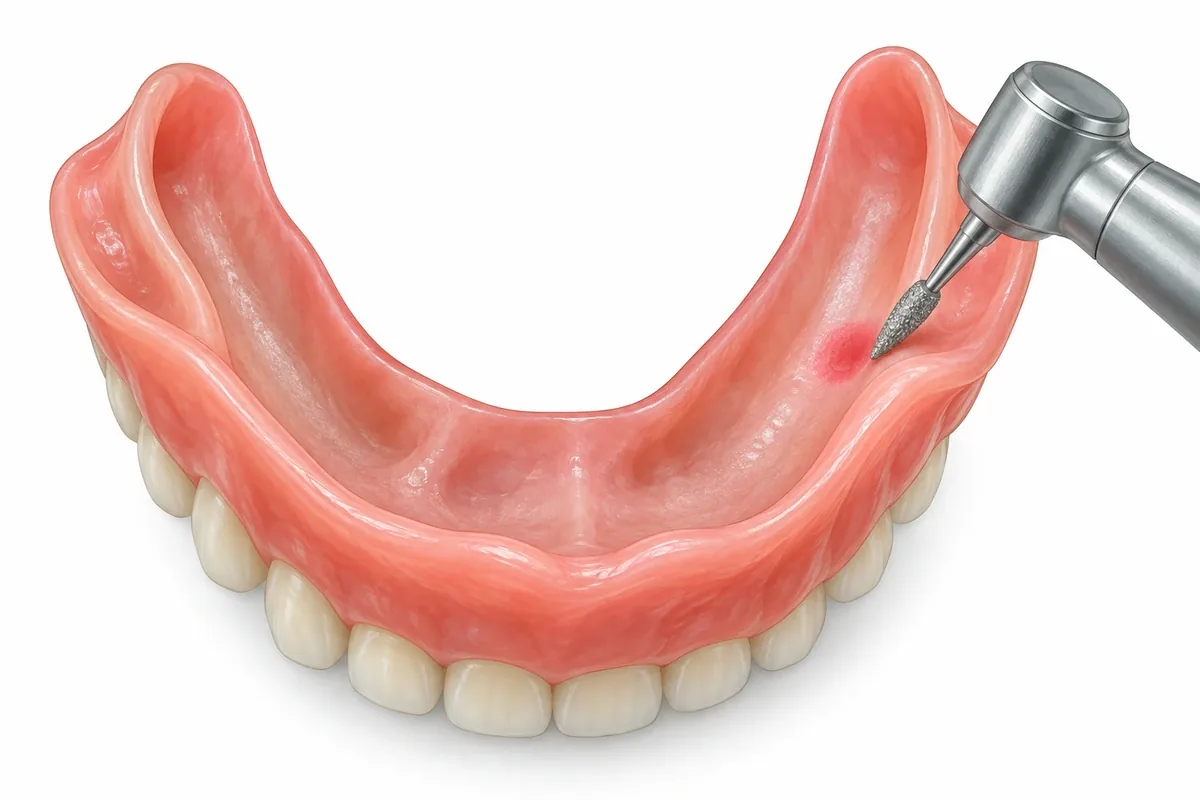
At the adjustment visit, the sore area is located, the corresponding spot on the denture's fitting surface is marked, and a small amount of material is relieved. Because the mark has to line up with the sore, it helps to wear the denture for several hours before the appointment, even if it is uncomfortable, so the spot is visible. Ask us for the specific guidance when you book.
Between visits, warm salt-water rinses soothe the gums. Do not file, sand or bend the denture, and do not apply household products or numbing gels to the tissue without asking. A sore that does not heal, swelling, or an area that looks different from simple rubbing needs to be seen.
Adhesive: helpful or a warning sign?
A thin layer of denture adhesive can add confidence in the early weeks, and some people continue to use a little long term. The warning sign is escalation. If you need more adhesive than you did a month ago, or it has stopped working by mid-afternoon, the denture is probably not fitting the way it should. Adhesive hides that; it does not solve it. Tell us how much you are using. A denture that depends on adhesive to stay in place may need a reline.
Why the type of denture changes the timeline
Not every new denture follows the same path.
- A conventional denture made for a healed ridge should settle into a stable fit after the early adjustments. Ongoing looseness points to a fit or bite problem.
- An immediate denture placed at extraction is expected to loosen as the gums heal. More adjustments, temporary liners and a later reline are part of the plan, not a sign of trouble.
- A partial denture adds the feel of clasps on your natural teeth and a learning curve for inserting and removing it along the correct path.
- An implant-supported denture adds snapping on and off attachments, which has its own technique, alongside the ordinary adaptation.
If you are not sure which expectations apply to you, ask. Knowing that a loose immediate denture is expected, while a loose conventional denture is not, saves a lot of worry.
What to write down before your follow-up
Follow-up visits are short, and the most useful ones are the ones where you arrive with specifics. In the days before, note:
- Where it hurts: upper or lower, left or right, inside by the tongue or outside by the cheek.
- When it hurts: only while eating, when you first put it in, all the time.
- Which foods are difficult, and whether the denture moves or the problem is pain.
- Which sounds are hard, and whether that is improving.
- How much adhesive you use and when it stops working.
- Anything else: clicking, a bad taste, a spot that bleeds.
Bring the notes and the denture, and wear it in so sore spots can be found. Our denture care guide covers the cleaning routine to start alongside all of this.
Sources and further reading
General information, not a diagnosis. Read how we create and review our dental guides.