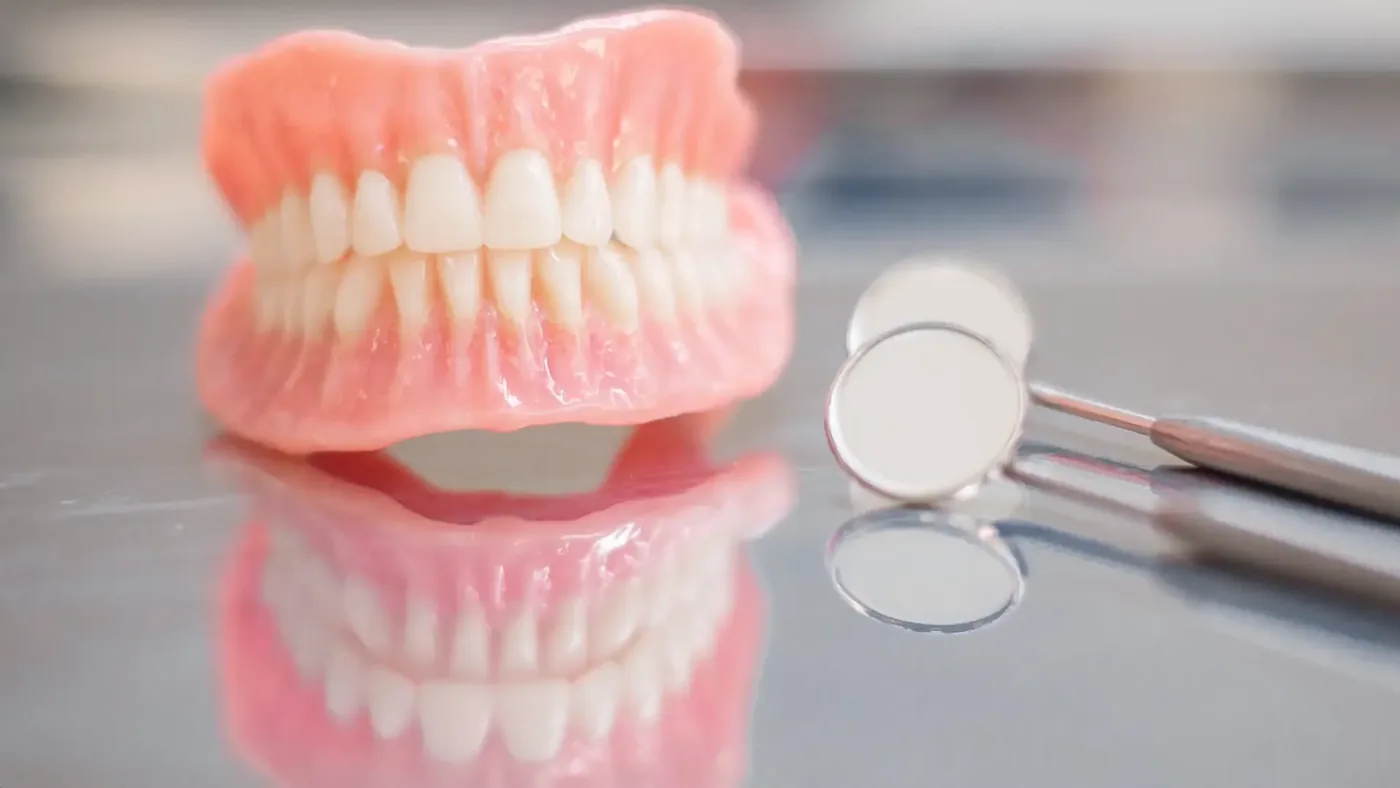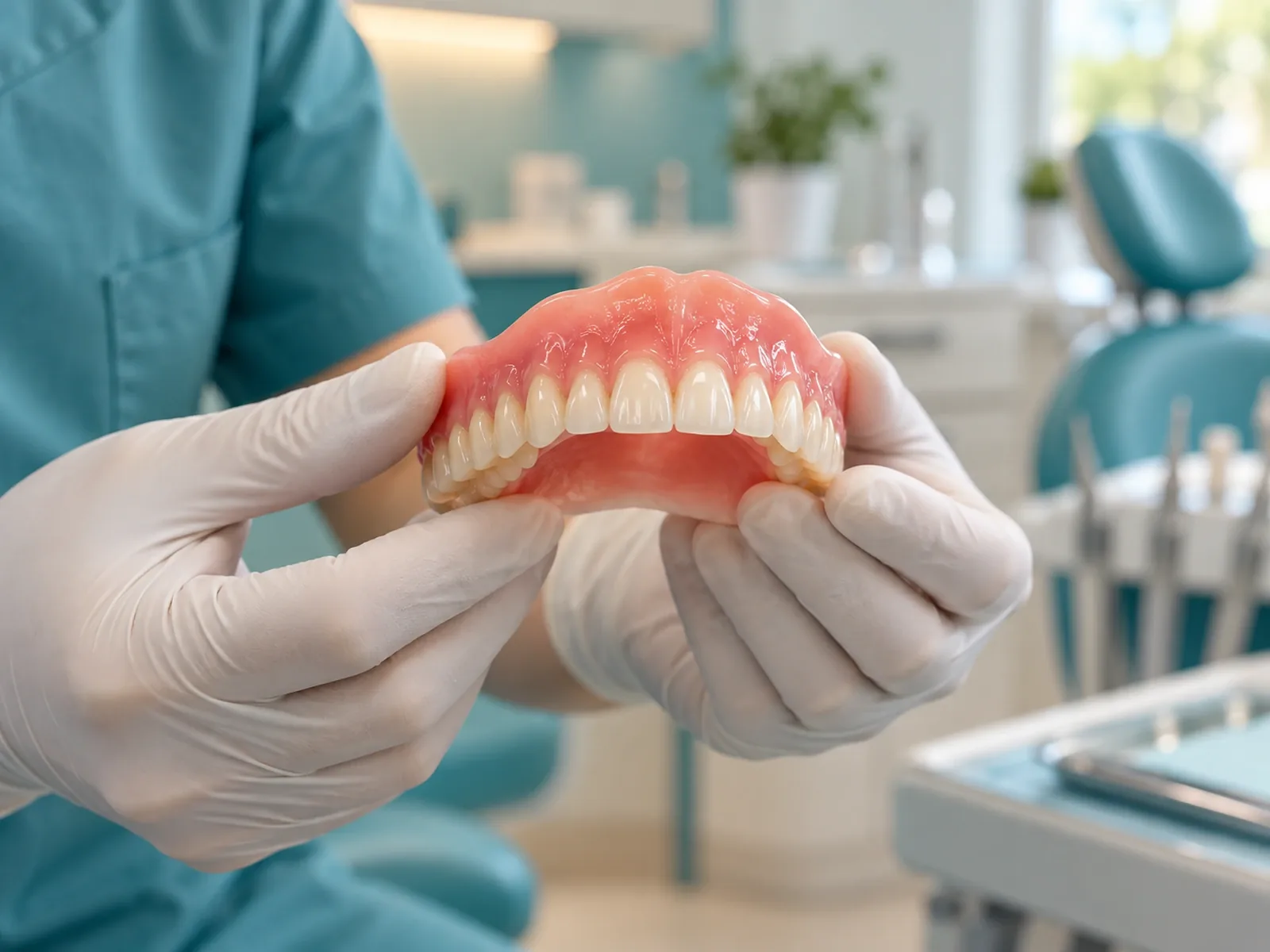

An immediate denture is made before your teeth are removed and placed in your mouth the same day the extractions are done. Its purpose is simple: you never have to go without teeth while your gums heal. For many people that matters a great deal for work, family and confidence.
The trade-off is just as simple. The denture is fitted to a mouth that is about to change. As the extraction sites heal, the gums and bone shrink, and a denture that felt snug on day one will loosen over the following weeks and months. That is not a failure. It is the expected course, and a good plan says in advance how it will be managed, with temporary liners, a later reline or a new denture.
This page explains how immediate dentures are planned, what the first days are like, why the fit changes, and what questions to settle before you agree to the extractions.
Who immediate dentures are for
Immediate dentures come up when the remaining teeth in an arch cannot be saved and you do not want a period with no teeth. They are most often discussed for people who:
- Still have front teeth and would find a visible gap hard to live with during healing.
- Have failing teeth that are being removed in one or two visits rather than over a long period.
- Want a denture to act as a bandage over the surgical sites, which can help control swelling and bleeding in the first day.
- Would like to keep the current tooth position and bite as a guide for the new teeth while the natural teeth are still present.
Before anything is scheduled, it is worth a frank discussion about which teeth truly need to come out. Our guide to deciding whether a tooth can be saved lists the questions to ask. Removal is permanent, so this step is not a formality. For how immediate dentures compare with the other types, see our dentures overview.
Planning while your teeth are still there
With a conventional denture, you see the teeth set in wax and try them before anything is final. With an immediate denture, the back teeth are often removed first and allowed to heal, but the front teeth stay until the day of delivery. That means a full try-in of the front is not possible, because the natural teeth are in the way.
Instead, the plan relies on records and good communication:
- Exam and X-rays. At our Cleburne office, Dr. Zohdi assesses which teeth are coming out, the shape of the bone, and anything that will affect healing.
- Impressions and bite records. Taken with your teeth in place, these let the lab remove the teeth on the model and shape the denture to the predicted ridge.
- Tooth selection. Your existing teeth guide shade, size and position unless you want changes. Photographs of your smile, including old ones, are useful here.
- Partial try-in where possible. If back teeth have already been removed, that part of the denture can sometimes be checked in wax.
- Extractions and delivery on the same visit. The teeth are removed, the sites are cleaned and any sutures placed, and the denture goes straight in.
Ask what can be previewed and what cannot. Knowing that the front teeth are set from records, not a mirror check, makes any small adjustments in appearance later feel reasonable rather than surprising.
The first 24 hours and the early follow-up
The instructions for an immediate denture are different from those for an established denture, and following them matters for healing. In many offices you are asked to leave the denture in place for the first night, because it acts as a pressure dressing and because swelling can make it hard to reinsert once removed. At the first follow-up, usually the next day, the denture is removed, the sites are checked, and sore areas are adjusted.
After that, you will be shown how to remove it, how to rinse the mouth gently, and how to keep the denture clean without disturbing the sockets. Expect several short adjustment visits in the first weeks. Pressure spots are common because the gums are changing shape under the base.
Do not trim, file or add material to the denture yourself during healing, and do not use a home reline kit. Material pressed into healing sockets can cause real harm. Our guide to recovery after an extraction covers bleeding, swelling, diet and the warning signs, including the kind of pain that suggests a dry socket, that should prompt a call.
Why the fit changes
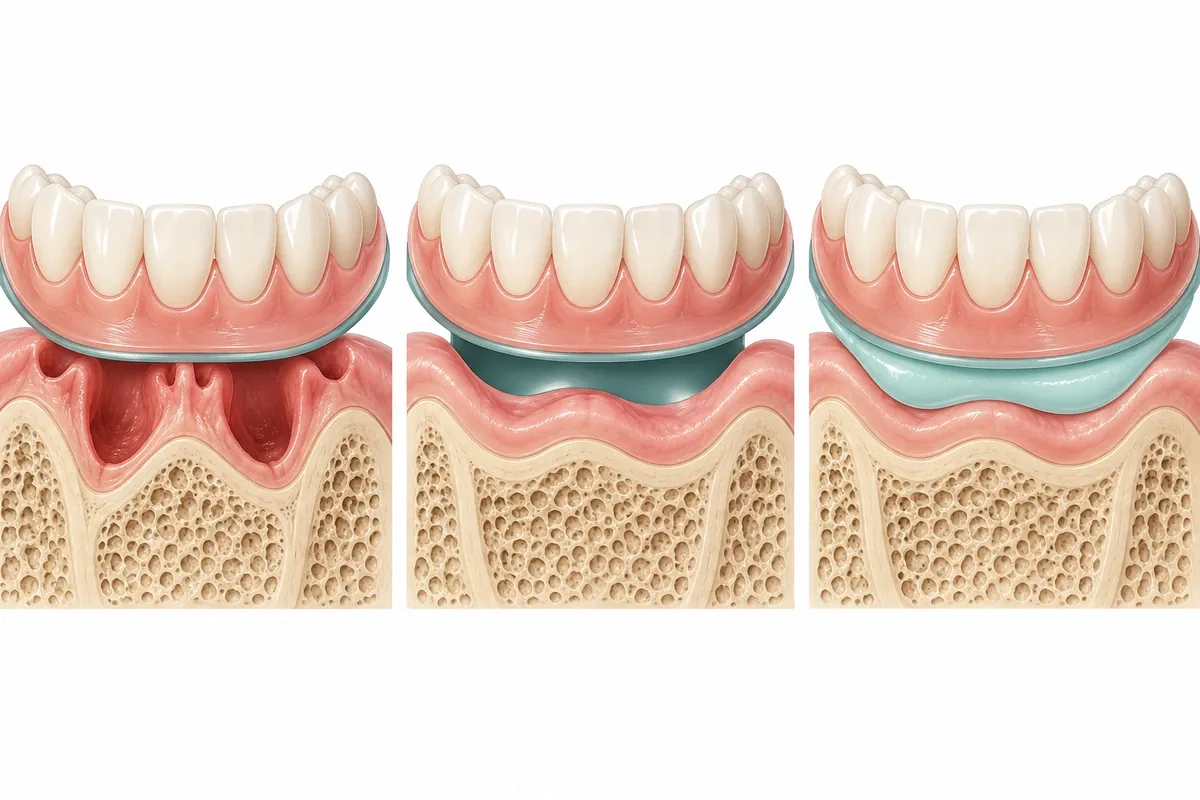
When a tooth is removed, the socket fills in with new bone and the surrounding ridge remodels. The greatest change happens in the first few months, and it continues more slowly afterwards. A denture made to the shape of your mouth on extraction day will gradually sit lower and rock, trap food or need adhesive.
The plan for that usually has stages:
- Temporary soft liners can be placed inside the denture during healing to take up the gap and cushion the tissues. They are not permanent and need changing.
- A definitive reline once the ridge has stabilized gives the denture a new, hard fitting surface. Our reline guide explains how that works.
- A new conventional denture may be recommended when the immediate denture has served its purpose, especially if appearance or bite changes are wanted that a reline cannot provide. Some people keep the immediate denture as a spare.
Which stage you end at depends on how your mouth heals, how well the immediate denture turned out and what you want from the final result.
Eating, speaking and expectations
For the first days, follow the surgical diet: cool, soft foods, nothing that needs biting with the front teeth, and no drinking through a straw. Chewing with a new denture over healing gums is awkward, and that is expected. Reading aloud helps your speech adapt, and most sounds settle quickly.
Rising pain after the first couple of days, swelling that is getting worse, a bad taste that will not rinse away, or a denture that stops you managing the recommended diet are reasons to call us at (817) 641-6261 rather than wait for your next scheduled visit.
What affects the cost
An immediate denture often involves more appointments than a conventional one: the surgery, the next-day check, several adjustments, liner changes and the eventual reline or replacement. Ask whether each of those is included in the quoted fee or billed separately. Comparing the price of an immediate denture to a conventional denture without counting the later work gives a misleading picture.
Extractions, any socket preservation grafting to limit bone loss, and whether implants are planned for later all affect the total. Our insurance and financing pages explain how we help you plan for that.
Risks and alternatives
The main risks are the ones that come with any extraction, plus the chance that the denture needs more adjustment than expected or that the appearance set from records needs refining. Healing can be slower for people who smoke or who have diabetes that is not well controlled, so tell us about your health history.
The alternatives are a conventional complete denture made after healing, accepting a gap for some weeks, or an implant approach. If you are considering implants, an immediate denture can still be a sensible first step, since it carries you through healing while bone and implant planning are worked out. Our page on planning replacement after an extraction lays out the options.
Sources and further reading
General information, not a diagnosis. Read how we create and review our dental guides.