
A tooth that has been completely knocked out of its socket is one of the few dental emergencies where minutes count. The fibers on the root surface that reattach the tooth to the bone begin to die as soon as the root dries. Replanted within about half an hour and kept moist in the meantime, a permanent tooth has a good chance of surviving for years. Left dry for an hour or more, the odds drop sharply.
That means the most important care happens before you reach us, on the sidelines, in the kitchen, or in the car. Read the steps below, act, and call us at (817) 641-6261 on the way. We are open Monday through Thursday, 8:00 AM to 5:00 PM; if the office is closed, see our after-hours guidance and get to any available emergency dentist rather than waiting for us.
If the injury involved a hard blow to the head, loss of consciousness, confusion, vomiting, a possible broken jaw, uncontrolled bleeding, or any trouble breathing or swallowing, call 911 or go to the emergency room first. Take the tooth with you in milk; the hospital can hold it while the person is assessed. In the days after the injury, swelling that spreads quickly across the face or neck, reaches the eye, or comes with a high fever also means the emergency room.
Handle the tooth carefully
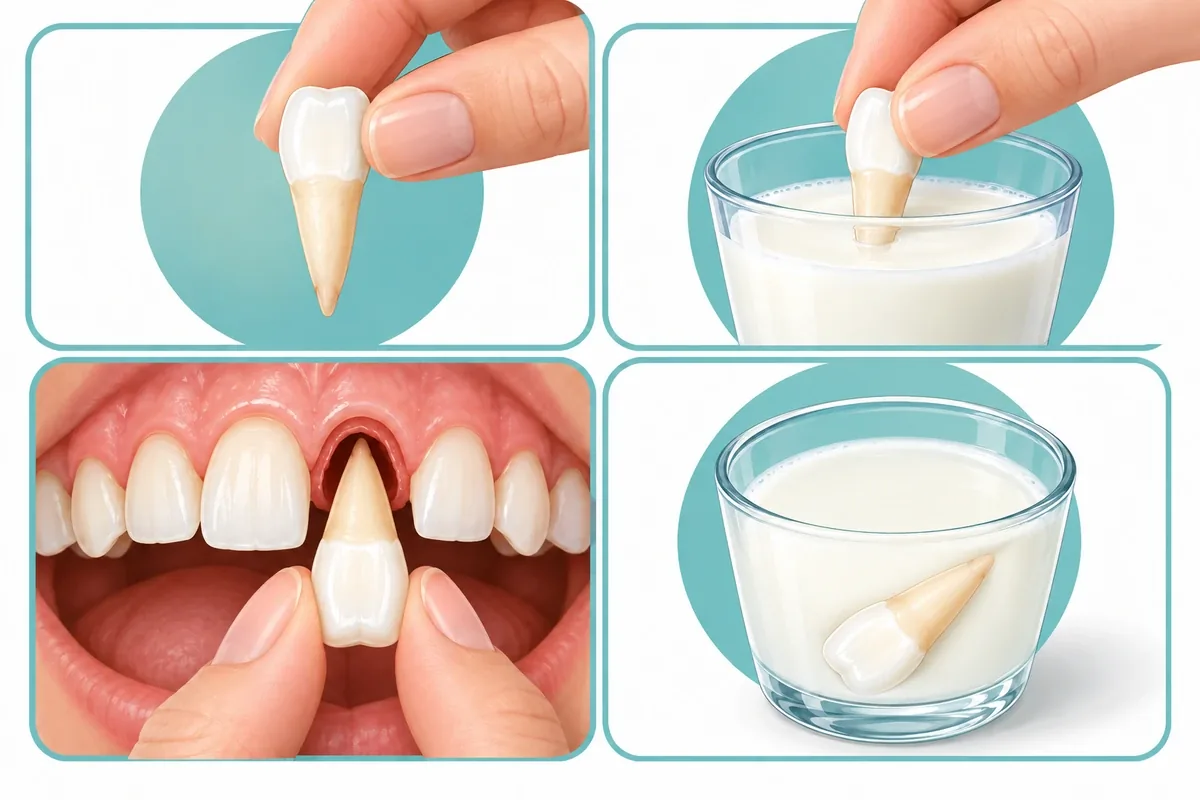
- Find the tooth. Pick it up by the crown, the white part that normally shows in the mouth. Do not touch the root.
- Rinse only if dirty. Hold it by the crown and rinse for a few seconds in milk, saline, or the person's own saliva. If none is available, a very brief rinse under cool tap water is acceptable. Do not scrub, wipe, or use soap, and do not pick off any tissue clinging to the root.
- Put it back if you can. For a permanent tooth in a conscious, cooperative person, gently push it back into the socket the right way round, then have them bite softly on a folded cloth or gauze to hold it. Do not force it. If it will not seat easily, stop and store it instead.
- Keep it moist if you cannot replant it. Place it in a small cup of cold milk, in saline, or in a commercial tooth-preservation solution if one is on hand. A cooperative adult can hold it inside the cheek. Never store it in water, which damages the root cells, and never wrap it in a dry tissue or napkin.
- Control bleeding from the socket with gentle pressure on gauze.
- Go. Call on the way and tell us when the injury happened and how the tooth has been stored.
Do not delay care hunting for the perfect container. Milk from any refrigerator is good enough, and a fast arrival matters more.
Never replant a baby tooth
Children knock out teeth often, and the rule for baby teeth is the opposite of the rule for adult teeth. A primary tooth should not be put back in the socket. Pushing it back can damage the permanent tooth developing in the bone just above it. Save the tooth so we can confirm it is the whole tooth and that nothing is left in the socket, control the bleeding, and bring your child in promptly.
If you are not sure whether the tooth is a baby tooth or a permanent one, do not replant it; keep it in milk and let us decide. As a rough guide, children begin getting their permanent front teeth around age six or seven, and baby teeth are smaller with shorter, thinner roots. Our children's dentistry page covers what to expect from a child's visit.
What happens after arrival
When you arrive at our Cleburne office with a knocked-out permanent tooth, the visit moves quickly:
- Assessment. Dr. Zohdi checks the socket, the surrounding bone, the lips and gums, and the neighboring teeth, which are often loosened or chipped in the same impact. An X-ray confirms that the socket is intact and that no fragment is left behind.
- Replanting. If the tooth is not already back in place, it is gently cleaned and repositioned under local anesthesia.
- Splinting. The tooth is bonded to its neighbors with a thin, flexible splint for roughly one to two weeks so the fibers can reattach. Longer splinting is sometimes needed if the bone was fractured.
- Medication and tetanus. A short course of antibiotics is commonly prescribed, and we will ask whether tetanus boosters are current, since a tooth that fell on the ground carries dirt.
- Follow-up. Replanted teeth need to be checked at set intervals over the following months and years for signs that the root is being resorbed or fusing to the bone.
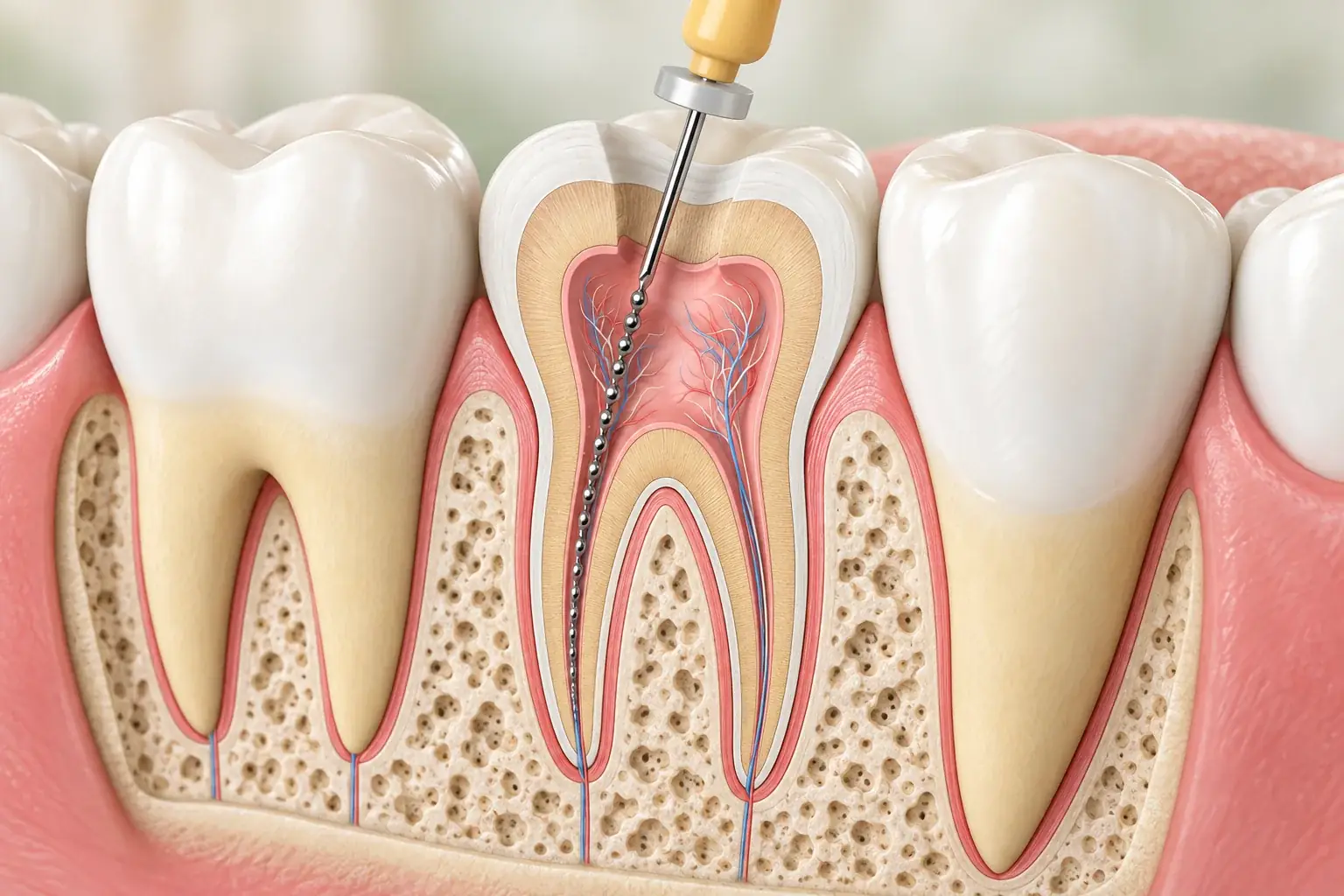
In most fully developed permanent teeth, the nerve inside does not survive the injury even when the tooth itself does. Root canal treatment is usually started within a week or two of replanting to prevent infection and root resorption. In a young child whose permanent tooth is still forming, the root tip may be open enough for the nerve to recover, so we may watch instead of treating right away.
Saving the tooth cannot be guaranteed, even with perfect first aid. The dry time, the age of the person, and the amount of damage to the root surface all play a part. Bring the tooth regardless; the attempt costs little and the alternative is permanent.
Recovery and aftercare
For the first two weeks, eat soft foods and avoid biting into anything with the splinted tooth. Brush the area gently with a soft brush after every meal and rinse with a mild antiseptic or salt-water rinse as directed. Avoid contact sports until cleared. Report any looseness after the splint comes off, darkening of the tooth, a gum pimple above it, or pain on biting, all of which can signal the nerve or root is in trouble.
If the tooth cannot be saved
Sometimes the tooth is lost, never found, too damaged, or fails later. In a growing child, the space is held with a simple appliance until the jaw is mature, and a long-term replacement is planned later. In an adult, the gap can be closed with a single-tooth implant once the socket has healed, or with a bridge. Our dental implants overview compares the options, and we will not rush that decision while the injury is fresh.
Preventing the next one
Most knocked-out teeth happen in sports, falls, and vehicle or bike accidents. A custom-fitted sports mouthguard spreads the force of a blow and is far more protective than a stock guard from a sporting-goods aisle. Helmets with face protection and seatbelts do the rest.

What affects the cost
The emergency visit, X-rays, replanting and splinting are the first costs; root canal treatment and a crown often follow within weeks. If the tooth is lost, replacement is a separate, later expense. Dental trauma may be covered partly by dental insurance and sometimes by medical or school accident insurance, so keep records of the injury. We will give you a written estimate and explain financing options at each stage.
Sources and further reading
- ADA MouthHealthy: Dental emergencies
- NHS: Knocked-out tooth
- American Association of Endodontists: Knocked-out teeth
- Mayo Clinic: Tooth loss first aid
General information, not a diagnosis. Read how we create and review our dental guides.