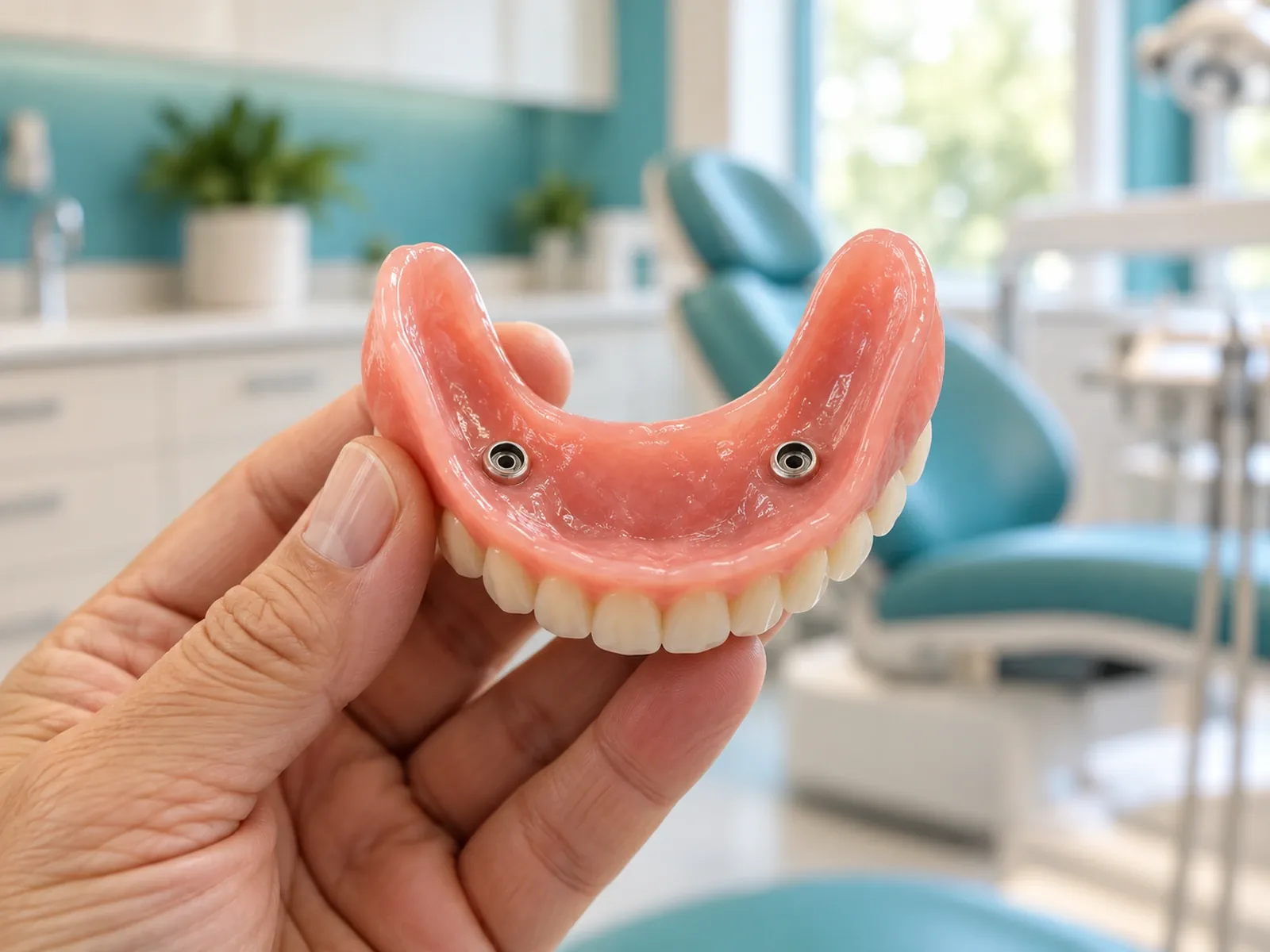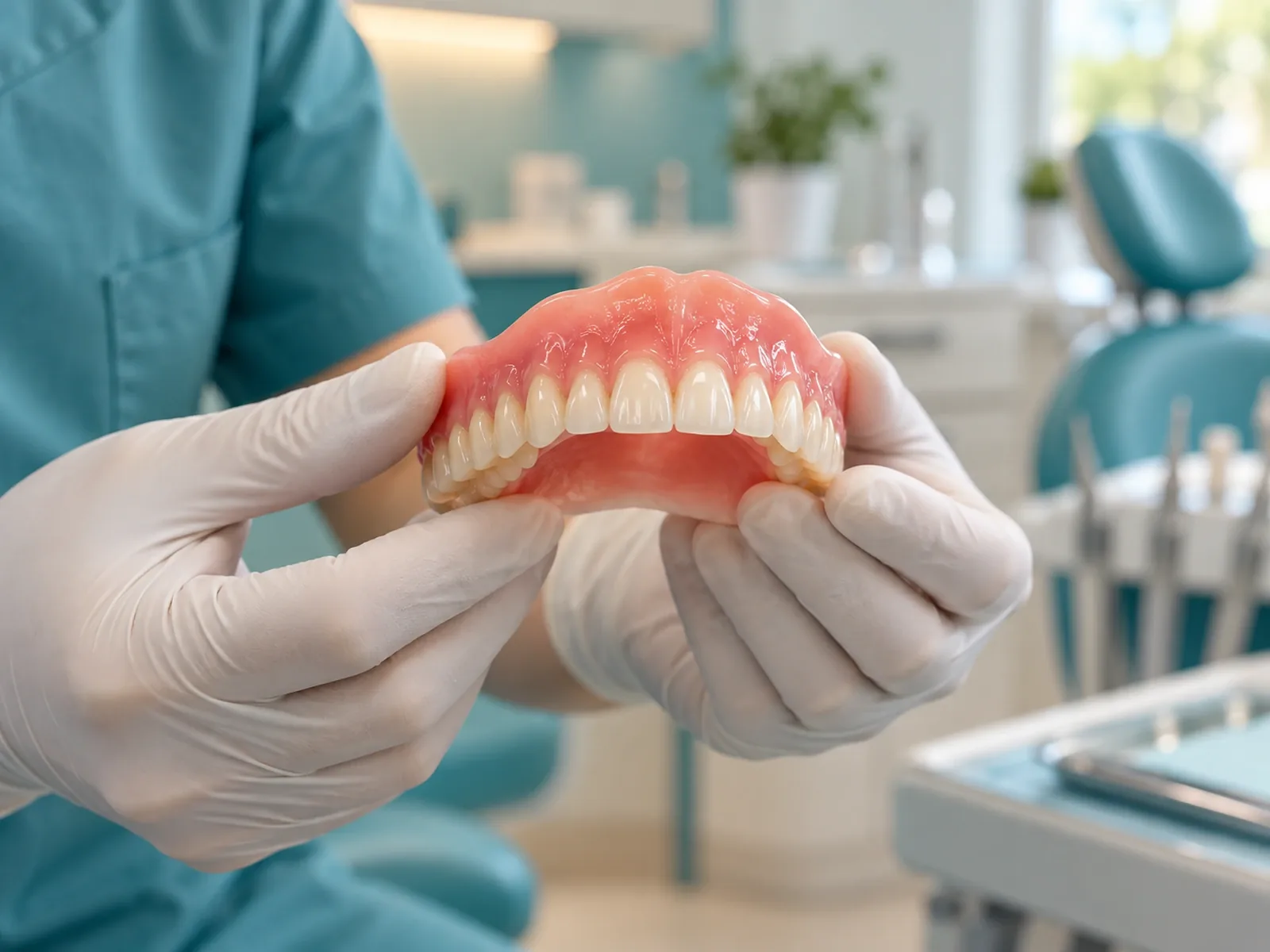
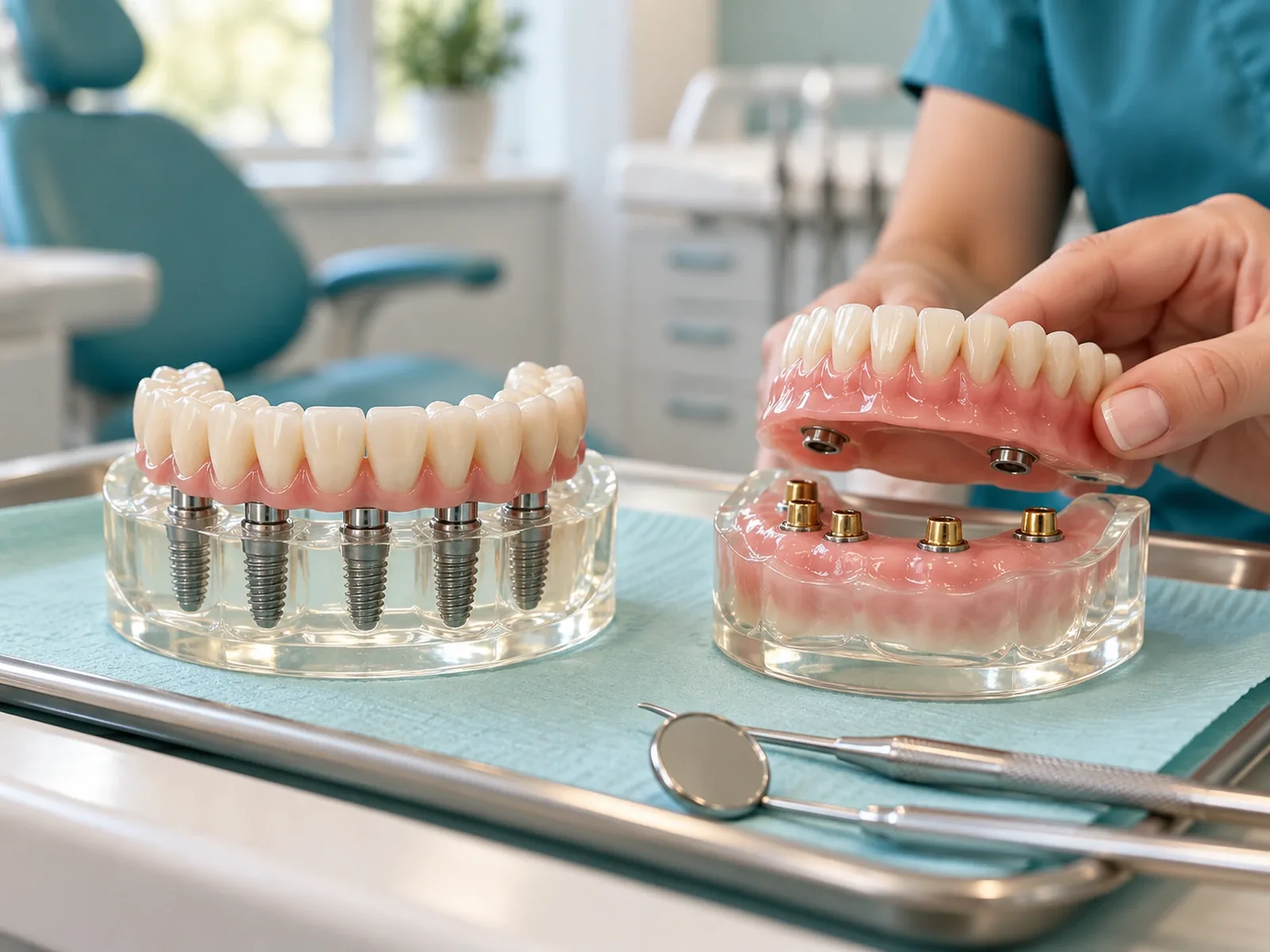
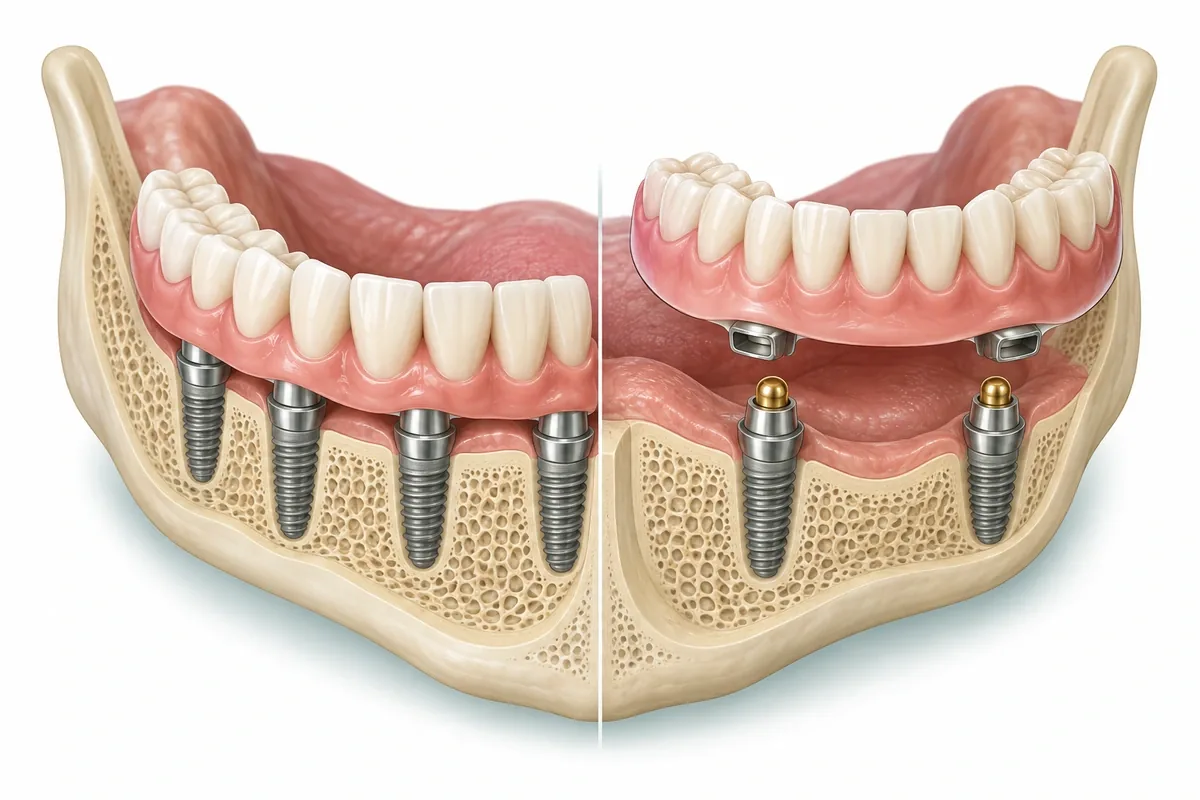
When patients hear "implant teeth," most picture a fixed bridge: teeth that are screwed onto implants and stay in your mouth like your own. There is a second option that uses implants just as much. A removable implant denture, often called a snap-in or overdenture, clips onto attachments on the implants and comes out at night for cleaning.
Both can be excellent. Both are intended to last for years. But the daily experience, the cleaning routine, what breaks, and what it costs to fix are different enough that the choice deserves more thought than "fixed sounds better." The honest answer is that the right one depends on your jaw, your lips, your hands and your budget, and it can be different for your upper and lower arch.
This page compares the two designs. For the broader picture of full-arch treatment, see our full-arch dental implants overview; for the removable option on its own, see implant-supported dentures.
The core difference in one sentence
A fixed bridge is cleaned in your mouth. A removable denture is cleaned in your hand. Almost every other tradeoff follows from that.
| Fixed implant bridge | Removable implant denture | |
|---|---|---|
| Comes out? | Only by the dentist | Daily, by you |
| Usual implant count per arch | Four to six | Two to four |
| Feel when eating | Closest to natural teeth | Much more stable than a regular denture; may still have slight give |
| Daily cleaning | Brush, floss threader or interdental brush, water flosser under the bridge | Brush denture out of mouth; brush around implant attachments |
| Common repairs | Chipped teeth, worn material, loose or broken screws | Worn clip inserts, relines, cracked base |
| Gum coverage | Minimal; gums largely exposed | Base covers the ridge and may extend onto the palate or under the tongue |
| Lip and cheek support | Built into the bridge; limited room to add bulk | The base provides support where the face has sunk |
| Typical cost | Higher | Lower |
Cleaning is the deciding factor more often than looks
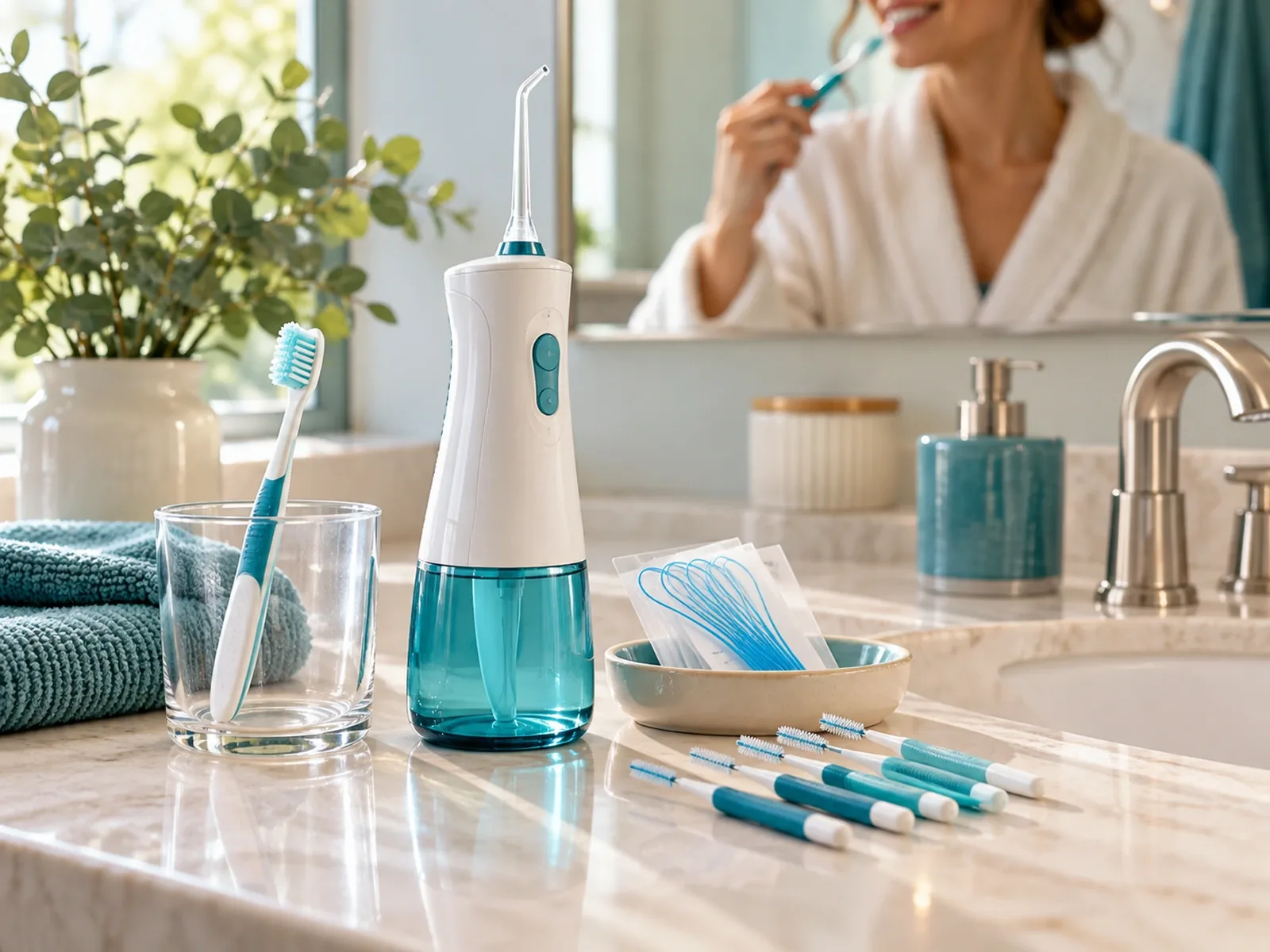
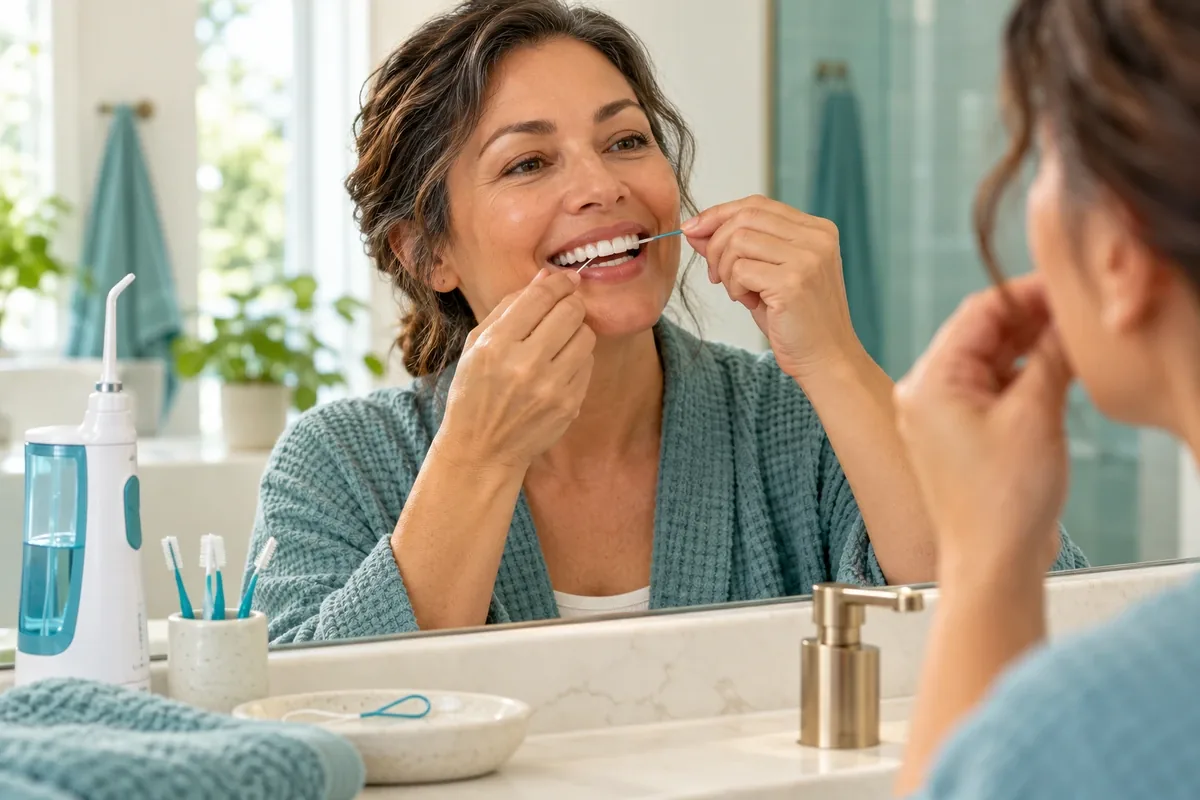
A fixed bridge sits a small distance above your gums. Food and plaque collect in that gap and around each implant. Keeping it clean means threading floss or a small brush underneath every day, usually with a water flosser as well. It takes some dexterity, decent eyesight and a few minutes morning and night. Done well, it keeps the gums around the implants healthy. Done poorly, inflammation can start around the implants without you noticing.
A removable denture comes out, so you can see and reach everything. You brush the denture over a sink and brush the small attachments on the implants directly. The trade is that you must handle the appliance safely and put it back correctly, and you need to be comfortable taking your teeth out at night.
Before you decide, ask us to show you the cleaning routine on a model and watch you try it. If arthritis, tremor, limited vision or simply a busy life makes the fixed-bridge routine unrealistic, that is a clinical reason to consider removable, not a personal failing. The guide to full-arch maintenance describes the fixed routine in detail.
Your face, your bite and the space between your jaws
When teeth and bone are lost over years, the lips and cheeks lose their support and the face can look sunken. A denture base can rebuild that support with pink acrylic where it is needed. A fixed bridge has less room to do so, because bulk added to a fixed bridge can trap food and affect speech.
The space between your jaws when you bite also matters. A fixed bridge needs a certain minimum height for strength; too little room and it may fracture, too much and the teeth look long. A removable denture is more forgiving of that measurement.
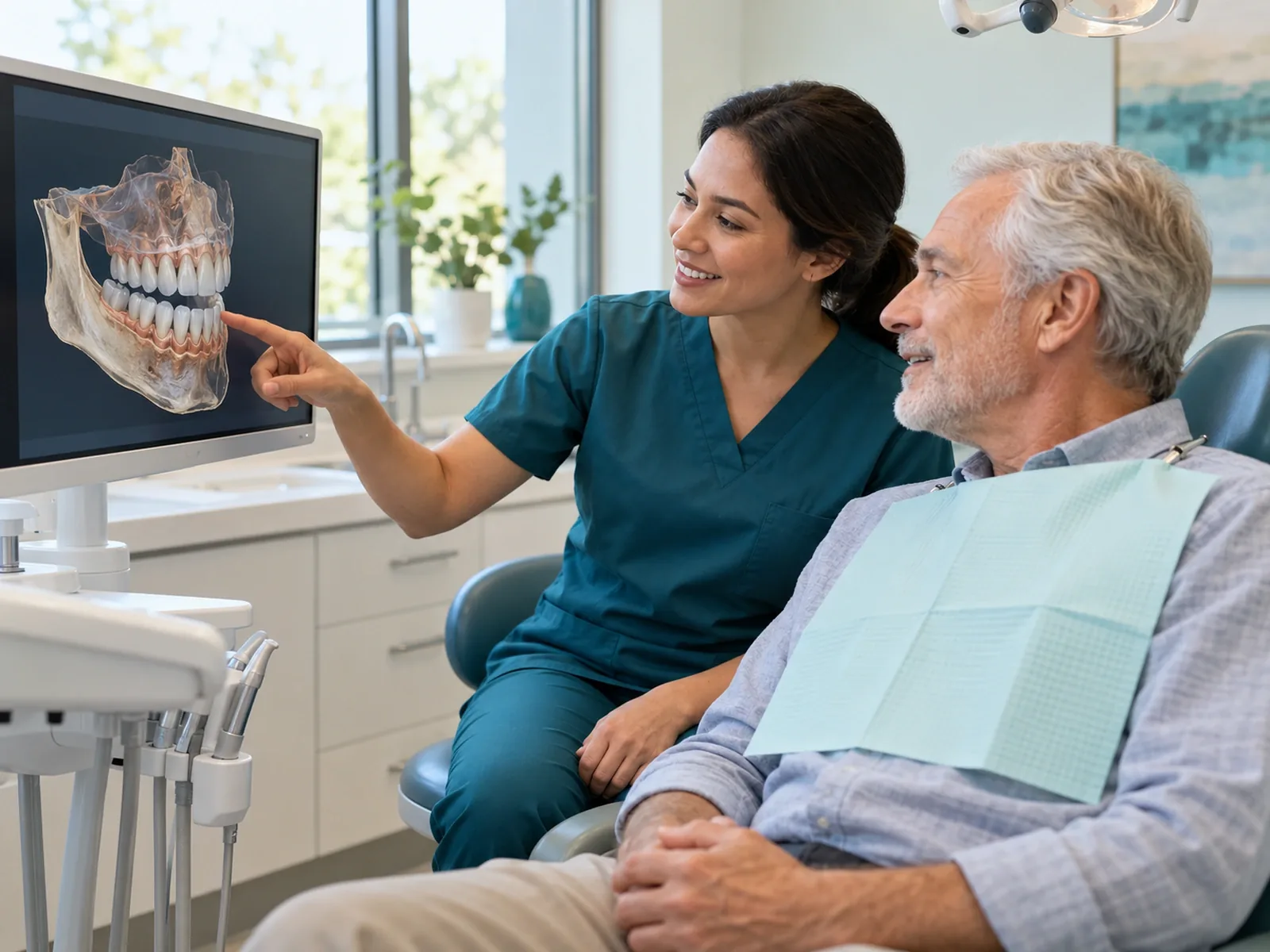
Finally, some patients find a full upper denture covering the palate changes taste or triggers gagging. An implant-retained upper denture can often be made without palate coverage because the implants hold it. A fixed upper bridge avoids the palate entirely. Dr. Zohdi will measure all of this during planning, which is why we discourage choosing a design before an examination.
What wears out, and who fixes it
Both options have parts that are designed to wear. That is normal, not a failure.
Removable dentures rely on small nylon or plastic inserts inside the denture that grip the implant attachments. These lose their snap over time and are swapped in a short visit. The acrylic base may need a reline as the gums change shape, and like any denture it can crack if dropped. Follow the care advice in our denture care guide for the appliance itself.
Fixed bridges can chip a tooth, wear down the chewing surfaces, or loosen a retaining screw, which shows up as a slight rocking or a new click. Repairs often require the dentist to unscrew the bridge, send it to a lab, and give you a temporary in the meantime. "Fixed" means you do not remove it; it does not mean it is never removed.
Biological problems, such as inflammation or bone loss around an implant, can affect either design. Regular professional check-ups are part of both plans.
Comparing the whole treatment, not just the result
Removable designs usually need fewer implants, which can mean less surgery, less grafting and a lower cost. Fixed designs need more implants in more precise positions and a stronger, more expensive restoration. Neither is "simple," and both involve a healing period, temporary teeth and several appointments.
Ask for the two options as complete written plans: implants, grafting if any, temporaries, final restoration, follow-up visits and expected maintenance costs. Our guide to full-arch cost factors explains how to read those estimates side by side.
Choosing with the right information
The best choice is the one you can live with comfortably and keep clean for years, and that fits the shape of your jaw and face. Dr. Zohdi will show you both designs on models, measure your bite and support needs, and explain which option he recommends for each arch and why. To start that conversation, request an appointment at our office in Cleburne.
Sources and further reading
General information, not a diagnosis. Read how we create and review our dental guides.