Choosing the material for a full-arch implant bridge is not like choosing a paint color. The material decides how your teeth look up close, how they wear against the opposing teeth, how they sound when you talk and chew, how heavy they feel, what happens when one chips, and how much it costs to put right. The two words you will hear most are "zirconia" and "acrylic," but each covers a family of constructions, and the way the bridge is built matters as much as what it is built from.
This guide explains the main constructions, how they behave over years of use, and the questions that let you compare one office's "zirconia" or "hybrid" against another's. It is the material companion to our full-arch dental implants overview.
The main constructions
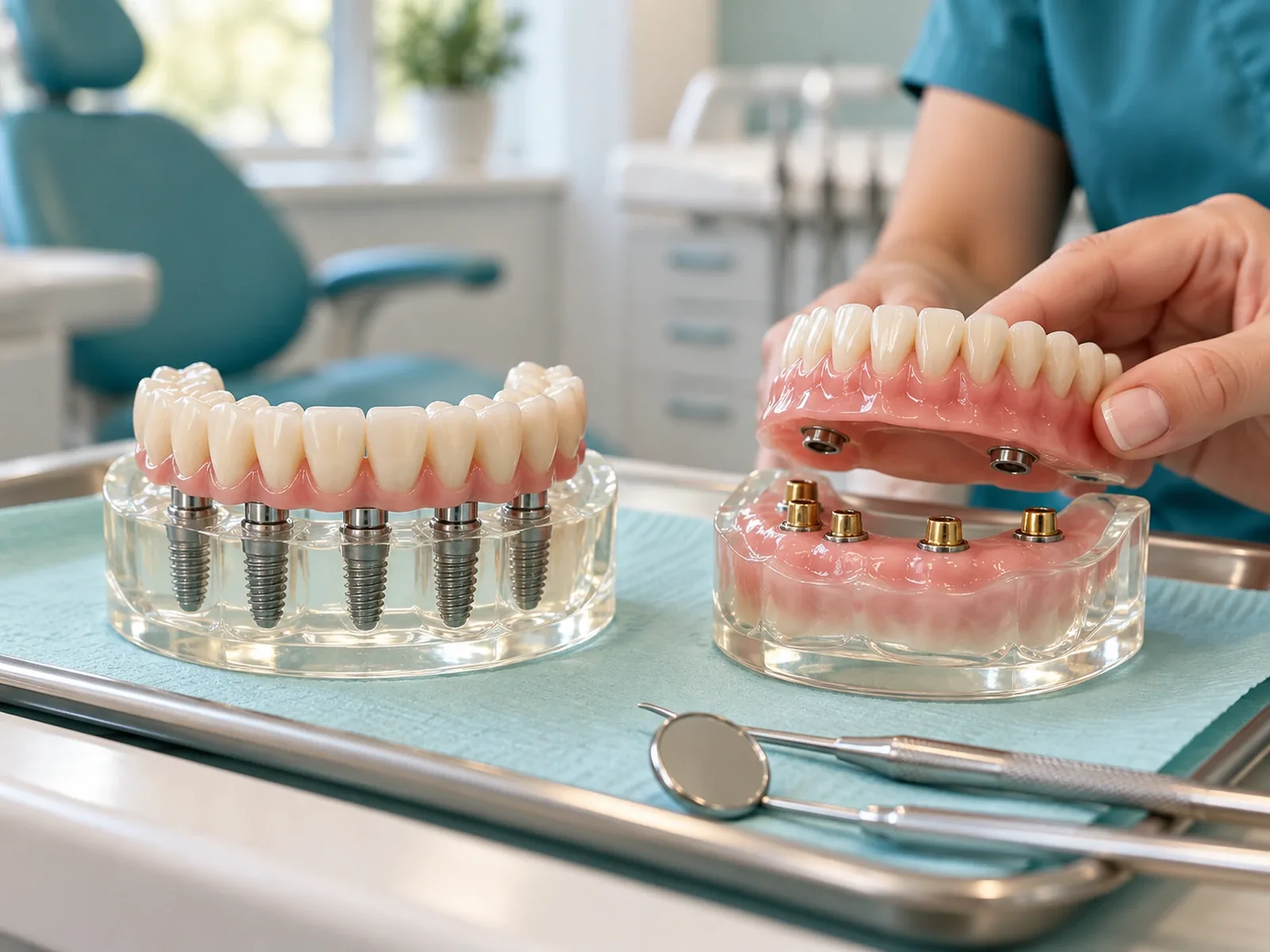
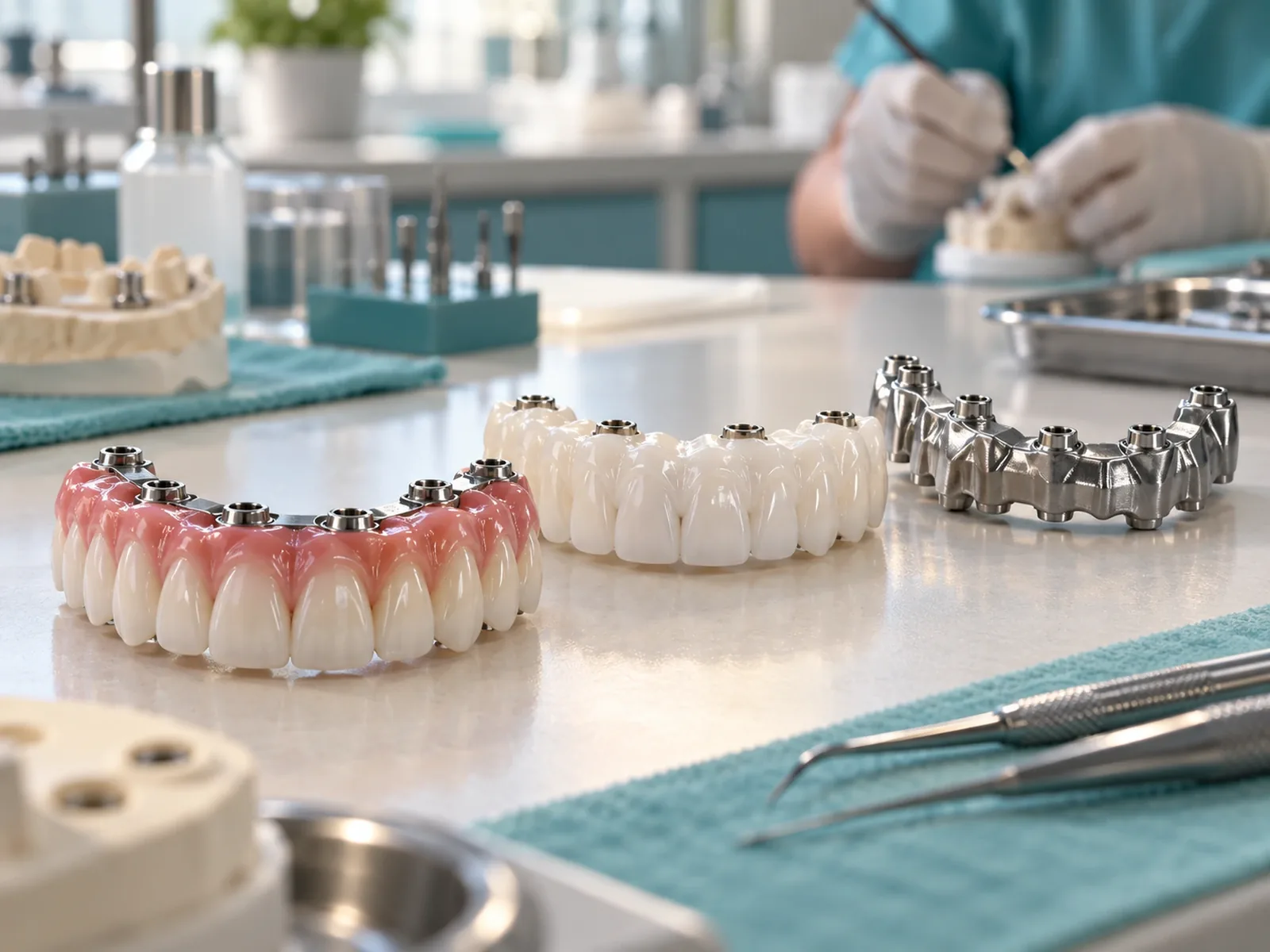
Almost every fixed full-arch bridge falls into one of these groups:
Acrylic hybrid (acrylic teeth and gum on a titanium bar). A milled titanium bar is screwed to the implants; denture-quality acrylic teeth and pink acrylic gum are processed around it. This is the traditional "hybrid denture." It is lighter, forgiving to adjust and relatively easy to repair, but the acrylic wears, stains and can chip with heavy use.
Monolithic zirconia. The whole bridge, teeth and gum, is milled from a single block of zirconia ceramic, then colored and glazed. It is very hard, resists wear and staining, and feels solid. It is heavier, harder to adjust once made, and a crack usually means remaking the bridge rather than patching it.
Layered zirconia or porcelain on a frame. A zirconia or metal frame is covered with layered porcelain for a more lifelike, translucent look. The layering is where appearance gains are made, and also where chips most often happen, because porcelain veneering is weaker than the core underneath.
Acrylic temporary bridge. Nearly all same-day or healing-phase bridges are acrylic, often reinforced with a metal or fiber bar. They are built to be adjusted and are not intended as the final material. Our guide to same-day implant teeth explains why the temporary and final bridges are deliberately different.
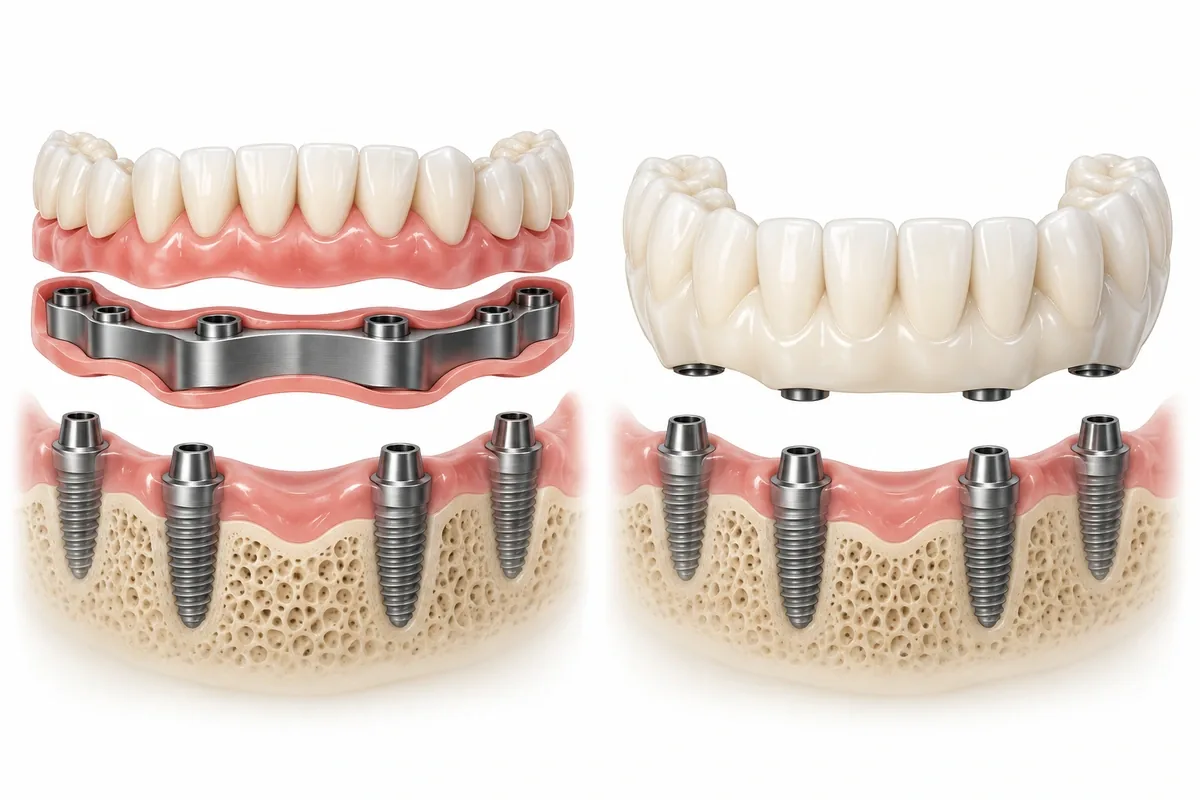
| Acrylic hybrid | Monolithic zirconia | Layered zirconia or porcelain | |
|---|---|---|---|
| Appearance | Good; denture-tooth look | Good; can look flat if not well characterized | Most lifelike when well made |
| Wear over years | Teeth wear down and may need replacing | Very wear-resistant | Core resistant; porcelain layer can chip |
| Chip or fracture | Common with heavy bite; usually repairable | Uncommon; fracture usually means remake | Chips of veneer layer are the main issue |
| Repair | Often in office or quick lab turnaround | Lab remake or polishing of minor edges | Lab repair; sometimes remake |
| Weight and feel | Light | Heavier, very solid | Moderate |
| Effect on opposing teeth | Gentle on natural teeth and dentures | Can wear opposing natural teeth if the bite is not adjusted | Porcelain can also wear opposing enamel |
| Space needed between jaws | Needs more height for strength | Needs less height | Moderate |
| Typical cost | Lower | Higher | Highest |
These are general tendencies. Lab quality and design change the outcome within each column.
Why the bite decides more than the brochure
A full-arch bridge takes every chewing force your jaw produces, and implants do not have the shock-absorbing ligament that natural teeth have. The material has to cope with that.
If you clench or grind, an acrylic hybrid may wear noticeably within a few years and chip repeatedly. Zirconia stands up to that force far better. But if the opposing arch is your own natural teeth, a hard zirconia bridge that is not carefully adjusted can wear them down instead. If both arches are being replaced, choosing two zirconia bridges against each other is strong but can feel and sound very hard; some dentists prefer acrylic in one arch to soften the contact.
Dr. Zohdi will look at your grinding habits, what you are biting against, and the space available between your jaws before recommending a construction. A night guard is often part of protecting any full-arch material when grinding is a factor.
Appearance: the design does more than the material
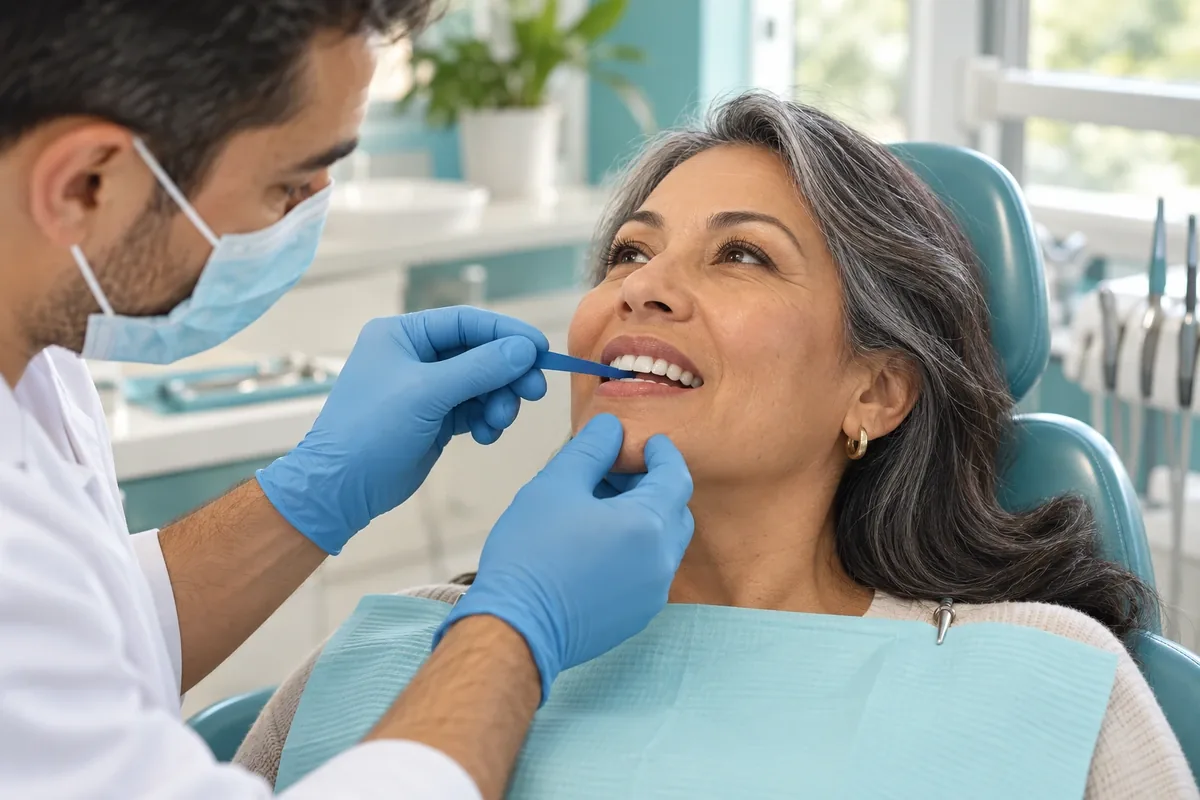
Patients often assume zirconia automatically looks better. In practice, how natural a bridge looks depends mostly on tooth position, tooth shape, how the pink gum portion meets your real gums, and whether the transition hides under your lip when you smile. A beautifully shaped acrylic hybrid can look more natural than a bulky zirconia bridge, and vice versa.
The temporary bridge is your test drive for all of this. Shade, length, how much gum shows, and how your lips are supported are all adjusted on the temporary and then copied into the final. Spend that healing period paying attention, because the final material locks those choices in.
Repairability over the long run
Every material will need attention over a decade or more. The difference is what that attention looks like.
- Acrylic hybrid: a chipped tooth can often be replaced, worn teeth re-set, and the acrylic refreshed, sometimes without a long wait. The bar itself rarely fails. Many plans anticipate "re-processing" the acrylic after a number of years.
- Monolithic zirconia: small edge chips can sometimes be polished. A fracture through the bridge generally means a new bridge, which is a bigger expense. Zirconia bridges fail less often, but when they do, the repair is larger.
- Layered porcelain: chips of the veneer layer are the most common repair; they may be smoothed, bonded or sent to the lab.
With any fixed bridge, repair usually means Dr. Zohdi unscrews it from the implants, so ask what you will wear while it is away. Our full-arch maintenance guide covers the professional care that catches wear and loosening before it becomes a fracture.
Hygiene does not change with the material
Zirconia is sometimes sold as "low maintenance" because it stains less and plaque is less likely to stick to its polished surface. That is true as far as it goes. It does not change the need to clean under the bridge and around each implant every day, and it does not change the need for professional check-ups. The shape of the underside, how closely it hugs the gums, and whether you can get a brush or floss beneath it matter far more to gum health than the material name.
How to compare quotes that use different labels
Terms like "zirconia," "hybrid," "premium" and "titanium-reinforced" are used loosely. When comparing estimates, ask each office to state:
- The exact construction: monolithic zirconia, zirconia with layered porcelain, acrylic on titanium bar, or something else.
- Whether the quoted material is the final bridge or the temporary.
- Which lab makes it and what the lab's remake or repair policy is.
- What a chip repair would involve and roughly what it costs.
- Whether a night guard is included if grinding is a concern.
Our guide to full-arch cost factors helps you line up the rest of the estimate once the material question is clear.
A material chosen for your mouth, not for a label
The right full-arch material is the one that holds up against your bite, looks natural in your face, and can be repaired in a way you can live with. Dr. Zohdi will show you the actual constructions, explain which ones suit your case and why, and put the specific material and lab in writing on your plan. If you are weighing full-arch options, request a consultation with us in Cleburne.
Sources and further reading
- ADA: Materials for indirect restorations
- FDA: Dental implants—what you should know
- ADA MouthHealthy: Implants
General information, not a diagnosis. Read how we create and review our dental guides.