"Teeth in a day" is one of the most searched phrases in implant dentistry, and one of the most misunderstood. It is real: for suitable patients, implants can be placed and a full arch of fixed temporary teeth attached within the same day or so. What it does not mean is that treatment is finished when you walk out. The teeth you leave with are a temporary bridge designed to get you through healing. The final teeth are made months later, once the implants have fused to bone.
Whether you qualify is not something a website, or even a first consultation, can promise. Part of the decision happens on the operating day, when Dr. Zohdi measures how firmly each implant grips the bone. This guide explains what "same day" actually covers, who tends to qualify, what the temporary phase feels like, and why a good plan always includes a backup.
For the full treatment picture, start with our full-arch dental implants overview.
Placement and loading are two different decisions
Two words get blurred together in advertising:
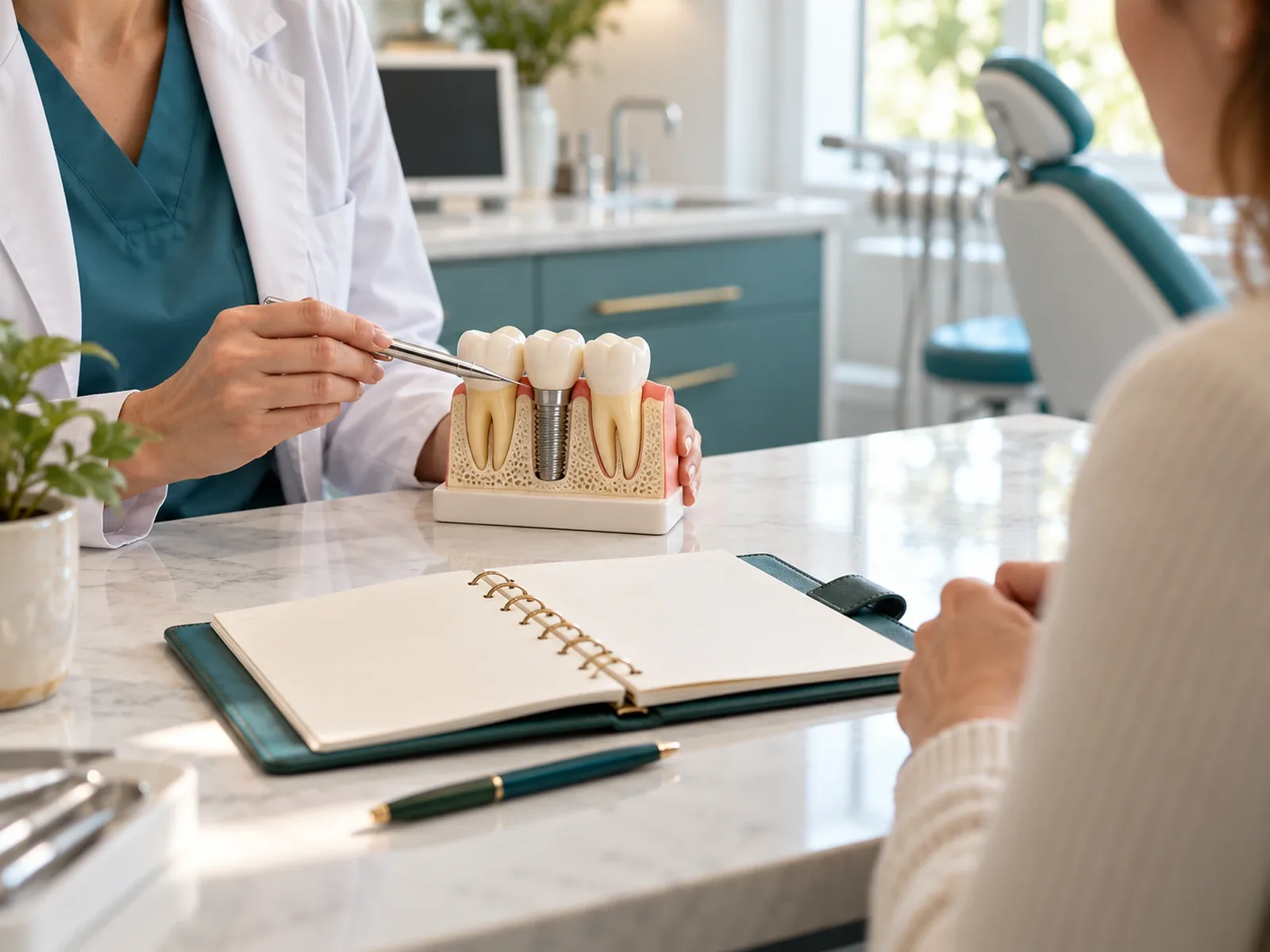
- Immediate placement means an implant goes into the socket right after a tooth is removed, instead of waiting months for the socket to heal.
- Immediate loading means teeth are attached to the implant right away and used for function, instead of leaving it buried and unloaded while it heals.
You can have one without the other. Implants are often placed on extraction day but left to heal quietly under a removable temporary denture. Or implants placed in healed bone months ago can be loaded with a bridge today. "Same-day teeth" refers specifically to immediate loading of a full-arch bridge, which is a bigger ask of the implants than simply placing them.
When you read a treatment plan, make sure each phrase is defined: immediate placement, immediate loading, removable temporary, fixed temporary, and final restoration. They are not interchangeable, and only the last one is the long-term result.
Who tends to qualify
Immediate loading works because a full-arch bridge joins all the implants into one rigid unit, so no single implant moves on its own while bone grows onto it. For that to be safe, several things need to line up:
- Primary stability. Each implant must be very firm in the bone at the moment it is placed. Dr. Zohdi measures this during surgery. If the readings are low, loading that day puts the implant at risk of never integrating.
- Bone quality and volume. Dense bone, usually found in the front of the jaws, gives better initial grip. Very soft upper-jaw bone sometimes argues against immediate loading.
- Control of infection. Active gum infection around failing teeth can be managed, but heavy infection at an implant site may change the plan.
- General health and habits. Uncontrolled diabetes, smoking, certain medications and a heavy grinding habit all raise the odds that an immediately loaded implant fails to integrate. See our implant candidacy guide for the health factors that matter.
- Enough implants in the right places. Immediate loading is usually planned on four or more well-distributed implants so that force is shared; our guide to four or six implants explains why distribution matters.
Being told you are a "likely" candidate before surgery is honest. Being told you are a "guaranteed" candidate is not, because the stability check has not happened yet.
Living with temporary teeth
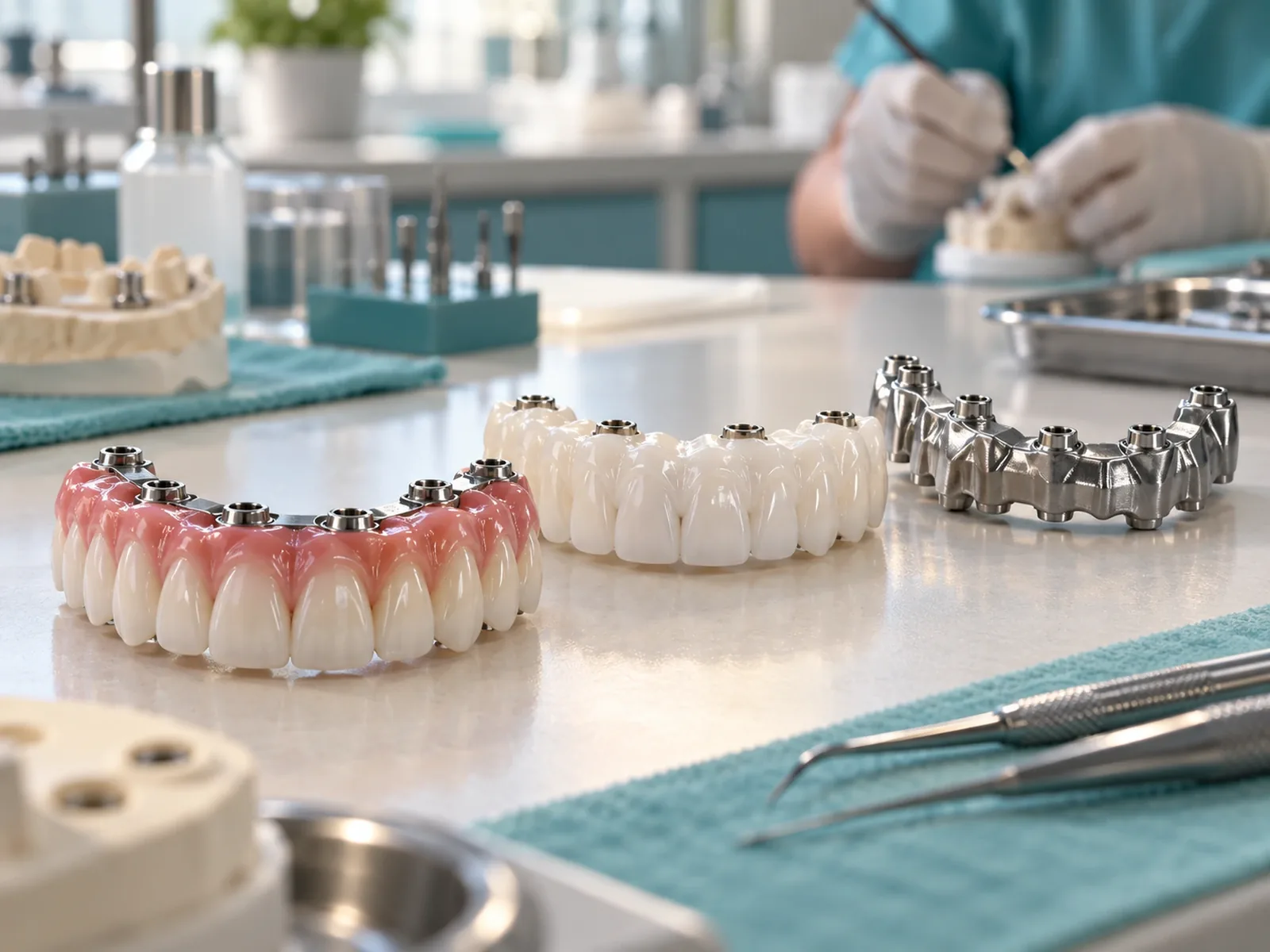
The temporary bridge is usually made of acrylic, often reinforced, and it looks like a finished smile. That is the point: it restores your appearance and lets you speak and eat soft food during healing. But it is doing a job under strict limits.
Diet. You will be asked to stay on a soft diet, typically for several weeks and often for the full integration period of a few months. Nothing hard, chewy, crunchy or tough. Biting into an apple or a crusty roll with a temporary bridge on fresh implants can overload them before bone has grown onto the surface. The soft-diet period is not a suggestion; it is part of the treatment.

Appearance adjustments. The temporary is also a trial run. Over the healing months you and Dr. Zohdi will note what you would change about the tooth length, shade, lip support or bite before the final bridge is made. Those notes shape the final design, so speak up about anything that bothers you.
Durability. Temporaries chip and wear more easily than final materials. A small chip is usually repaired quickly; a fracture may mean a day or two on a removable temporary while it is fixed. Our guide to full-arch materials explains why the temporary and final bridges are deliberately made from different materials.
Cleaning. You will learn to clean under the temporary just as you will under the final bridge. Starting that habit early matters, because inflammation during healing is harder on new implants than on established ones.
The backup plan belongs in writing
Ask this question before surgery: "If my implants are not stable enough for fixed teeth that day, what will I go home with?"
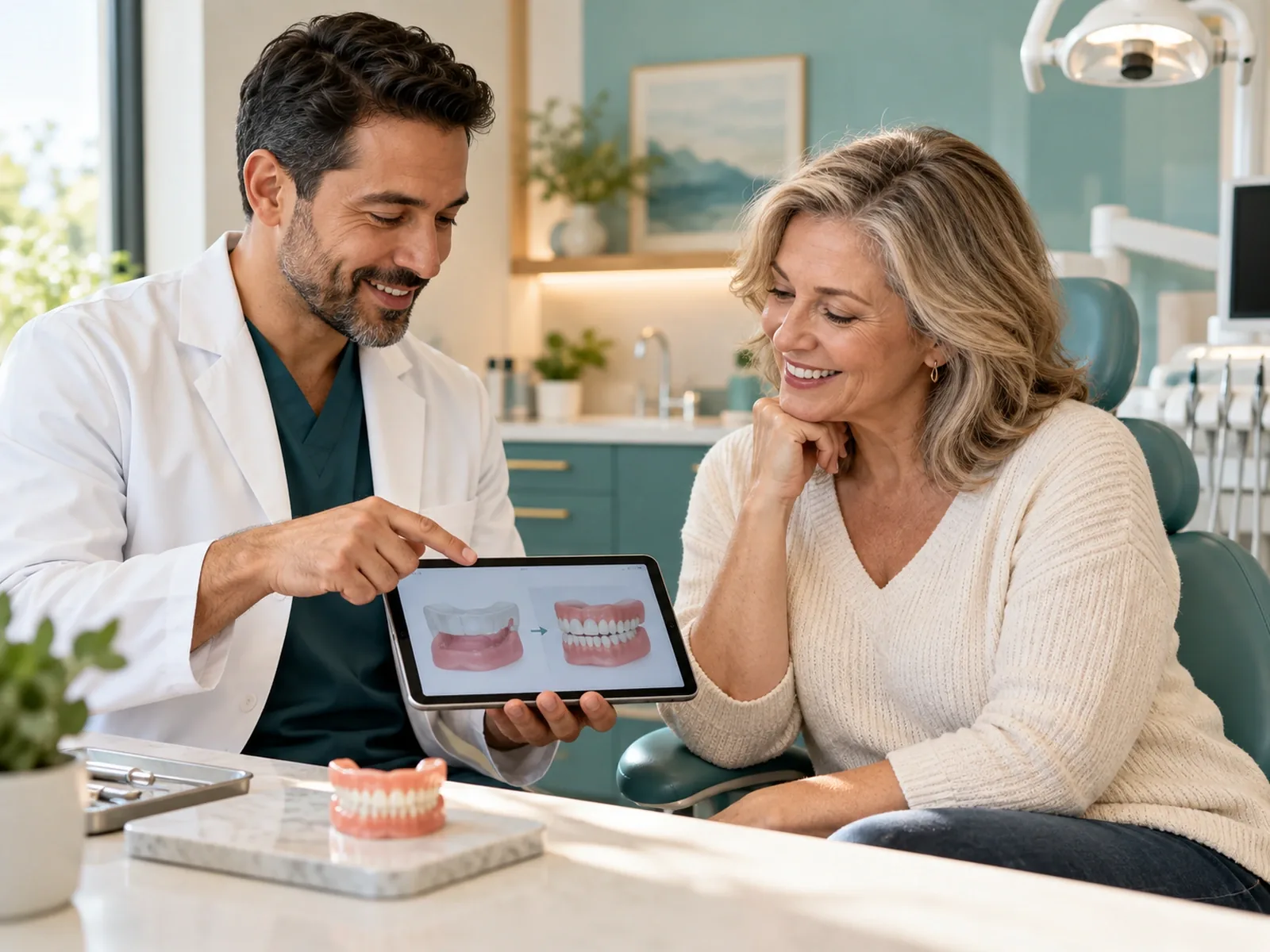
The usual answer is a removable temporary denture, made in advance, that sits over the healing implants without loading them. It is the same kind of appliance described in our immediate dentures guide. You would wear it for the healing period, and a fixed bridge would be attached once the implants have integrated. The final result can be the same; the path is slower and your weeks of healing look different.
Knowing this plan in advance also tells you how the cost and schedule change if it is needed. Those details should be in the written estimate, which our guide to full-arch cost factors can help you read.
Same-day teeth do not shorten the treatment
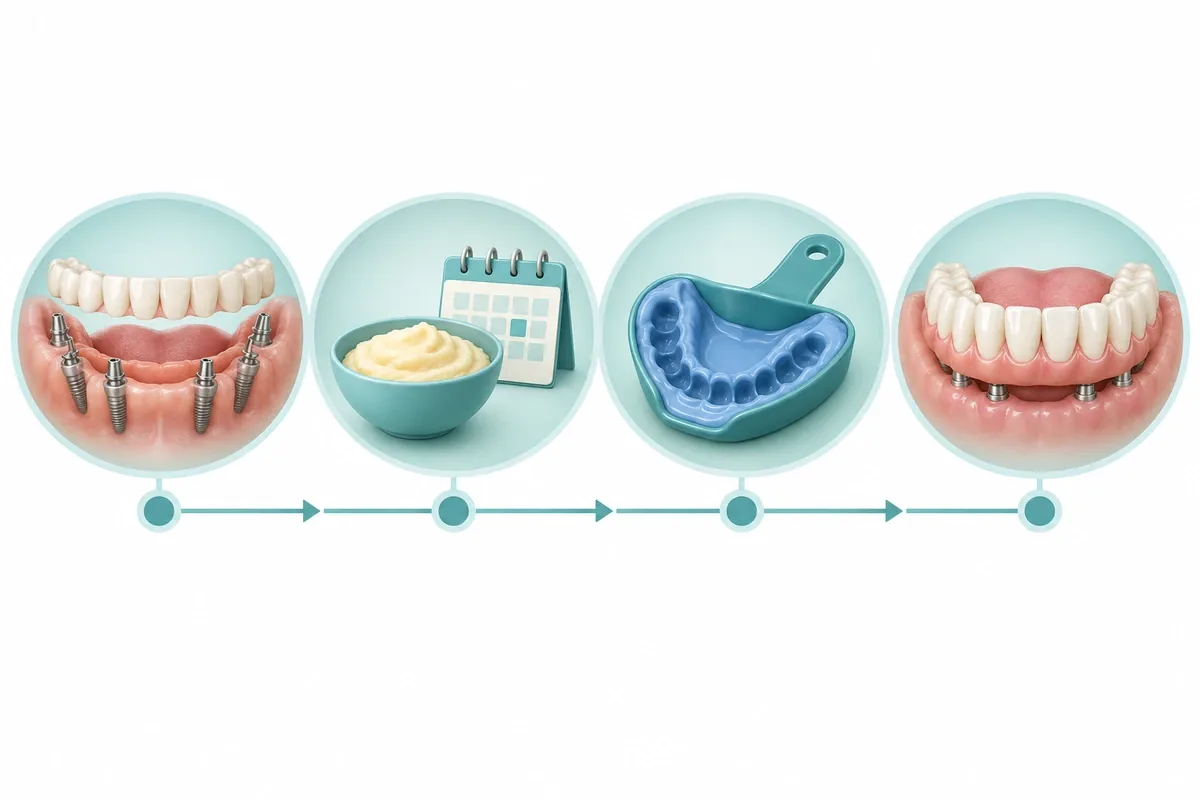
This surprises many patients. Immediate loading changes what you wear during healing. It does not change how long bone takes to fuse to titanium, typically several months, and it does not remove any of the later steps: healing checks, impressions or scans for the final bridge, try-in appointments, delivery, and ongoing maintenance. The implant treatment timeline applies to full-arch cases too. What you gain is never being without teeth, which for most people is well worth it. What you do not gain is a shortcut.
Talk through the real timeline
Same-day teeth can be a genuine relief for someone facing the loss of all their teeth, and it is a reasonable goal to aim for. The right way to pursue it is with a plan that spells out the stability criteria, the temporary phase, the backup, and the final teeth. Dr. Zohdi will go through each of those with you, scan your jaws, and tell you honestly how likely immediate teeth are in your case. To begin, request a full-arch evaluation at our Cleburne office.
Sources and further reading
- FDA: Dental implants—what you should know
- American Academy of Periodontology: Dental implant procedures
- ADA MouthHealthy: Implants
General information, not a diagnosis. Read how we create and review our dental guides.