
Gums that bleed when you brush or floss are telling you something. Most often the message is simple: plaque has been sitting along the gumline long enough to inflame the tissue, and inflamed tissue bleeds at the lightest touch. That stage, gingivitis, is common and reversible. But bleeding can also be the first visible sign of periodontitis, a deeper infection that quietly destroys the bone around teeth, and it can be influenced by medications, hormones, and general health.
The amount of blood you see cannot tell you which of these is going on. A thorough look by a dentist can. This page explains the likely causes, what you can do at home right away, which symptoms should not wait, and what an evaluation at Cleburne Dental actually involves.
Common reasons gums bleed
Bleeding gums rarely have a single cause. Several of these often overlap:
- Plaque and gingivitis. The most common reason by far. Bacteria in plaque irritate the gum margin, which becomes red, puffy, and fragile.
- Periodontitis. When inflammation has gone deeper, the gum detaches from the tooth and forms a pocket that bleeds when probed or brushed, often without pain.
- Brushing or flossing technique. A hard-bristled brush, heavy scrubbing, or snapping floss into the gum can injure healthy tissue. Starting to floss after a long gap often causes a week or so of bleeding while the gums calm down.
- Medications. Blood thinners and some aspirin regimens make any bleeding last longer. Certain blood-pressure, seizure, and immune-suppressing medicines can cause gum overgrowth that traps plaque.
- Hormonal changes. Pregnancy, puberty, and menopause make gums react more strongly to plaque.
- Smoking and vaping. Tobacco actually reduces bleeding by narrowing blood vessels, which can hide gum disease until it is advanced.
- Health conditions. Diabetes, low vitamin C or K, and some blood disorders affect gum health and bleeding.
- Dental factors. A rough filling edge, a crown margin that traps food, a loose partial denture, or crowded teeth all create spots where plaque is hard to remove.
- Dry mouth and mouth breathing. Less saliva means less natural rinsing, so plaque builds up faster, especially on the front teeth.
Symptoms that should prompt a call
Make an appointment if bleeding continues for more than a week or two despite gentle, consistent cleaning, or if it comes with any of the following: a persistent bad taste or bad breath, gums that look swollen or dark red, gums that seem to be pulling away from the teeth, new spaces between teeth, teeth that feel loose, or tenderness when you bite. Call the office at (817) 641-6261 during business hours and tell us what you are seeing.
Some situations need faster attention. If bleeding does not stop with firm, gentle pressure after fifteen to twenty minutes, if you have swelling of the face or jaw, fever, or trouble swallowing or breathing, go to an emergency room or call 911. Those signs point to something more than inflamed gums.
Do not stop a prescribed blood thinner or any other medication because your gums bleed. Tell us what you take, and we will coordinate with your physician if anything needs to change.
Gingivitis and periodontitis are different conditions
This distinction is the reason an exam matters. Gingivitis is inflammation of the gum alone. Nothing has been lost, and with a professional cleaning and better daily care the tissue can return to full health within a couple of weeks. Periodontitis means the inflammation has reached the fibers and bone that hold the tooth. The gum pulls away, a pocket forms, and bone slowly recedes. That damage does not reverse on its own.
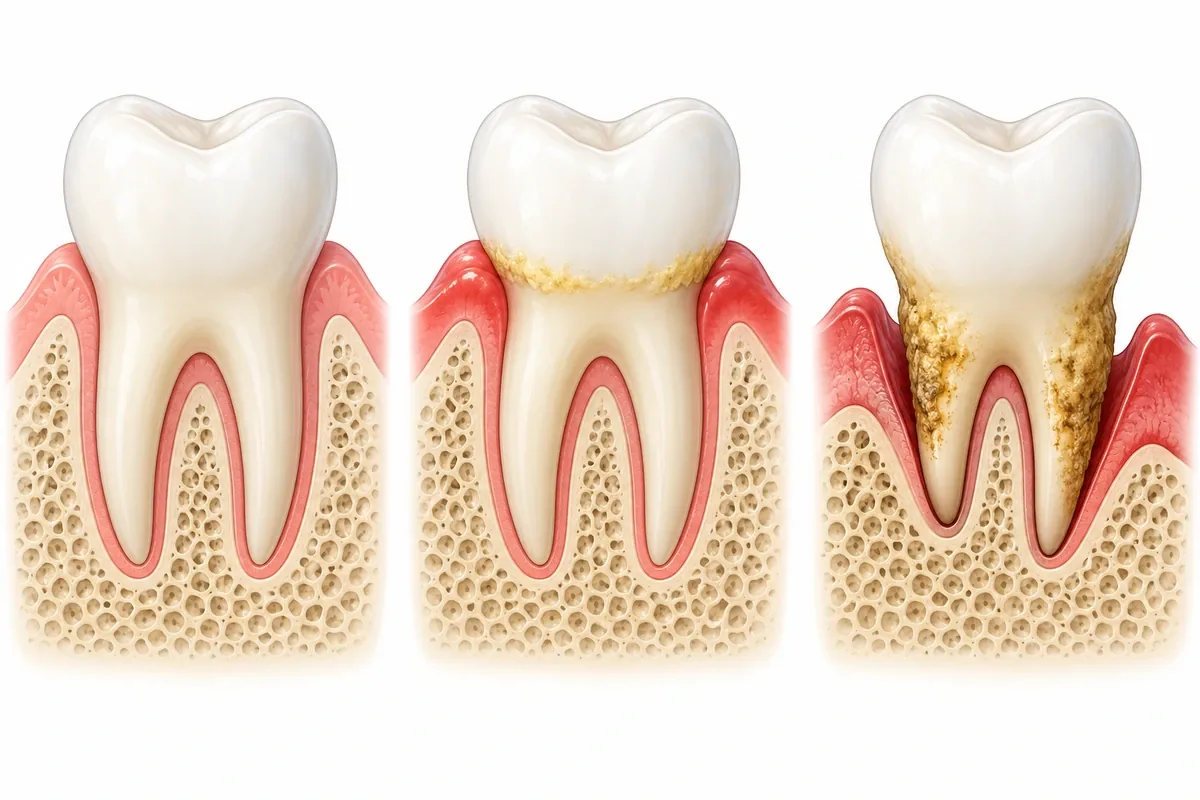
Red, bleeding gums look the same in both cases from the outside. The difference is only visible when the dentist measures the pockets and looks at the bone on X-rays. Our guide on why a routine cleaning and periodontal treatment are different explains how that measurement decides which kind of care you need.
What an evaluation involves
A gum evaluation is not complicated or painful. At your visit we will:
- Ask about the bleeding. Is it new? One spot or everywhere? Only when you clean, or on its own? We also review your medications and health history.
- Look. Color, swelling, recession, plaque and tartar deposits, and the condition of fillings and crowns near the gumline.
- Measure. A slim probe is placed gently between the gum and tooth at several points around each tooth. Healthy gums are shallow and do not bleed when probed. Deeper pockets that bleed point toward periodontitis.
- Take X-rays when indicated. Dental X-rays show whether bone has been lost between the teeth and reveal tartar below the gumline.
- Explain what we found. Dr. Zohdi will show you the chart and the images so you can see for yourself which areas are healthy and which are not.
If the finding is gingivitis, the plan is usually a professional cleaning and exam, a review of technique, and a recheck. If pockets and bone loss are present, scaling and root planing treats below the gumline, followed by periodontal maintenance to keep the disease from returning. If a local cause such as a rough restoration is found, fixing that is part of the plan.
Keep cleaning, but adjust the technique
The instinct when something bleeds is to leave it alone. With gums, that backfires. Plaque left in place keeps the inflammation going, and the bleeding gets worse. In the meantime:
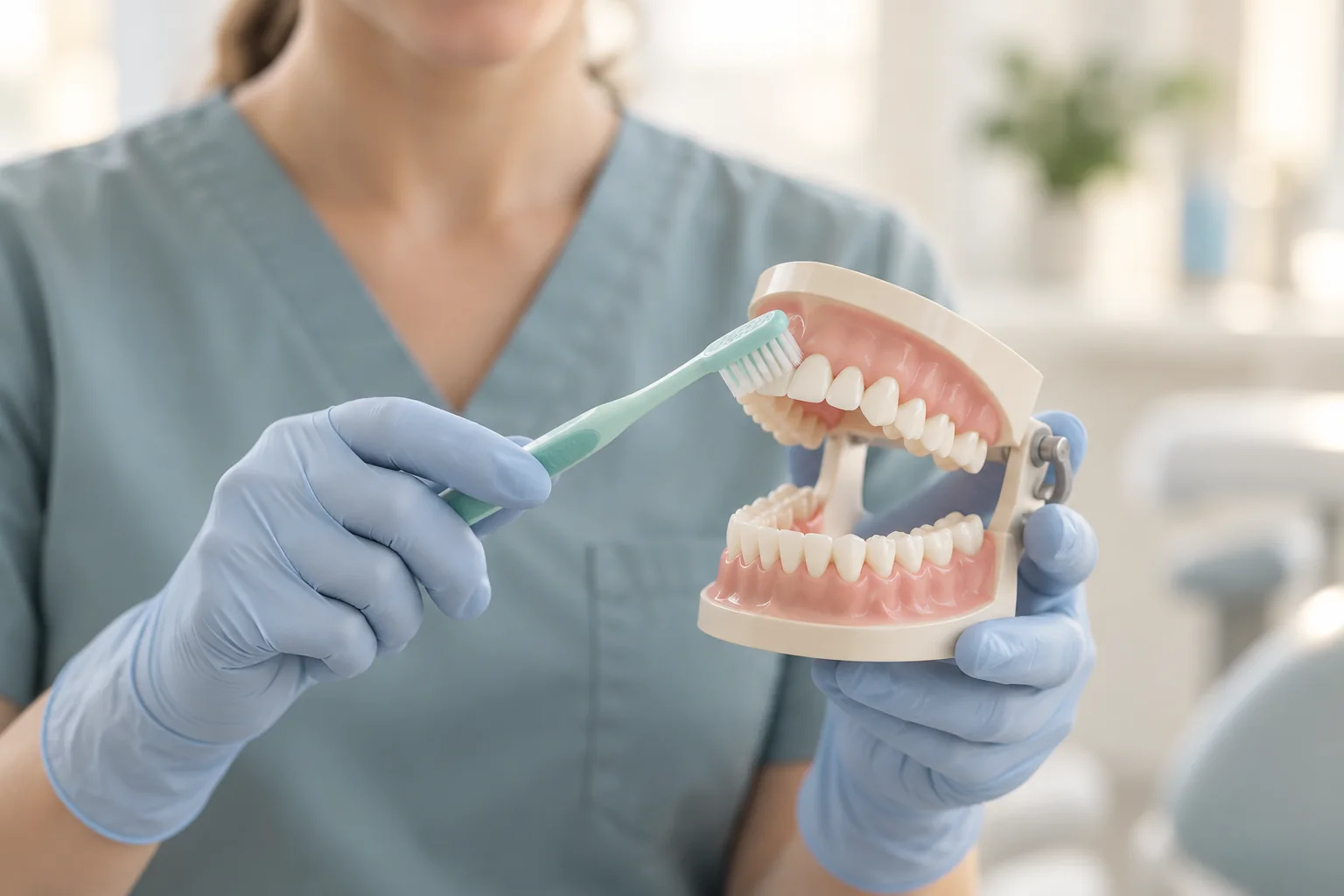
- Use a soft-bristled brush and aim the bristles toward the gumline at a slight angle. Let the brush do the work; pressure should be light enough that the bristles do not splay.
- Clean between the teeth every day. Slide floss gently against each tooth in a C shape rather than snapping it down, or use an interdental brush that fits the space without forcing.
- Brush for two minutes, twice a day, with a fluoride toothpaste. An electric brush with a pressure sensor helps if you tend to scrub.
- A water flosser can help flush around braces, bridges, and implants, but it is a supplement to brushing and interdental cleaning, not a replacement.
- If floss shreds or catches at one specific spot, point it out at your visit. A rough edge or an overhang there may need smoothing.
Healthy gums usually stop bleeding within one to two weeks of consistent, gentle cleaning. If yours do not, that is useful information for your exam, not a reason to feel discouraged.
Sources and further reading
- NIDCR: Gum disease
- ADA MouthHealthy: Gum disease
- American Academy of Periodontology: Patient questions
General information, not a diagnosis. Read how we create and review our dental guides.