Healthy gums hold your teeth in place. This overview explains how gum disease is found, treated, and kept under control, and where each of our detailed guides fits in.
Your gums and the bone beneath them are what hold your teeth in place. Gum disease, also called periodontal disease, is an infection of those supporting tissues, and it is the leading reason adults lose teeth. It is also unusually quiet. Most people feel nothing until the disease is advanced, which is why finding it depends on measurement rather than on waiting for pain.
At Cleburne Dental, gum care follows a clear sequence: find out exactly what is happening, treat what needs treating, check that it worked, then keep it stable. This page is the overview of that part of our services. It explains the two stages of gum disease, the signs worth checking, what a periodontal exam measures, and how treatment unfolds, with links to detailed guides on each step.
Gum disease comes in two forms, and the difference matters more than almost anything else on this page.
Gingivitis is inflammation of the gum alone. Plaque left along the gumline irritates the tissue, which becomes red, swollen, and quick to bleed. Nothing has been lost. With a professional cleaning and consistent daily care, gingivitis is fully reversible, often within a couple of weeks.
Periodontitis is what gingivitis can become if the inflammation goes unchecked. The body’s response to the bacteria begins to break down the fibers and bone that anchor the tooth. The gum detaches and forms a pocket, tartar collects inside it out of reach of a toothbrush, and bone recedes. That damage does not reverse on its own. Periodontitis is managed rather than cured, which is why long-term follow-up is built into treatment.
What raises the risk
Plaque is the trigger, but several factors make gums more vulnerable or make the disease progress faster: tobacco use, diabetes, a family history of gum disease, hormonal changes during pregnancy or menopause, dry mouth from medications, stress, clenching or grinding, and crowded teeth or older dental work that trap plaque. Tell us about these; they shape the plan and the follow-up interval.
Signs worth checking
Because periodontitis rarely hurts, it pays to know the quieter signals:
Gums that bleed when you brush or floss, or that look red, swollen, or shiny
A persistent bad taste or bad breath that brushing does not fix
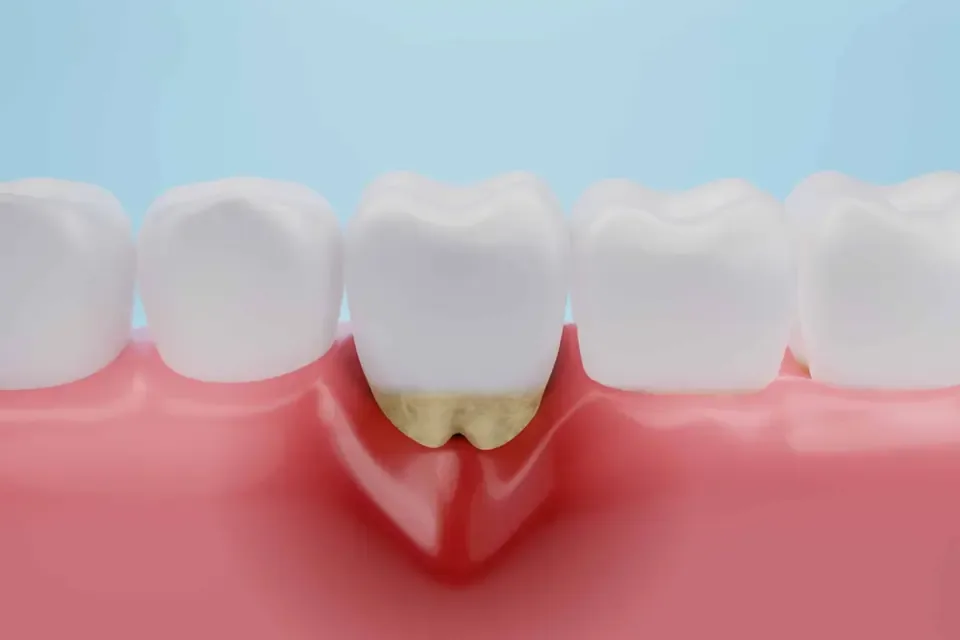
Gums that seem to be pulling away from the teeth, or teeth that look longer
New spaces opening between teeth, or teeth that have shifted or feel loose
Tenderness when chewing in one area, or pus near the gumline
A partial denture or bridge that no longer fits the way it did
Bleeding is the most common first sign and also the most misread. Our guide to why gums bleed and what an evaluation can clarify covers the causes, from technique to medications to disease, and which symptoms should not wait. Gums that have moved down the tooth are a different question with its own set of causes, explained in gum recession and protecting exposed roots.
What the periodontal exam measures
A gum evaluation is quick and comfortable, and it produces a chart you can read yourself.
A periodontal exam looks and measures: pocket depths, bleeding, recession, and bone levels on X-rays.
A slim probe measures the depth of the pocket between gum and tooth at several points around each tooth. Shallow readings with no bleeding mean healthy attachment. Deeper readings that bleed mean the gum has detached. We also record recession, check whether any teeth are loose, look at the bite, and take X-rays to see the bone level between the teeth and any tartar hidden below the gumline. Together these findings say which teeth are healthy, which have gingivitis, and which have periodontitis, site by site.
This is also the moment to settle a common confusion. A long gap since your last visit, heavy tartar, or stain does not by itself mean you need periodontal treatment, and a clean-looking mouth does not rule it out. Our guide on why a routine cleaning and periodontal treatment are different explains how to read your chart and what justifies each recommendation.
How treatment unfolds
Gum disease treatment is a sequence rather than a single appointment.
Control the infection
For gingivitis, a thorough professional cleaning and exam plus improved home care is usually enough. For periodontitis, the first treatment is almost always scaling and root planing, the non-surgical “deep cleaning” that removes deposits from below the gumline and smooths the roots so the gum can reattach. It is done under local anesthetic, usually in sections over more than one visit.
Scaling and root planing removes deposits from below the gumline, where a routine cleaning cannot reach.
Some sites need more. A locally placed antibiotic can be added to a stubborn pocket, and in selected cases a dental laser is used to treat the inner pocket wall; our laser dentistry page is frank about where it helps and where it does not.
Reevaluate
Several weeks after treatment the gums are measured again. Sites that have healed move to maintenance. Sites that remain deep may be re-treated, or Dr. Zohdi may recommend a periodontist (a dentist with advanced training in gum treatment), for surgical treatment or grafting that a non-surgical approach cannot achieve.
Maintain
Once the disease is controlled, periodontal maintenance replaces the routine six-month cleaning. Visits are usually every three to four months at first, each one re-measuring the pockets and cleaning below the gumline. The interval is adjusted to how stable your gums prove to be.
Rebuild and refine
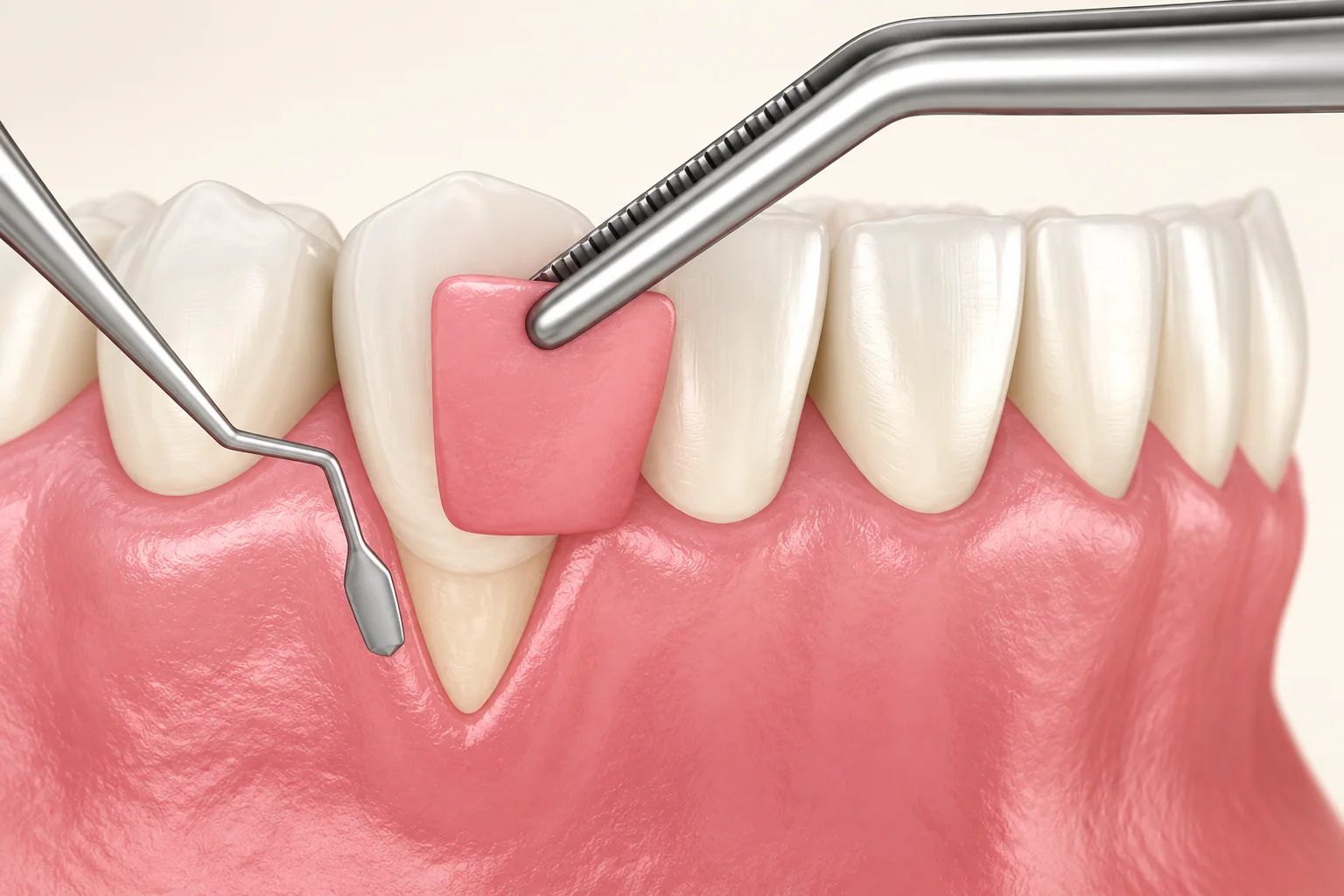
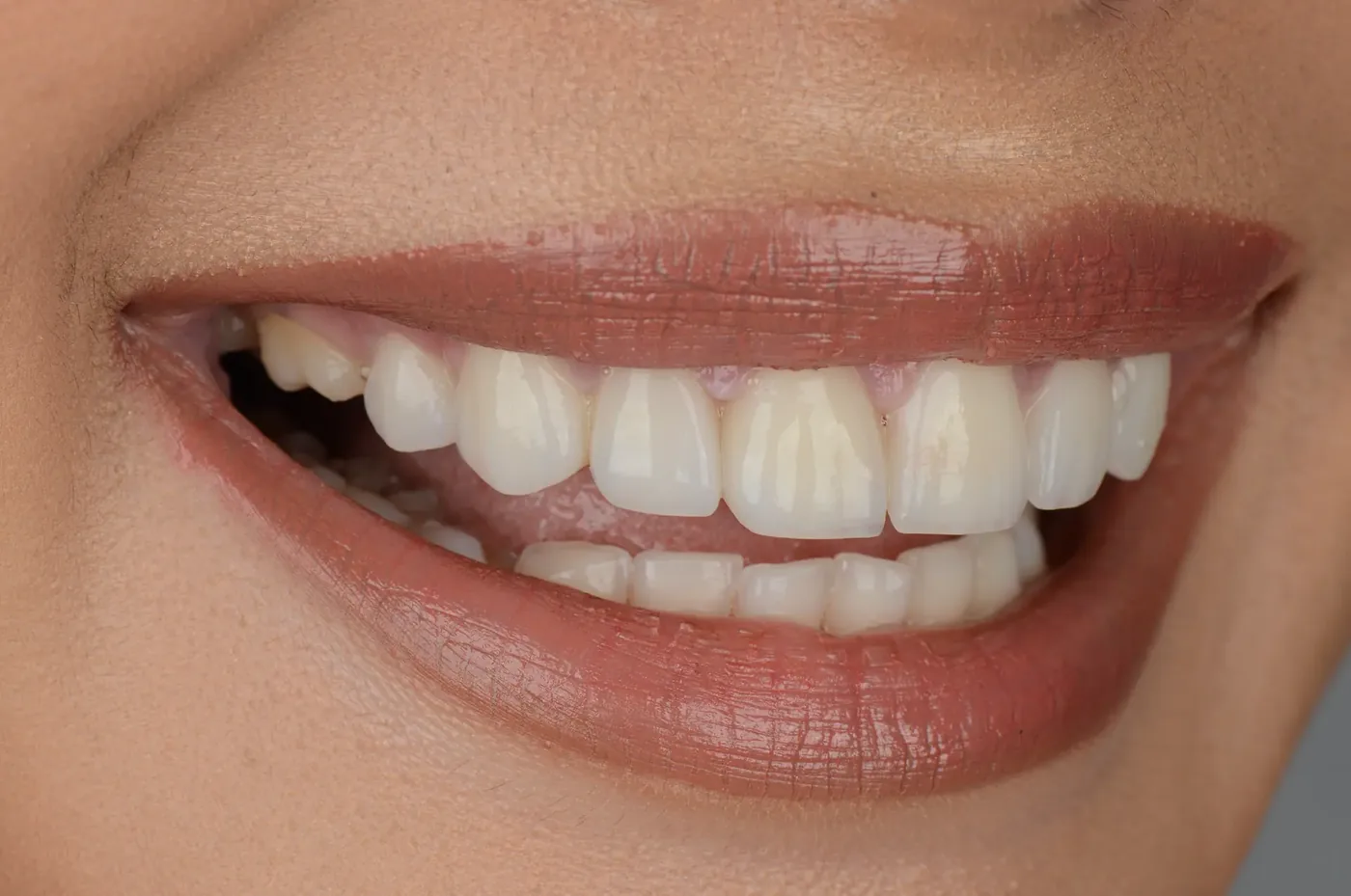
Where recession has exposed roots, gum grafting can cover them and thicken thin tissue; the options are described on the gum recession page. At the other end of the spectrum, when the concern is too much gum rather than too little, a gum lift reshapes excess tissue so a gummy smile shows the true length of the teeth.
Why gum health shapes everything else
Healthy gums are the ground that other dental work is built on. Implants placed into inflamed tissue or thinned bone are at higher risk; our guide to implants when you have bone loss explains why the periodontal picture is assessed first. Orthodontic tooth movement, veneers, crowns, and dentures all depend on a stable gum margin and bone. Treating gum disease is often the first chapter of a larger plan, not a detour from it.
Daily care that supports treatment
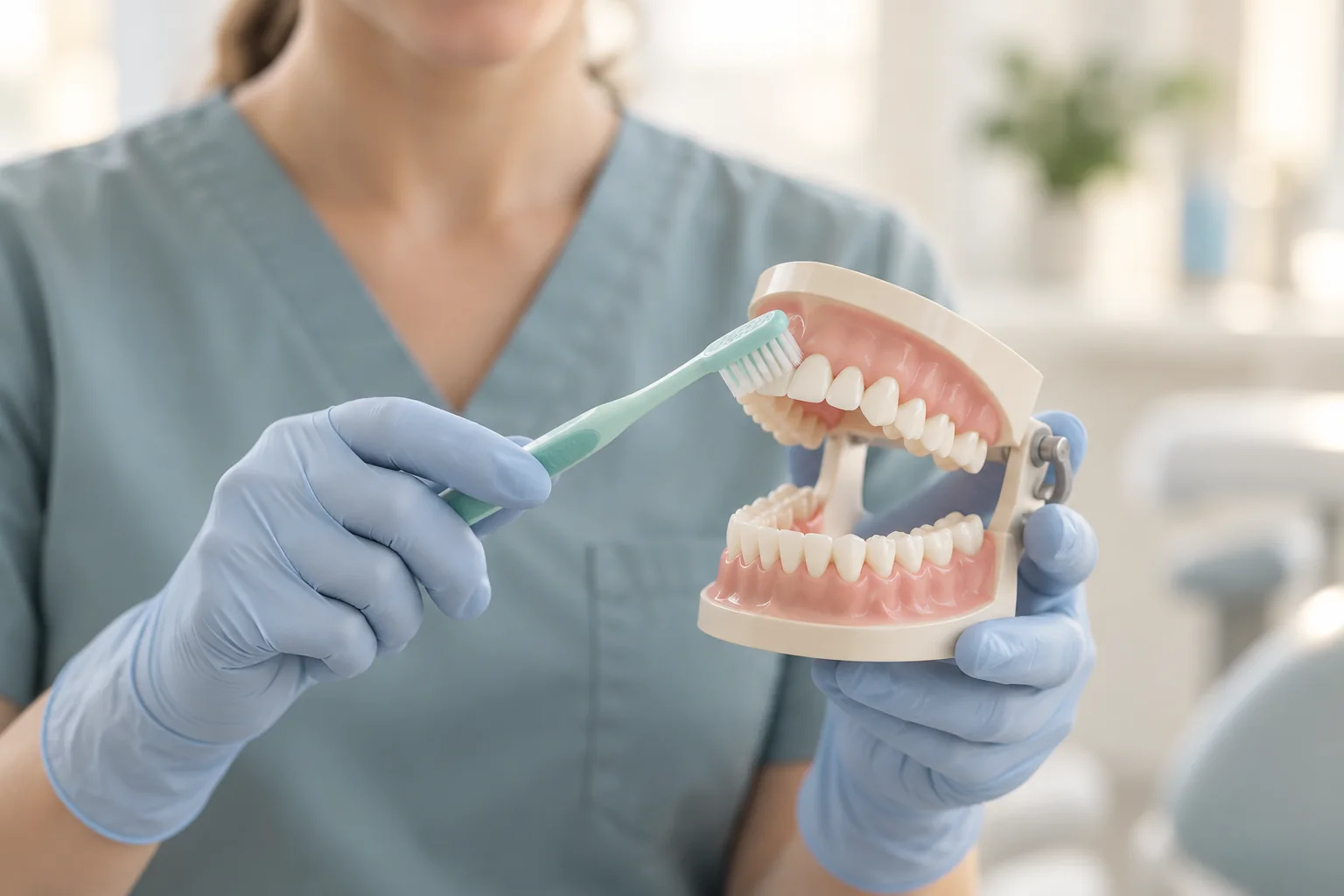
Office visits remove what has built up; what you do daily decides how fast it returns. Brush twice a day with a soft brush angled toward the gumline, clean between every tooth once a day with floss or an interdental brush sized to the space, and ask us to show you the technique. If you smoke, quitting is the single most effective thing you can do for your gums; if you have diabetes, good blood-sugar control helps them too.
Gingivitis can be fully reversed. Periodontitis can be stopped and kept stable, but lost bone does not grow back on its own, so it is managed with ongoing maintenance rather than cured.
Does gum disease affect my general health?
Research links periodontitis with diabetes control, heart disease, and complications in pregnancy. Treating gum disease is part of looking after your overall health, not separate from it.
Will I need a periodontist?
Many patients are treated fully in our office. Deep pockets that do not respond, significant bone loss, or complex grafting may call for a periodontist, and we will say so plainly if that is the case.
How often will I need to come in?
After treatment, usually every three to four months at first. The interval changes as your gums show how stable they are.
If your gums bleed, your teeth look longer, or you have simply never had your gums measured, request a periodontal evaluation at our Cleburne office. We will chart, explain, and show you exactly where your gums stand before anything is decided.