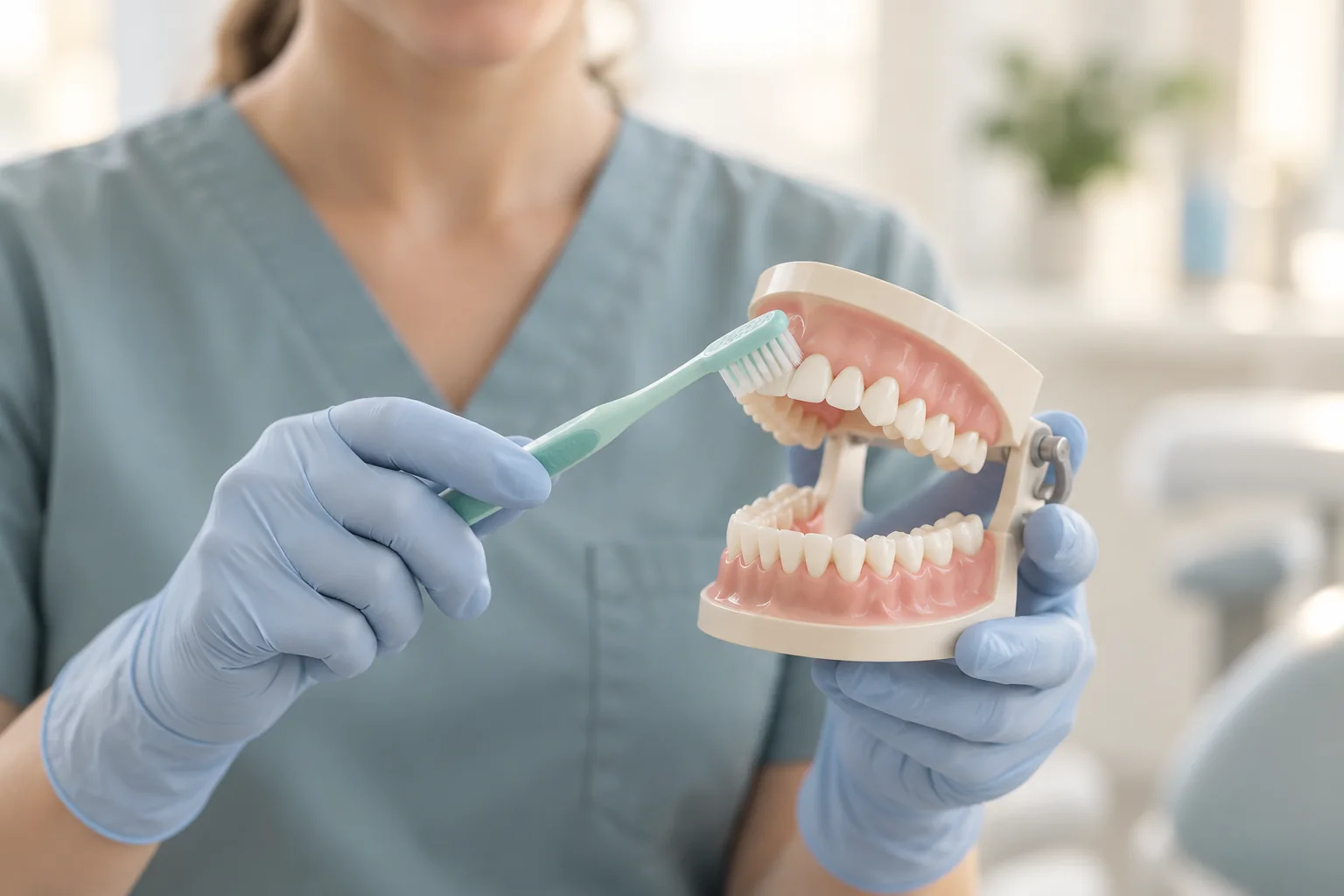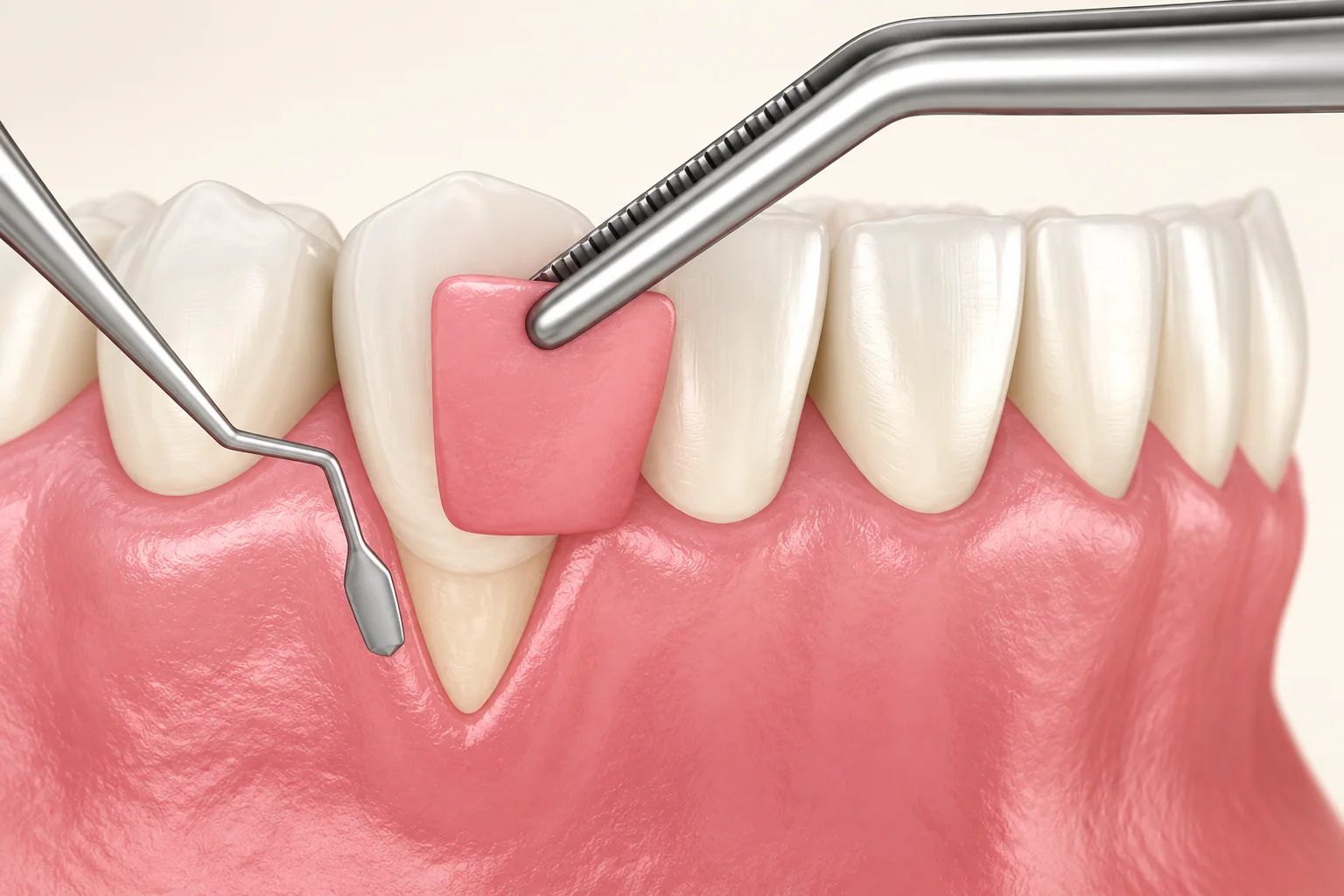

“Scaling and root planing” is the treatment most people know as a “deep cleaning.” It is a non-surgical way to treat periodontitis, the form of gum disease that has started to damage the bone and ligament holding your teeth in place. The hygienist or dentist removes hardened deposits (tartar) and bacteria from the tooth surfaces below the gumline, then smooths the root so the gum can heal snugly against it again.
The nickname is friendly, but it can mislead. A deep cleaning is not a more thorough version of your regular cleaning; it is treatment for a diagnosed disease. At Cleburne Dental, the recommendation follows measurable findings in your mouth, never simply how long it has been since your last visit. If you want the plain side-by-side comparison of the two kinds of visit, read why a routine cleaning and periodontal treatment are different.
This page covers the treatment itself: what the exam must show first, what happens in the chair, how healing feels, and why the follow-up visit is part of the care rather than an optional extra.
Who scaling and root planing is for
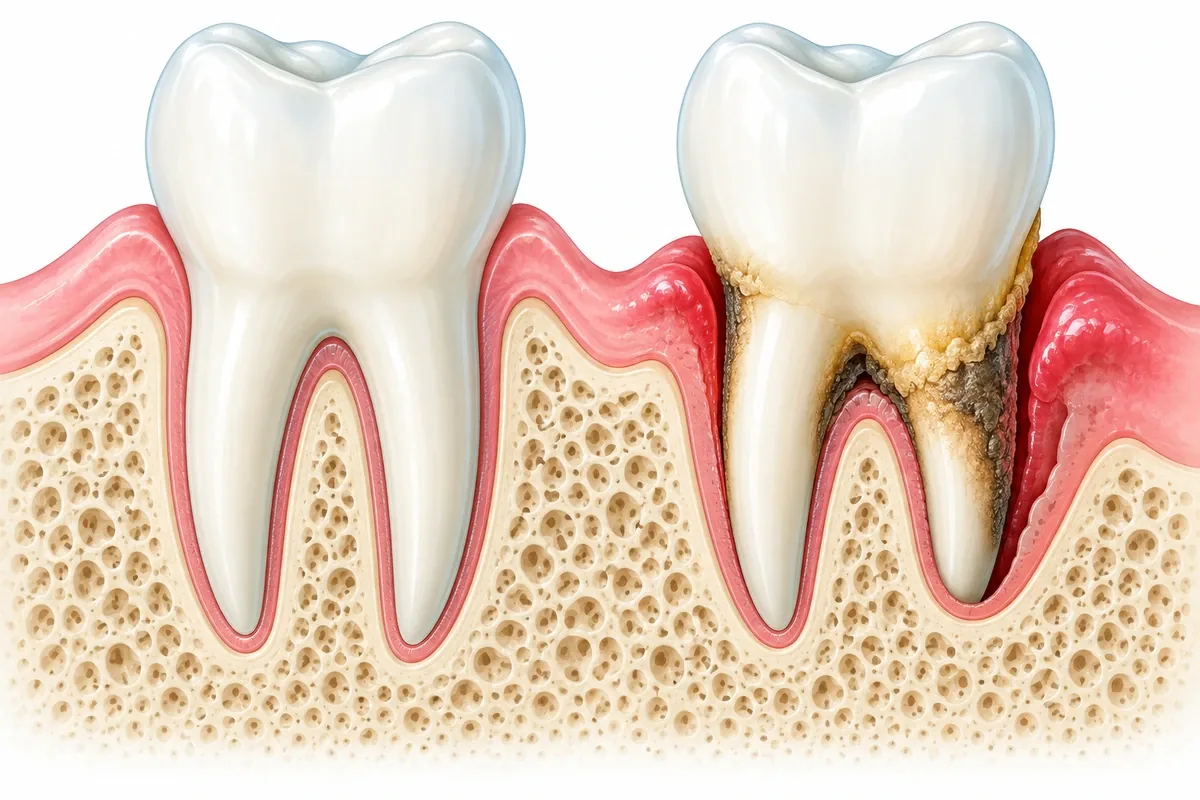
Gum disease has two stages. Gingivitis is inflammation of the gum alone. The gums look red, feel puffy, and bleed when you brush, but nothing has been lost. It is reversible with a routine professional cleaning and better daily cleaning at home.
Periodontitis is the next stage. Bacteria below the gumline provoke the body into breaking down the fibers and bone that anchor the tooth. The gum detaches and forms a “pocket,” and tartar collects inside it where no toothbrush or floss can reach. Because this usually causes no pain, many people have no idea it is happening until a dentist measures it.
Scaling and root planing is for teeth with those deeper pockets. Signs worth asking about include gums that bleed easily or look dark red, a persistent bad taste, gums pulling away from the teeth, new gaps between teeth, or a tooth that feels slightly loose. If bleeding is your main concern, start with why gums bleed and what an evaluation can clarify; for the wider picture, see our overview of gum disease and periodontal care.
What the examination should establish first
A deep cleaning should never be recommended on a glance. Before treatment, you should have a full periodontal examination, which includes:
- Pocket measurements. A slim probe measures the gum pocket at several points around every tooth. Healthy pockets are shallow, about one to three millimeters. Deeper pockets, especially those that bleed when probed, point to active disease.
- Bleeding and recession. Each site is noted for bleeding and for how far the gum margin has moved down the root. Gum recession and pockets together show how much attachment has been lost.
- Tooth mobility and bite. Loose teeth and heavy bite forces can speed bone loss.
- X-rays. Dental X-rays show bone levels between the teeth and reveal tartar below the gumline.
- Your health history. Diabetes, smoking, pregnancy, dry mouth, and certain medications all change how gums respond.
Ask to see your chart. Dr. Zohdi can show you which teeth are healthy, which have pockets, and where the X-rays show bone changes. If the chart shows only shallow pockets, a regular cleaning is the right service, and you should expect to be told that.
What happens during treatment
Scaling and root planing is done in the dental chair, awake, with the area thoroughly numbed. A typical visit goes like this:
- Numbing. A topical gel is applied first, then local anesthetic is given for the section of the mouth being treated. The goal is for you to feel pressure and vibration but no pain. Tell us if any spot is still sensitive and we will stop and add more.
- Scaling. Using an ultrasonic instrument that vibrates and sprays water, plus fine hand instruments, the hygienist removes tartar and plaque from the tooth above and below the gumline, all the way to the bottom of each pocket.
- Root planing. The exposed root surfaces are smoothed so bacteria have a harder time re-attaching and the gum can heal against a clean surface.
- Rinsing and, in some cases, medication. The pockets are flushed. For stubborn sites, a small amount of antibiotic may be placed directly into the pocket.
- Home-care coaching. The hygienist shows you how to clean the treated areas while they heal.
Because numbing one side of the mouth at a time is more comfortable, treatment is usually divided into sections: often two visits covering half the mouth each, or four shorter visits by quadrant.
If dental visits make you anxious, say so when you book. A clear plan, an agreed hand signal to pause, breaks when you need them, and a steady pace make a real difference; our page on feeling nervous about dental treatment explains our approach.
Recovery and aftercare
Most people are back to normal activity the same day. Here is what to expect:
- Numbness lasts a few hours. Avoid chewing on that side until feeling returns.
- Tenderness in the gums is common for two to three days. An over-the-counter pain reliever you already use safely is usually enough.
- Cold sensitivity can appear for a few weeks because root surfaces once covered by swollen gum or tartar are now exposed. A toothpaste for sensitive teeth helps; see our guide to sensitive teeth if it lingers.
- Appearance changes. As inflammation goes down, gums shrink to their healthy size. Teeth may look a little longer and small dark triangles may appear between them. This is the true shape of your gums, not damage from the cleaning.
- Minor bleeding when brushing is normal for several days and should steadily decrease.
Keep cleaning the treated areas gently but thoroughly. Soft foods for a day or two, warm salt-water rinses, and avoiding tobacco all help. Call the office at (817) 641-6261 if swelling is getting bigger, you have a fever, pain gets worse after day three instead of better, or bleeding does not stop with gentle pressure.
The follow-up is part of the treatment
Several weeks after the last section is treated, the gums are measured again. This reevaluation tells us whether the disease is under control:
- Pockets have shrunk and bleeding has stopped. The gums have reattached. You move to periodontal maintenance, closer monitoring and cleaning below the gumline that keeps the disease from returning.
- Most sites improved, but a few are still deep. Those sites may be re-treated, treated with a locally placed antibiotic, or, where it fits, treated with a dental laser. Our laser dentistry page explains where a laser helps and where it does not.
- Deep pockets or bone loss remain in several areas. Dr. Zohdi may recommend a periodontist (a dentist with advanced training in gum treatment), for surgical treatment that reaches areas a non-surgical cleaning cannot.
Removing the deposits once does not end the disease. Daily plaque control and regular maintenance keep the result.
Results are best when the factors that fuel gum disease are addressed too. Smoking slows healing and hides bleeding, uncontrolled diabetes keeps gums inflamed, and dry mouth or heavy grinding add strain. Tell us about these, but do not stop or change a prescribed medication on your own.
Cost factors
Fees depend on how many sections of the mouth are treated, how many teeth are affected in each, whether a locally applied medication is used, and whether the reevaluation leads to further treatment. Dental plans usually classify scaling and root planing as periodontal therapy rather than a preventive cleaning, so coverage and frequency rules differ. We give you a written estimate before treatment begins, and our dental insurance page explains how we handle benefits.
Risks and alternatives
Scaling and root planing is low-risk. The main downsides are temporary soreness, cold sensitivity, and the changed look of gums that are no longer swollen. Infection afterward is rare.
The alternatives are limited. A routine cleaning does not reach the bottom of deep pockets, so it leaves the disease untreated. Doing nothing lets bone loss continue, and lost bone does not grow back on its own; our guide to dental implants when you have bone loss explains why protecting bone now matters later. For advanced disease, periodontal surgery is the step beyond what this treatment can do.
Sources and further reading
- American Academy of Periodontology: Nonsurgical treatment
- NIDCR: Gum disease
- ADA MouthHealthy: Gum disease
General information, not a diagnosis. Read how we create and review our dental guides.