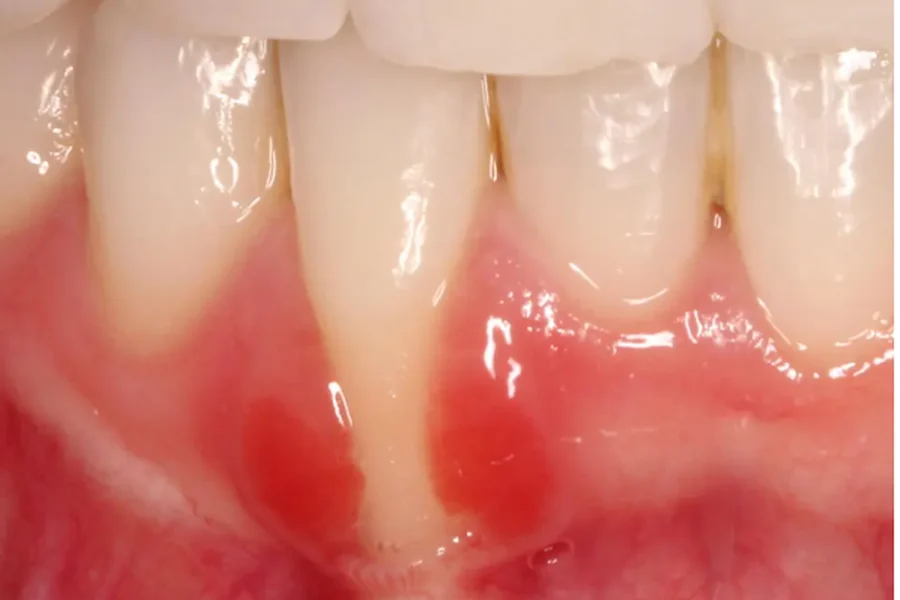
Gum recession means the gum margin has moved down the tooth, exposing part of the root that used to be covered. You might notice a tooth that looks longer than its neighbors, a notch or darker band near the gumline, or a sharp twinge when something cold touches the area. Sometimes a hygienist points it out before you have noticed anything at all.
Recession is common and it is not an emergency, but it should not be dismissed either. Root surfaces are softer than enamel, so once they are exposed they are more vulnerable to sensitivity, decay, and wear. And because the gum does not grow back on its own, the questions that matter are what caused it, whether it is still moving, and how best to protect the tooth. At Cleburne Dental we answer those questions before anyone talks about surgery.
This page explains the causes, how recession is assessed, the everyday steps that help, and what gum grafting involves when rebuilding the tissue is the right call.
Recession is a finding, not a single disease
Several different things can pull the gum margin down the root, and more than one is often at work:
- Periodontal disease. Inflammation below the gumline destroys the bone and fibers that support the gum, so the tissue follows the bone downward. This is the cause that must be ruled out first; see our overview of gum disease and periodontal care.
- Aggressive brushing. A stiff brush, heavy pressure, or a hard sawing motion wears away gum and root alike, often on the canines and premolars where the brush hits hardest.
- Thin gum tissue and anatomy. Some people inherit thin, delicate gums or teeth that sit toward the outside of the jaw with very little bone over the root. These areas recede easily.
- Tooth position. Crowded or tilted teeth, and sometimes teeth moved quickly during orthodontics, can end up with roots partly outside the bony housing.
- Clenching and grinding. Heavy bite forces can contribute to notches at the gumline and stress on thin tissue. Our page on bruxism explains how to recognize it.
- Tobacco and oral piercings, which irritate or weaken the gum margin over time.
The cause changes the plan. Recession from brushing needs a technique change and monitoring; recession from periodontal disease needs the disease treated first; recession over a tooth with almost no bone may need a graft to stop it progressing.
Why exposed roots matter
A receded area is more than a cosmetic concern:
- Sensitivity. Root surfaces contain tiny channels that run toward the nerve, so cold, sweets, and brushing can trigger a sharp, short pain. See our guide to sensitive teeth for other causes worth ruling out.
- Root decay. Root surface is softer than enamel and decays faster, especially in a dry mouth.
- Wear and notching. Exposed roots wear down under brushing and bite forces.
- Appearance. Longer-looking teeth and dark triangles between them change the balance of a smile.
- Progression. Thin, receded tissue is more likely to keep receding if the cause is still present.
How recession is assessed
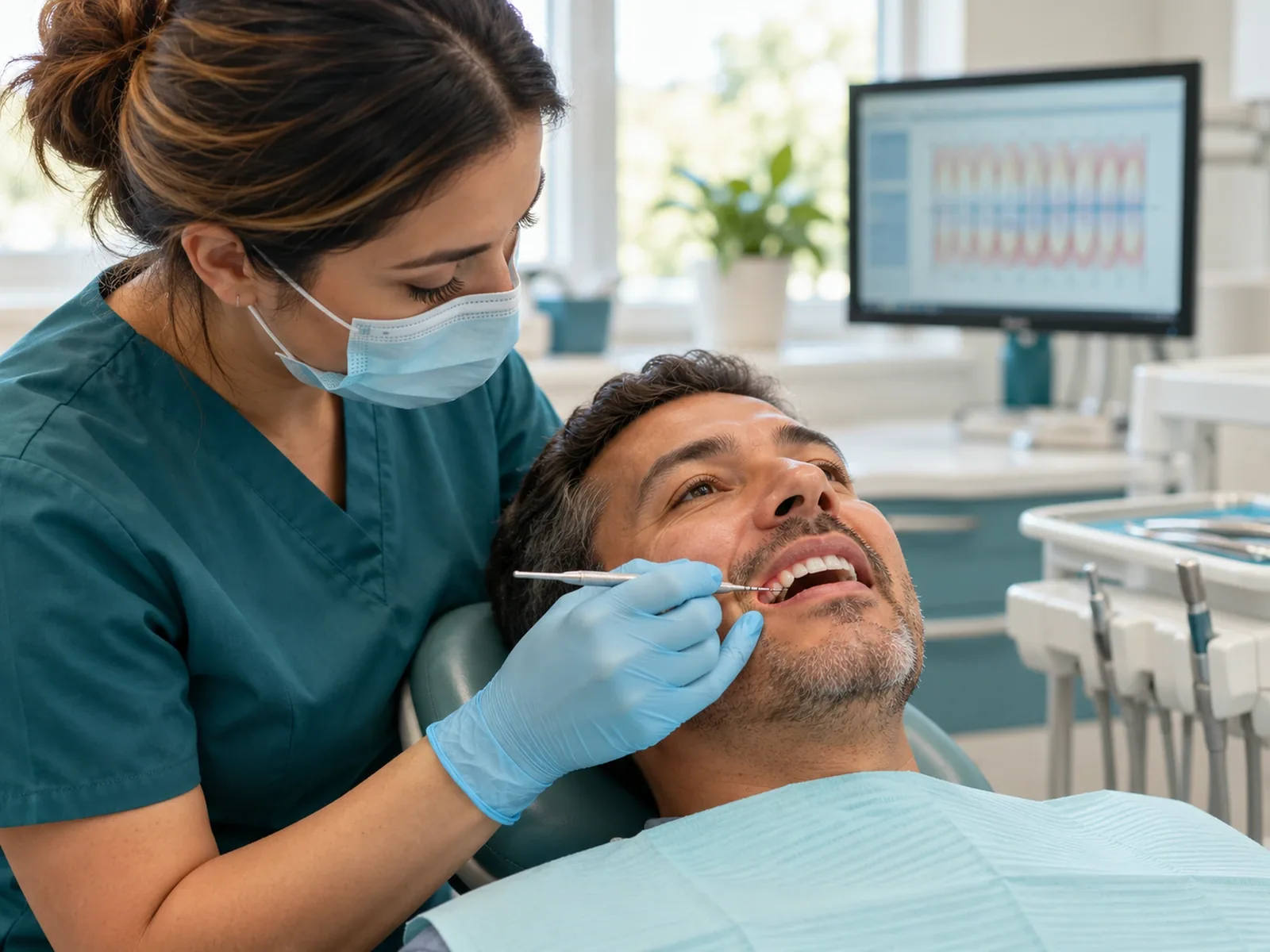
At your visit we measure how far the gum has moved, how deep the pocket is at that site, how thick the remaining gum is, and whether a band of firm, attached gum remains below the recession. We check bone on X-rays, look at the root for wear or decay, review your bite, and ask about brushing, grinding, and smoking.
Photographs and measurements taken now become the baseline for later comparison. Recession that is unchanged over a year or two and causing no symptoms can usually be protected and watched. Recession that is progressing, sensitive, decaying, or sitting on very thin tissue is where treatment is discussed.
Begin with the factors you can address
Most patients start here, whether or not a graft is eventually planned:
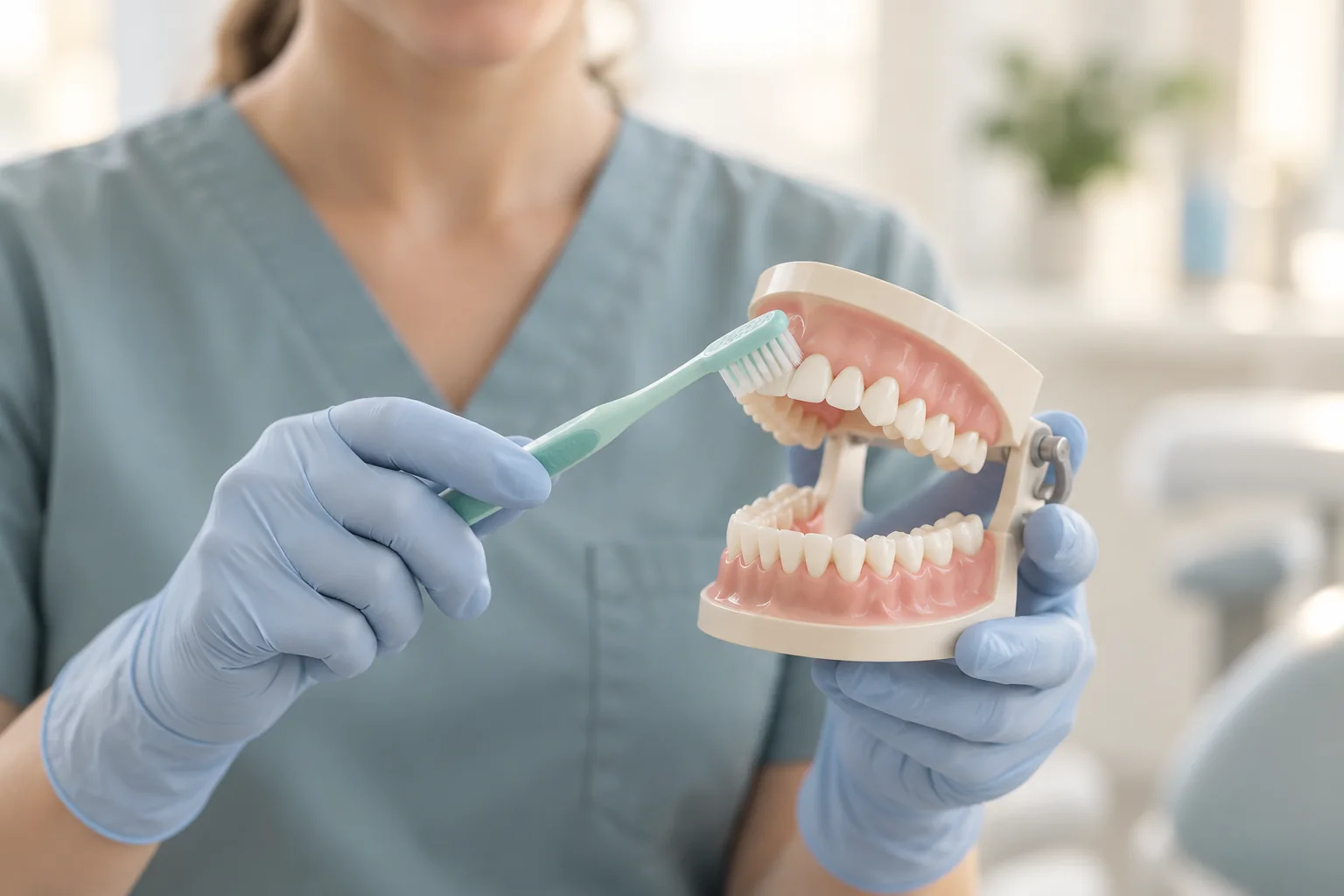
- Brushing technique. A soft or extra-soft brush, light pressure, and small circular or sweeping motions angled toward the gumline. An electric brush with a pressure sensor is helpful if you tend to scrub.
- Treat inflammation. If periodontal disease is present, scaling and root planing and ongoing periodontal maintenance come first; grafting into inflamed tissue does not hold.
- Protect the root. Fluoride toothpaste, a prescription-strength fluoride paste for high-risk areas, and in-office desensitizing treatments reduce sensitivity and the risk of root decay.
- Reduce bite stress. A night guard may be recommended if grinding is contributing.
- Repair damaged root surface. A worn notch or an area of decay can be restored with tooth-colored bonding, which also covers the sensitive surface.
When gum grafting is discussed
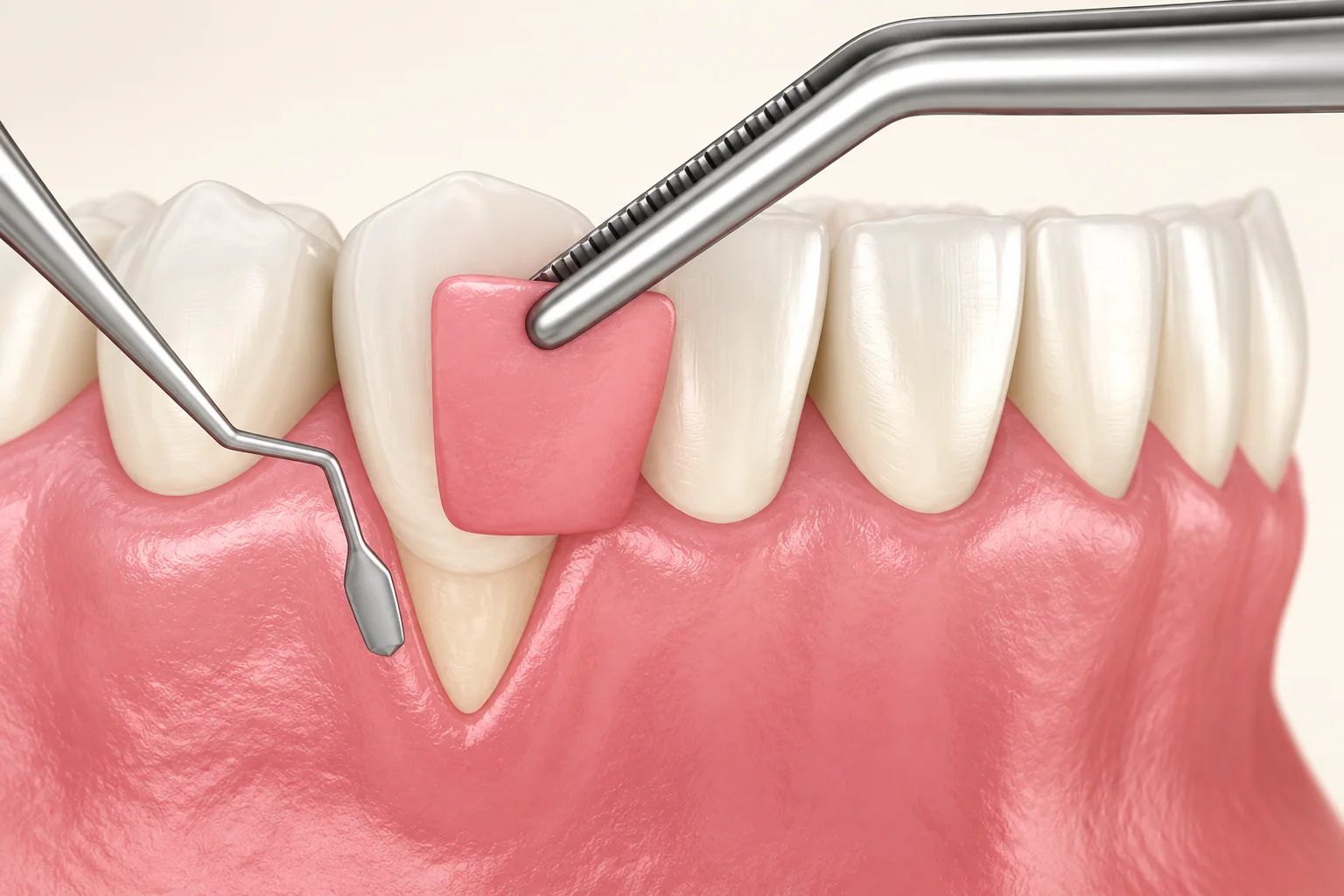
Gum grafting rebuilds lost tissue by moving a small piece of gum from another part of your mouth to the receded site. It can cover the exposed root, thicken thin gum so it stops receding, reduce sensitivity, and improve appearance. Not every site can be fully covered; coverage depends on how much bone remains between the teeth, and Dr. Zohdi will tell you what is realistic for each tooth before you decide.
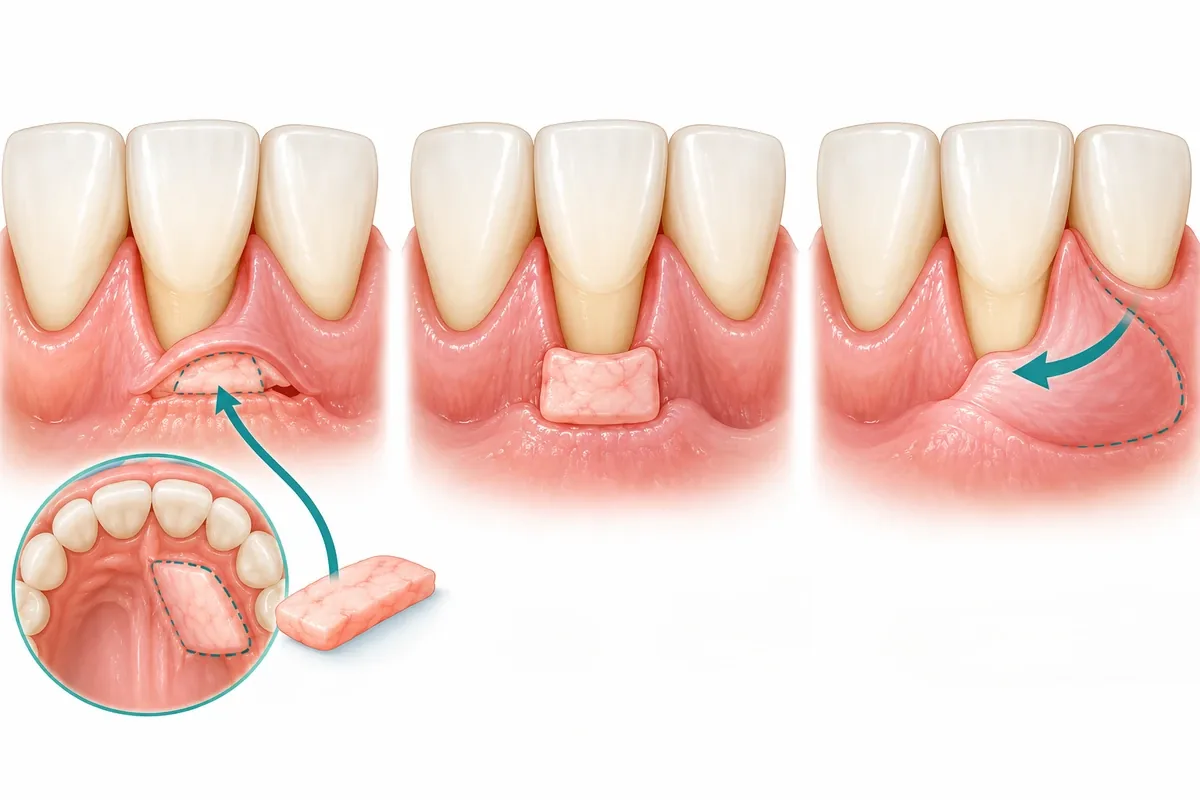
There are three common approaches:
| Graft type | Where the tissue comes from | When it is typically chosen |
|---|---|---|
| Connective tissue graft | Tissue from beneath the surface of the palate, placed under the existing gum | The most common choice for covering exposed roots, especially visible front teeth |
| Free gingival graft | A thin layer of tissue taken directly from the palate surface | When the main goal is to thicken thin gum and stop further recession rather than cover the root |
| Pedicle graft | Gum next to the receded tooth, partly cut and rotated over the root while still attached | When there is plenty of healthy gum beside the site; it heals well because its blood supply is never interrupted |
Donor-free options using processed tissue material also exist and avoid a second surgical site in the palate; whether one suits you depends on the site and your preferences.
What happens at a grafting visit
- Planning. The site is measured and photographed, inflammation is controlled first, and the graft type is chosen.
- Local anesthesia. Both the recipient site and the donor area are numbed. You are awake and should feel pressure but no pain. Tell us if you want a break at any point.
- Preparing the site. The root surface is cleaned and smoothed, and the gum at the site is gently loosened to make room for the new tissue.
- Placing the graft. The tissue is positioned over the root and secured with fine sutures. A protective dressing may be placed over the palate.
- Aftercare instructions. You leave with written instructions and a follow-up appointment, usually within one to two weeks.
Some grafting cases are best handled by a periodontist (a dentist with advanced training in gum treatment). If your situation is one of them, we will say so and coordinate the referral and the follow-up care.
Recovery after a gum graft
Expect the area to be tender for several days, and the palate, if tissue was taken from there, to feel like a scrape from hot food. Soft, cool foods at first, no brushing directly on the graft until you are cleared, gentle rinsing as instructed, and no smoking are the main rules. Swelling settles within a week, sutures are removed or dissolve over one to two weeks, and the tissue matures and blends in color over the following months. Call the office at (817) 641-6261 if bleeding does not stop with gentle pressure, if swelling increases after the third day, or if the graft feels loose.
Cost factors
Cost depends on whether the plan is monitoring and protection, a bonded restoration, or a graft, and for grafts on the number of teeth, the graft type, and whether donor material is used. Dental plans sometimes cover grafting when it protects a tooth and treat it as cosmetic when it does not. We provide a written estimate first and can explain insurance and payment options.
Risks and alternatives
Grafting is well established, but like any surgery it carries some risk: donor-site soreness, swelling, a graft that does not fully take, incomplete root coverage, or a contour that needs minor refinement. Smoking and uncontrolled diabetes reduce success. The alternatives are to monitor and protect the area, restore a damaged root with bonding, or in some cases move the tooth with orthodontics so the root sits back within bone. Doing nothing is reasonable for stable, symptom-free recession, as long as it is actually being watched.
Sources and further reading
General information, not a diagnosis. Read how we create and review our dental guides.