A dental laser is a focused beam of light that can reshape, remove, or treat tissue with great precision. In the right procedures it means less bleeding, usually no stitches, and a quicker, more comfortable recovery than conventional surgery. At Cleburne Dental, Dr. Zohdi uses a laser for a defined set of gum and soft-tissue treatments where it offers a real advantage.
It is also worth saying what a laser is not: a replacement for every drill, scalpel, or cleaning instrument, or a way to make all treatment pain-free. This page explains how a dental laser works, what we use it for, where it does not help, and what to expect.
What a dental laser does
Different wavelengths of laser light are absorbed by different things: water, blood pigment, or the mineral in teeth. A soft-tissue laser is absorbed by the water and pigment in gums, so it removes a very thin layer of tissue exactly where it is aimed while sealing the small blood vessels around it. That is why laser gum procedures bleed so little and usually need no stitches.
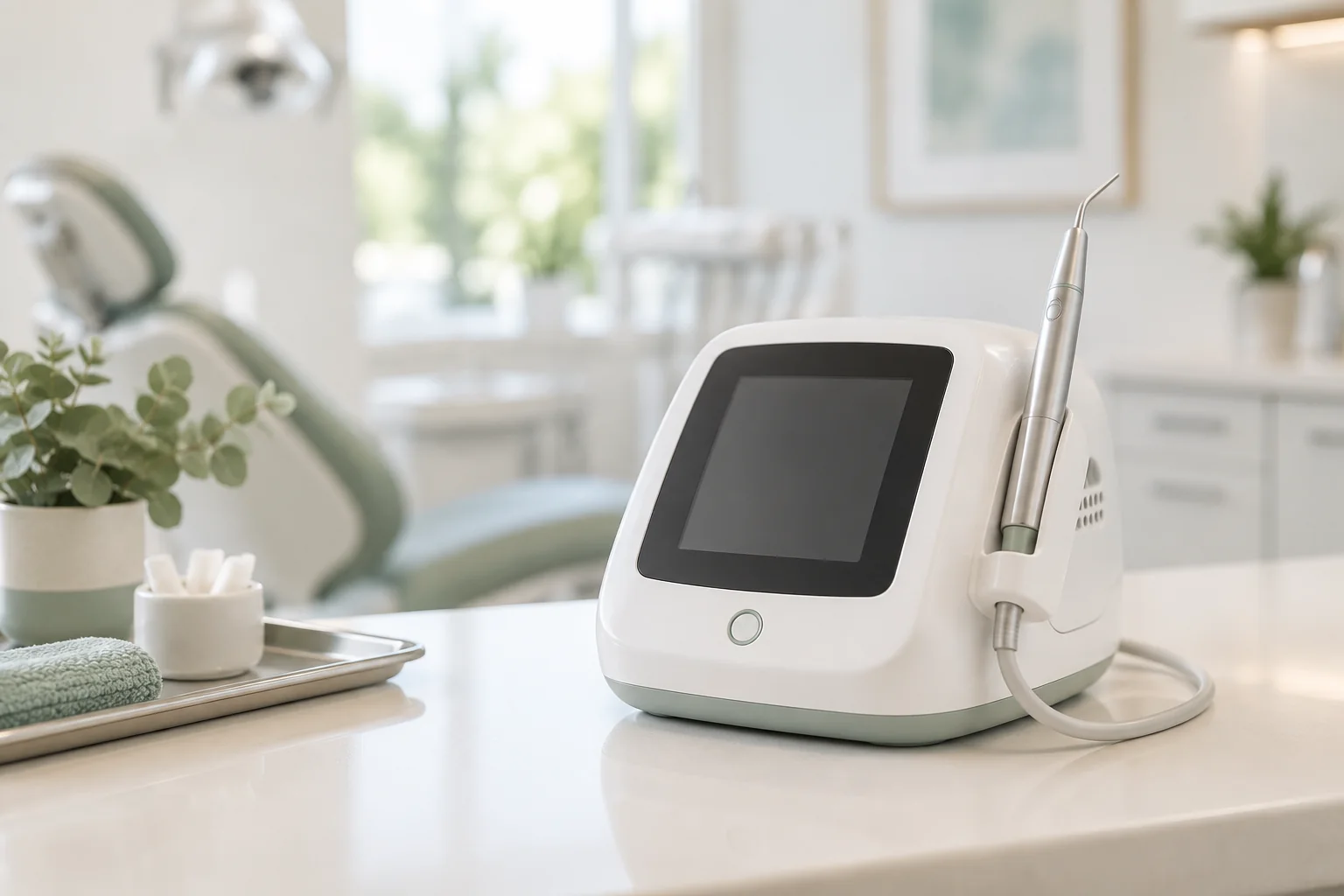
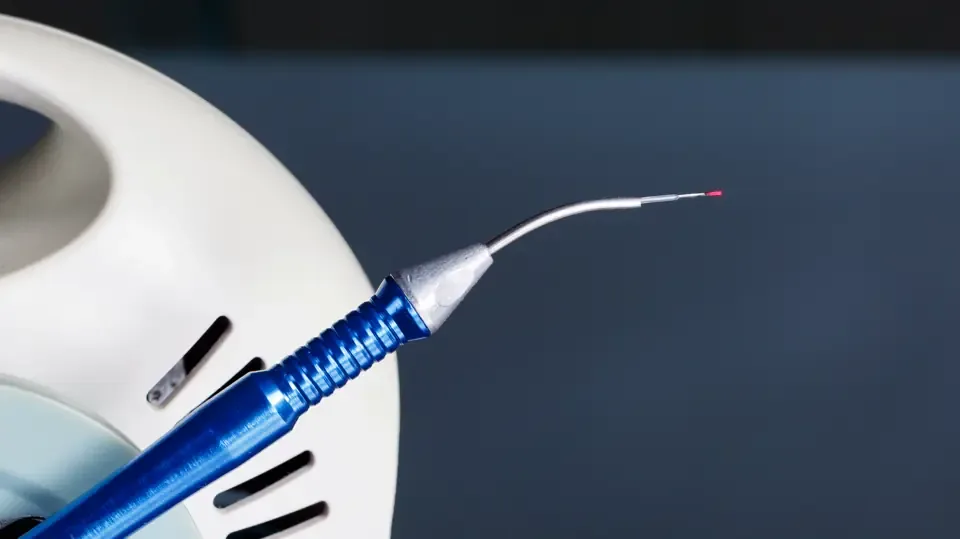
The laser we use is a LightWalker, which combines two wavelengths for soft- and hard-tissue work and for low-level light therapy that does not cut at all. Because the beam affects only the tissue it touches, healthy tissue nearby is largely left alone.
What we use the laser for at Cleburne Dental
Gum contouring and gum lifts
When the gums cover too much of the teeth or sit at uneven heights, the smile can look short or lopsided even when the teeth are fine. A laser gum lift reshapes the gumline to a more even, balanced position without a scalpel or stitches. Most people are back to normal eating within a few days.
Gum disease treatment
Gum disease is driven by bacteria living below the gumline. The foundation of treatment is still scaling and root planing, which physically removes the hardened deposits from the root surfaces. The laser is used alongside that cleaning to reduce bacteria in the pocket and remove inflamed tissue lining it, with the aim of helping the gum reattach and heal. If you have been told you need gum surgery, ask whether laser-assisted treatment fits your case; it does not suit every pattern of bone loss. See our gum care overview for how periodontal treatment is staged.
Frenectomies for tongue-tie and lip-tie
A frenum is the small band of tissue that connects the lip or tongue to the gum. When it is too short or tight, it can restrict tongue movement, interfere with feeding or speech, or pull the gum away from the front teeth. A laser frenectomy releases that band in a few minutes with little bleeding and no stitches. It is a common treatment for infants and children with tongue-tie or lip-tie, and our children's dentistry page explains how we approach young patients.
Cold sores and canker sores
A short, non-cutting laser treatment can ease the pain of a cold sore or canker sore and may help it heal faster than it would on its own. It works best when the sore is treated early, so call when you first feel one coming on.
Finding early decay
A laser-based detection device reads how tooth structure responds to light and can flag early decay in the grooves of back teeth before it shows clearly on an X-ray. It is a screening aid confirmed by examination and imaging; catching decay early often means a smaller filling or none at all.
Easing soreness after procedures
At a low, non-cutting setting, the laser can be used on tissue after a procedure to reduce inflammation and encourage healing, an approach called photobiomodulation. We may use it after a gum lift or periodontal treatment to make the first few days more comfortable.
Where a laser helps and where it does not
| A laser is a good fit for | A laser does not |
|---|---|
| Reshaping or removing small amounts of gum tissue | Remove old crowns, metal fillings, or most old composite |
| Releasing a tight frenum | Replace the physical cleaning of root surfaces in gum disease |
| Reducing bacteria in a gum pocket alongside cleaning | Treat every pattern of gum disease or bone loss |
| Treating cold sores and canker sores | Make every procedure anesthetic-free |
In some soft-tissue procedures the laser needs less local anesthetic than a scalpel would, and a few small ones can be done with only a numbing gel. Dr. Zohdi will tell you what to expect for your procedure, and local anesthetic is always available if you want it.
What a laser procedure feels like
Everyone in the room wears protective glasses. You may hear a soft popping sound and notice faint warmth or a slight smell as tissue is treated. There is no vibration and little pressure, and gum procedures are often finished in minutes. You can raise a hand at any time to pause.
Recovery after a soft-tissue laser procedure
Because the laser seals as it works, bleeding is minimal and stitches are rarely needed. Expect mild tenderness for a few days, and possibly a whitish or grayish film over the treated area, which is normal healing tissue and not infection. Eat soft, cool foods at first, avoid spicy or crunchy foods for a day or two, and keep the area clean as instructed. Call (817) 641-6261 if you have bleeding that does not stop with gentle pressure, swelling that is increasing, or pain that is getting worse rather than better.
Is laser treatment right for you?
Most people who need gum reshaping, a frenectomy, or help with gum disease are candidates, and the laser is especially useful for children, anxious patients, and anyone who wants the shortest recovery. If you have a bleeding disorder or take blood thinners, tell us; the laser's sealing effect helps, but your care still needs coordinating with your physician. If visits make you nervous, our page on dental anxiety explains how we pace treatment.
Sources and further reading
General information, not a diagnosis. Read how we create and review our dental guides.