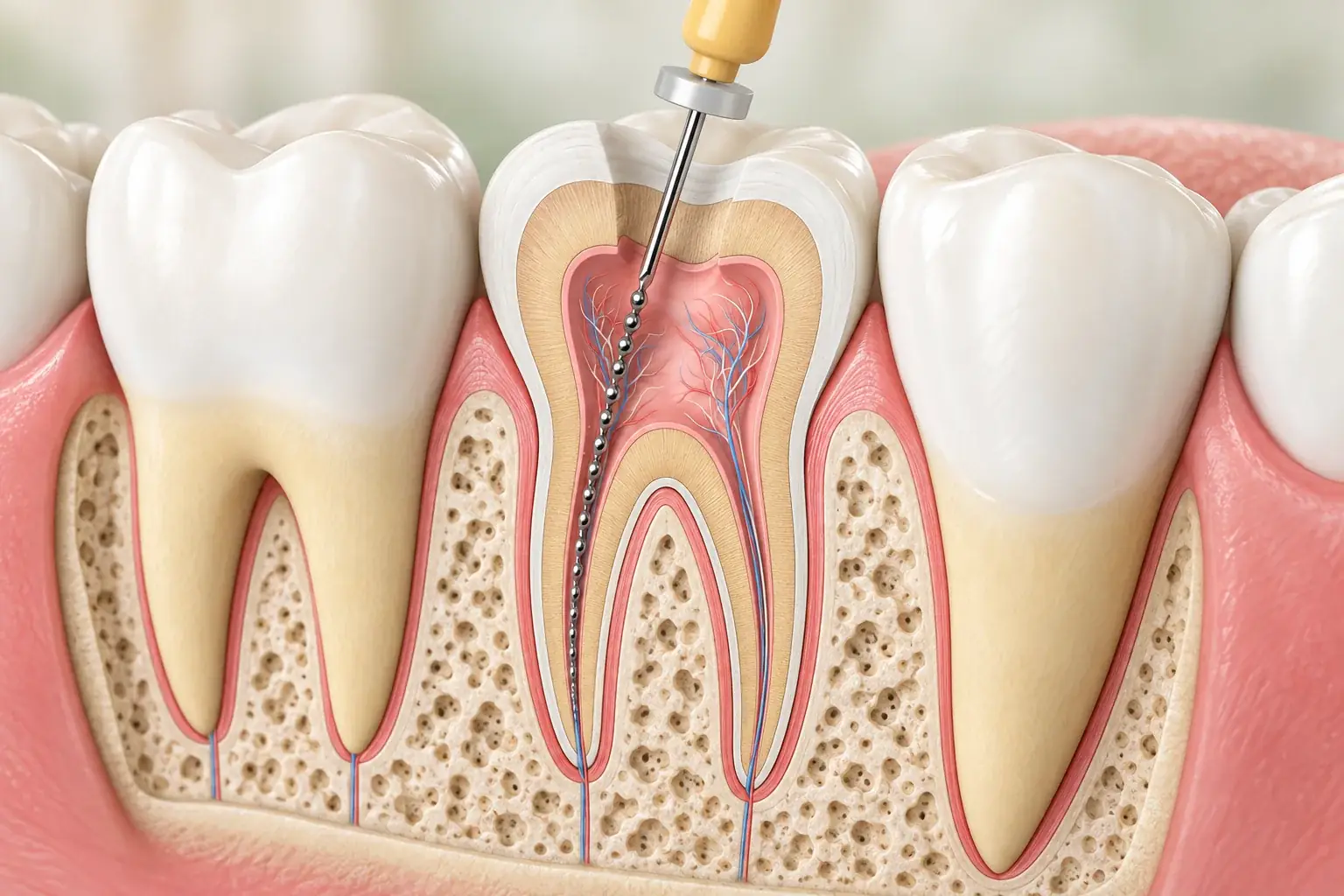

The anesthetic wears off, the tooth that kept you up last night is quiet, and you are left wondering what counts as normal over the next few days. For most people, recovery after a root canal is uneventful: some tenderness when biting, a tooth that feels slightly "different," and steady improvement. The procedure removed the inflamed or infected pulp that was causing the pain, so the ache that brought you in should ease quickly, often within a day or two.
For the bigger picture — when a root canal is recommended, what the visit involves and the alternatives — start with our root canal treatment overview.
But the root canal is one step, not the finish. The tissues around the root tip need time to settle, the temporary filling needs to be replaced by a durable restoration, and the tooth needs to be checked over time to confirm the bone is healing. This page walks through what to expect at each stage, how to protect the tooth in the meantime and which symptoms deserve a call rather than patience.
The first day
Your lip, tongue or cheek may stay numb for a few hours. Avoid chewing until the feeling returns so you do not bite yourself, and start with soft foods on the opposite side. Mild soreness as the anesthetic fades is expected; most people manage it with over-the-counter pain relief. If Dr. Zohdi recommended a specific plan for pain relief or prescribed medication, follow that plan rather than mixing in leftovers from home.
Brush and floss normally, including the treated tooth, but floss gently around a temporary filling and pull the floss out sideways rather than snapping it up, which can dislodge the material. There is no need to avoid cleaning the area; keeping the gum healthy helps it heal.
The next several days
Tenderness when you press on the tooth or bite is the most common complaint we hear from patients at our Cleburne office, and it is normal for roughly two to four days. The ligament that holds the tooth in the bone was irritated by the infection and by the treatment itself, and it takes time to calm down. The tooth may also feel slightly raised or "aware" for a week or so.
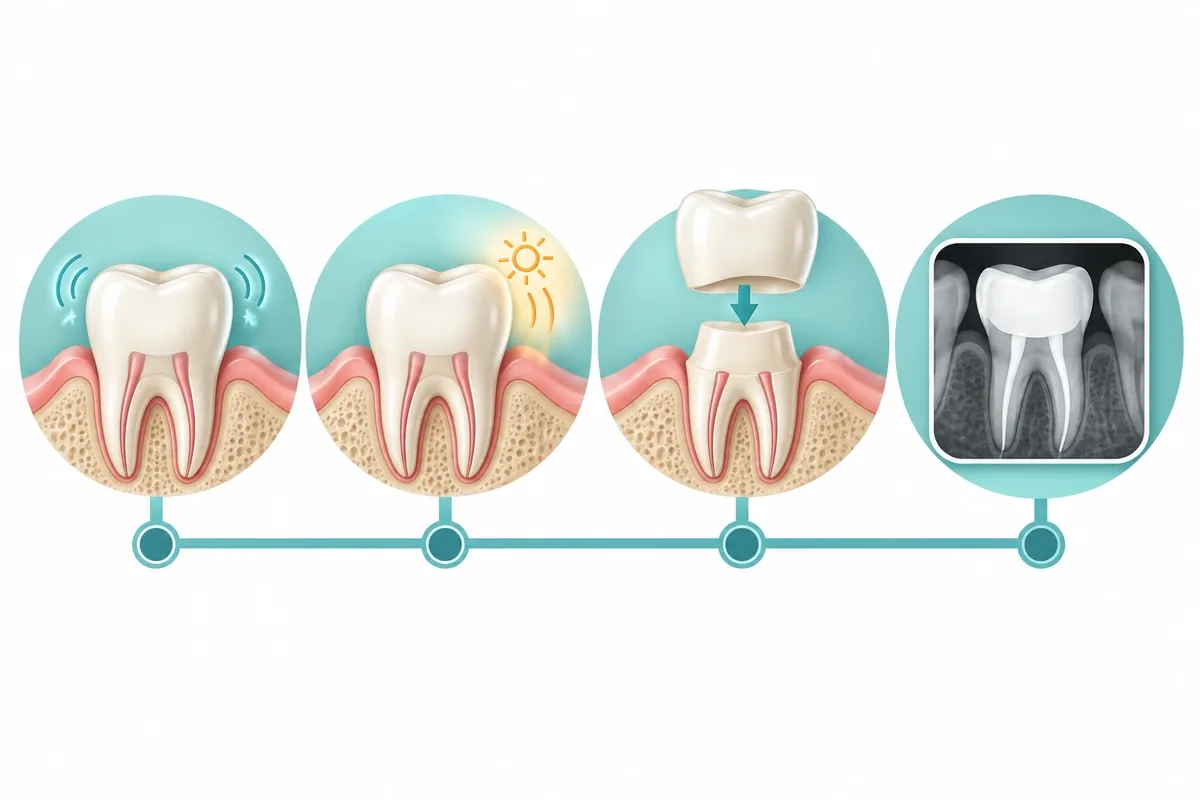
What you should see is a trend toward better. Pain that is improving day by day is healing. Pain that is getting worse after the second or third day, that wakes you at night or that starts to throb is not the expected pattern and warrants a call during office hours at (817) 641-6261.
Protect the tooth until it is restored
Unless a permanent filling was placed at the same visit, the opening in your tooth is sealed with a temporary material. It does an important job, keeping bacteria out of the freshly cleaned canals, but it is soft, wears down and is not meant for months of chewing. Until the final restoration is in place:
- Chew on the other side of your mouth.
- Avoid hard foods (ice, nuts, hard candy) and sticky foods (caramel, taffy, chewing gum) on that tooth.
- Do not test the tooth to see how it feels; a weakened back tooth can crack under a single hard bite.
- Call if the temporary feels loose, develops a hole, or comes out. A lost temporary is not an emergency in the middle of the night, but it should be replaced within a day or two so the canals are not exposed. Our page on a lost crown or filling explains what to do in the meantime.
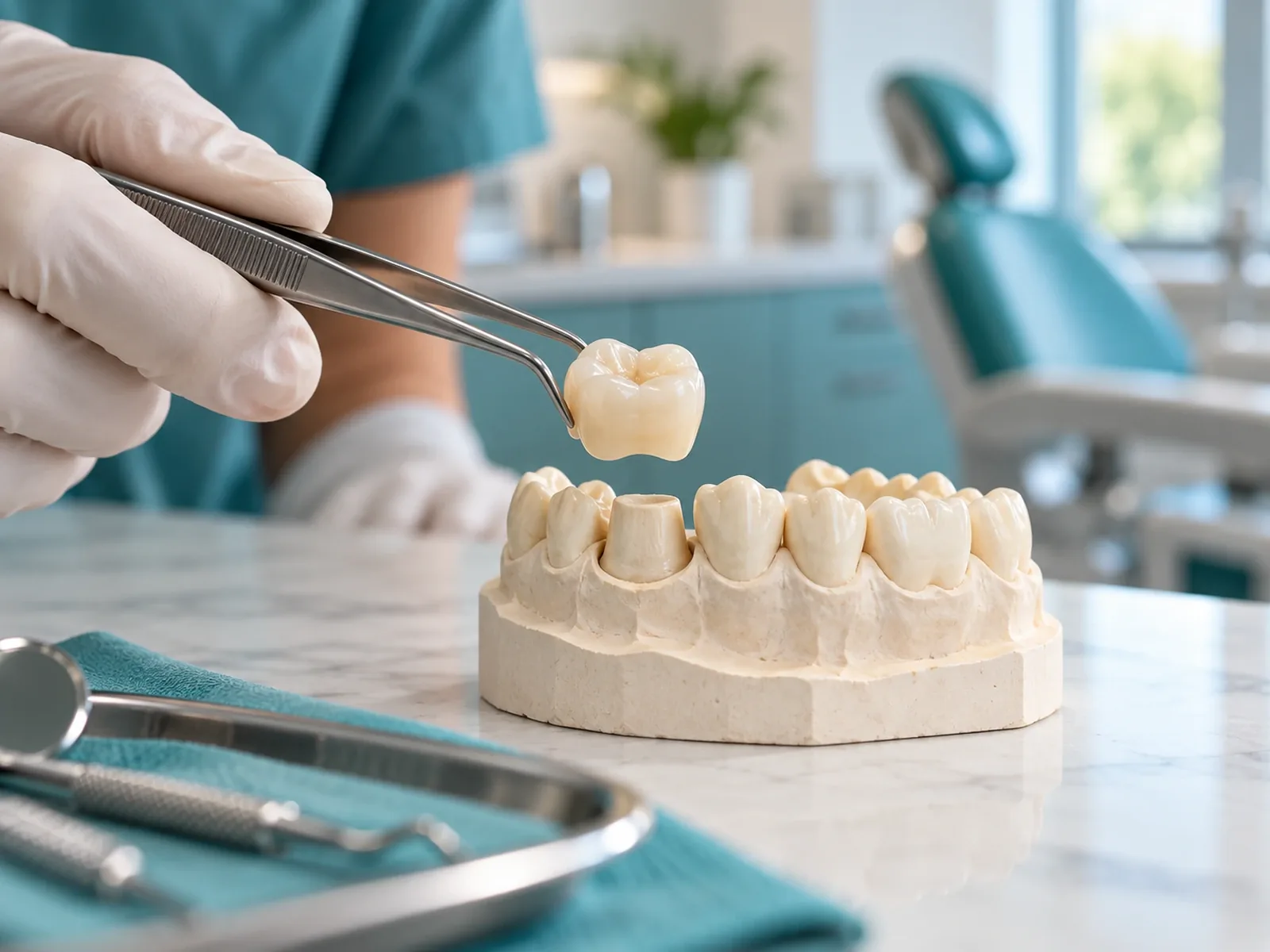
Before you leave the root canal appointment, make sure the next visit is scheduled. Back teeth in particular need a crown or other cusp-covering restoration, and the longer a treated tooth sits with only a temporary, the higher the chance of leakage or fracture that undoes the work. Our page on restoring a tooth after a root canal explains the options and why timing matters.
Pay attention to the bite
If the treated tooth is the first thing that touches when you close, the extra load keeps the ligament irritated and prolongs soreness. This is easy to fix with a small adjustment at the office, so mention it; do not try to "wear it in" by biting harder. A bite that suddenly changes days after treatment, or a tooth that becomes loose, is also worth reporting.
Medicines
Use pain relievers as directed on the label or as prescribed. If you were given antibiotics because of an active infection, finish the course as instructed even once you feel better, and do not start leftover antibiotics on your own for a flare-up; the right response to new symptoms is an exam, not an old bottle. If you take blood thinners, have diabetes or take several daily medications, let the office know so instructions can be tailored to you, and ask your pharmacist about any interaction you are unsure of.
When to call, and when to go to the ER
Call the office the same day for:
- pain that is increasing rather than easing after the first few days,
- visible swelling of the gum or face near the tooth,
- a pimple-like bump on the gum, drainage or a bad taste,
- a return of the original symptoms (throbbing, heat sensitivity, pain lying down),
- a temporary filling that is lost or a piece of tooth that breaks off, or
- a bite that feels high or a tooth that feels loose.
Go to the emergency room or call 911 if you have trouble breathing or swallowing, swelling that is spreading quickly toward the eye or down the neck, a high fever with facial swelling, or uncontrolled bleeding. Those are medical emergencies and should not wait for a dental callback. Our pages on facial swelling with dental pain and after-hours dental problems explain how to tell the difference.
Why follow-up matters even when the tooth feels fine
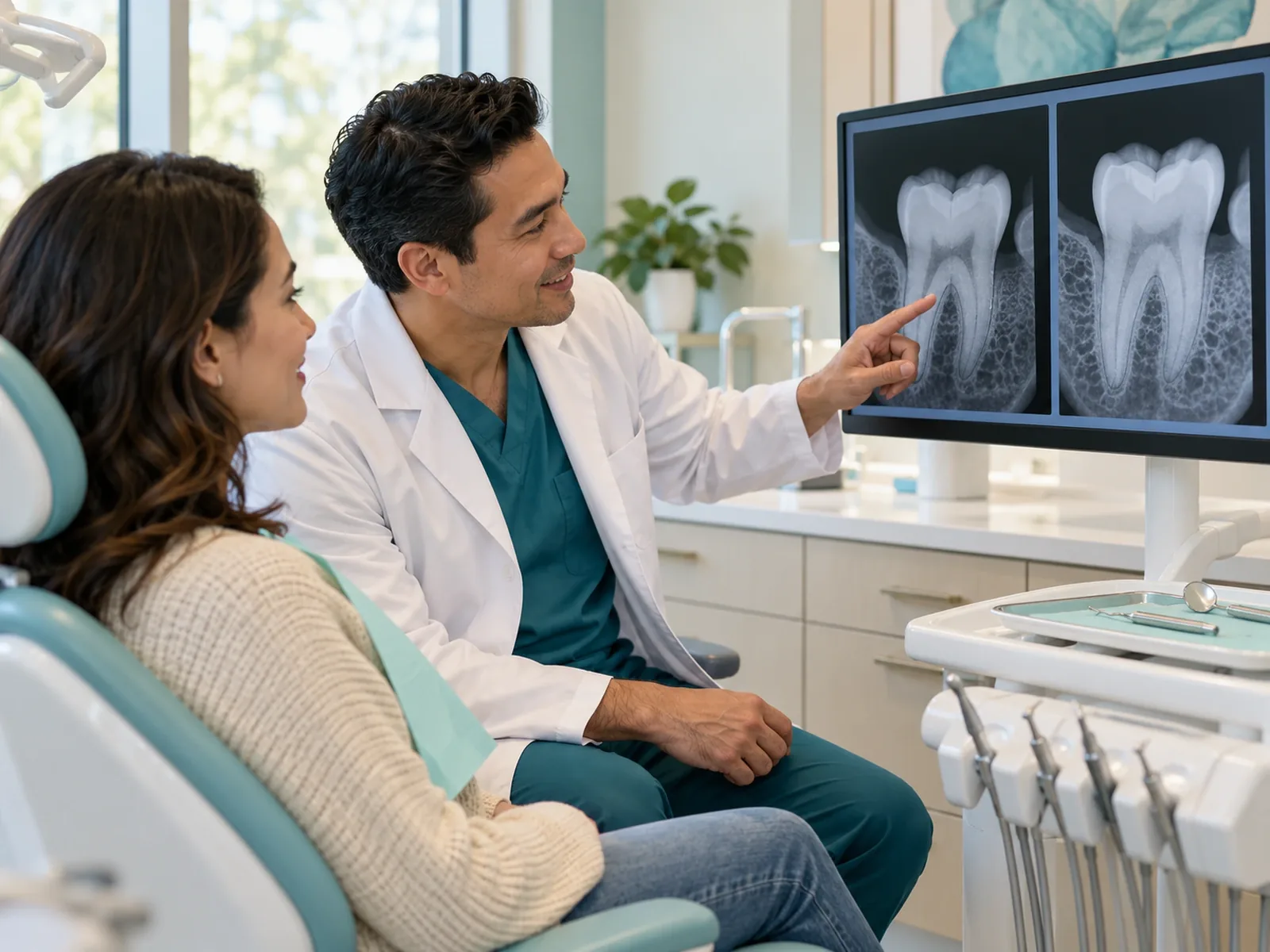
Pain relief tells you the pulp problem is gone. It does not tell you the bone around the root tip has healed. That is checked with a follow-up X-ray, often around six months and again later, where the dark area at the root tip should be shrinking. Most do. Occasionally one does not, which may point to a canal that could not be fully cleaned or a crack, and that is how a problem gets caught early rather than years later. Our page on retreatment of a root-canaled tooth explains what happens then.
The restored tooth also needs the same care as every other tooth: daily brushing and flossing, routine exams and cleanings, and attention to the gum line around the crown, where decay can start on a tooth that can no longer warn you with sensitivity.
Sources and further reading
- American Association of Endodontists: What is a root canal?
- ADA MouthHealthy: Root canals
- Mayo Clinic: Tooth abscess
General information, not a diagnosis. Read how we create and review our dental guides.