"TMJ" is the temporomandibular joint, the hinge just in front of each ear where the lower jaw meets the skull. Everyone has two. "TMD" is the term for the group of disorders that affect those joints and the muscles that move them. People use TMJ to mean both, which is fine in conversation, but the distinction matters for care: most jaw pain comes from overworked muscles rather than from a damaged joint, and the two are treated differently.
For the bigger picture — how jaw pain, clenching and worn teeth fit together and what we check first — start with our TMJ and teeth-grinding overview.
The other distinction that matters is between noise and trouble. A jaw that clicks or pops when you open wide but does not hurt is common and rarely needs anything done. A jaw that aches, that locks open or closed, that will not open as far as it used to, or that suddenly changed is a different matter and deserves an assessment. This page explains how that assessment works, what conservative care involves, and why you should be cautious about any plan that begins with permanently changing your teeth.
How the joint works, briefly
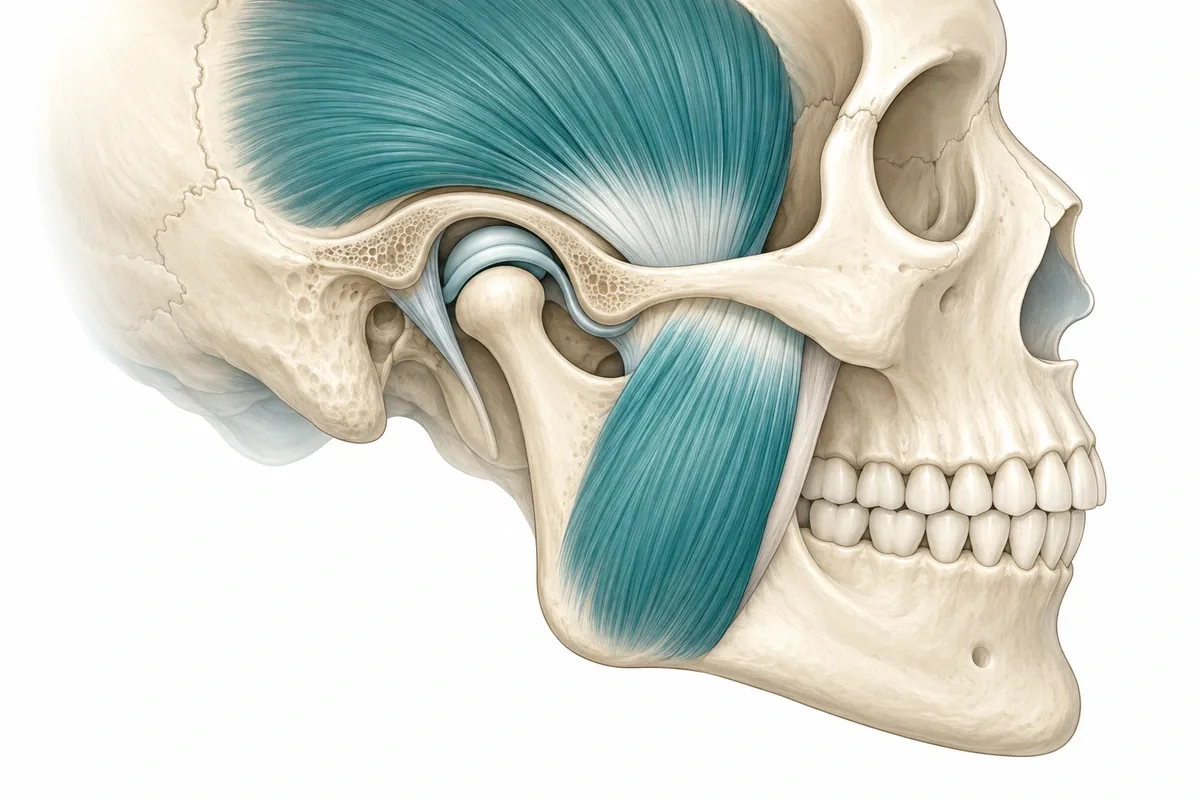
The rounded end of the lower jaw (the condyle) sits in a shallow socket in the skull, with a small cartilage disc between them that moves with the jaw as a cushion. The joint both rotates and slides forward as you open, which is why it is one of the more complex joints in the body. Large muscles on the side of the face and temple do the chewing and clenching. A click usually means the disc is slipping slightly ahead of the condyle and snapping back into place; it is a mechanical noise, not necessarily damage, and many people click for decades without consequence.
Symptoms worth describing precisely
The more specific you can be, the better the assessment. Think about:
- Where it hurts. In front of the ear, in the cheek muscle, at the temple, in the teeth, or in the ear itself.
- When. On waking (suggests nighttime clenching), during or after meals, during stress, or constantly.
- What changes it. Chewing, yawning, cold weather, talking for long periods, rest.
- Sounds and movement. Clicking, popping, a gritty grinding sensation, catching, or locking. Can you open three fingers' width?
- Other symptoms. Headaches, earache or fullness, neck and shoulder tension, and whether you grind or clench (see our bruxism page).
- History. Injuries to the face or jaw, long dental appointments, whiplash, other pain conditions such as fibromyalgia or migraine, and recent dental work.
Toothaches, sinus infections, ear problems, nerve pain and some medical conditions can all be felt near the jaw, so the exam should not assume the joint is to blame. If one tooth hurts to bite on or lingers after cold, start with our toothache page, because a cracked or infected tooth is treated very differently from a sore muscle.
Call 911 or go to the emergency room if jaw or facial pain comes with chest pain, pressure, shortness of breath, sweating or pain spreading down an arm, which can be signs of a heart problem, or with sudden weakness, drooping or trouble speaking. A jaw that locks open and cannot be closed, or a suspected jaw fracture after a blow, also needs urgent care.
What the assessment involves
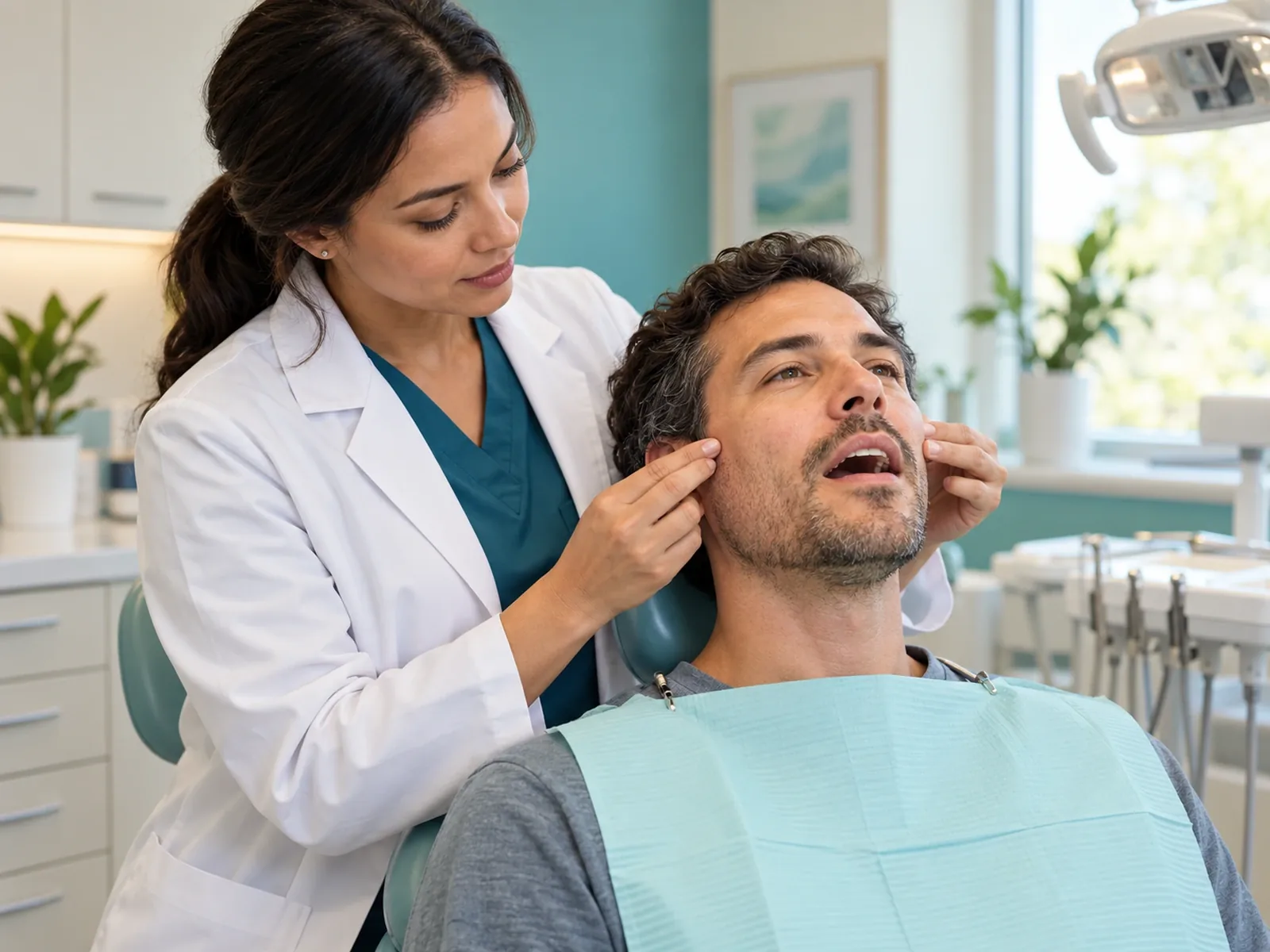
At our Cleburne office, Dr. Zohdi will listen to your history, then examine the jaw: how far it opens, whether it deviates to one side, where it clicks, how the joints feel under the fingers as you move, and which muscles are tender. The teeth are checked for wear, cracks and how they meet, since clenching leaves clues. X-rays are not always needed for muscle-type pain; they are considered when the joint itself seems involved, after injury, or when symptoms do not follow the expected pattern. Advanced imaging of the joint is arranged through an outside provider when it is genuinely indicated.
The aim is a working diagnosis in plain language: mostly muscle, mostly joint, a disc that is displacing, arthritis in the joint, or a problem that is not the jaw at all. From that follows a plan, starting with the least invasive options.
Conservative care comes first
Most TMD improves over weeks to months with simple, reversible measures, and major treatment is rarely needed. Depending on the diagnosis, first-line care may include:
- Resting the jaw. Softer foods for a while, cutting food into small pieces, avoiding gum, nail biting and wide yawns.
- Heat or cold. Warm compresses for tight muscles; cold for an acutely inflamed joint.
- Gentle movement. Slow, controlled opening and side-to-side movements within comfort, not forced stretching. Physical therapy with someone experienced in jaw problems can be very effective.
- Habit awareness. Keeping teeth apart during the day ("lips together, teeth apart") and noticing clenching while concentrating.
- Over-the-counter pain relief used as directed for short periods.
- Sleep and stress. Addressing poor sleep, snoring or stress, which are common amplifiers of muscle pain. If you snore heavily or stop breathing at night, see our sleep apnea page.
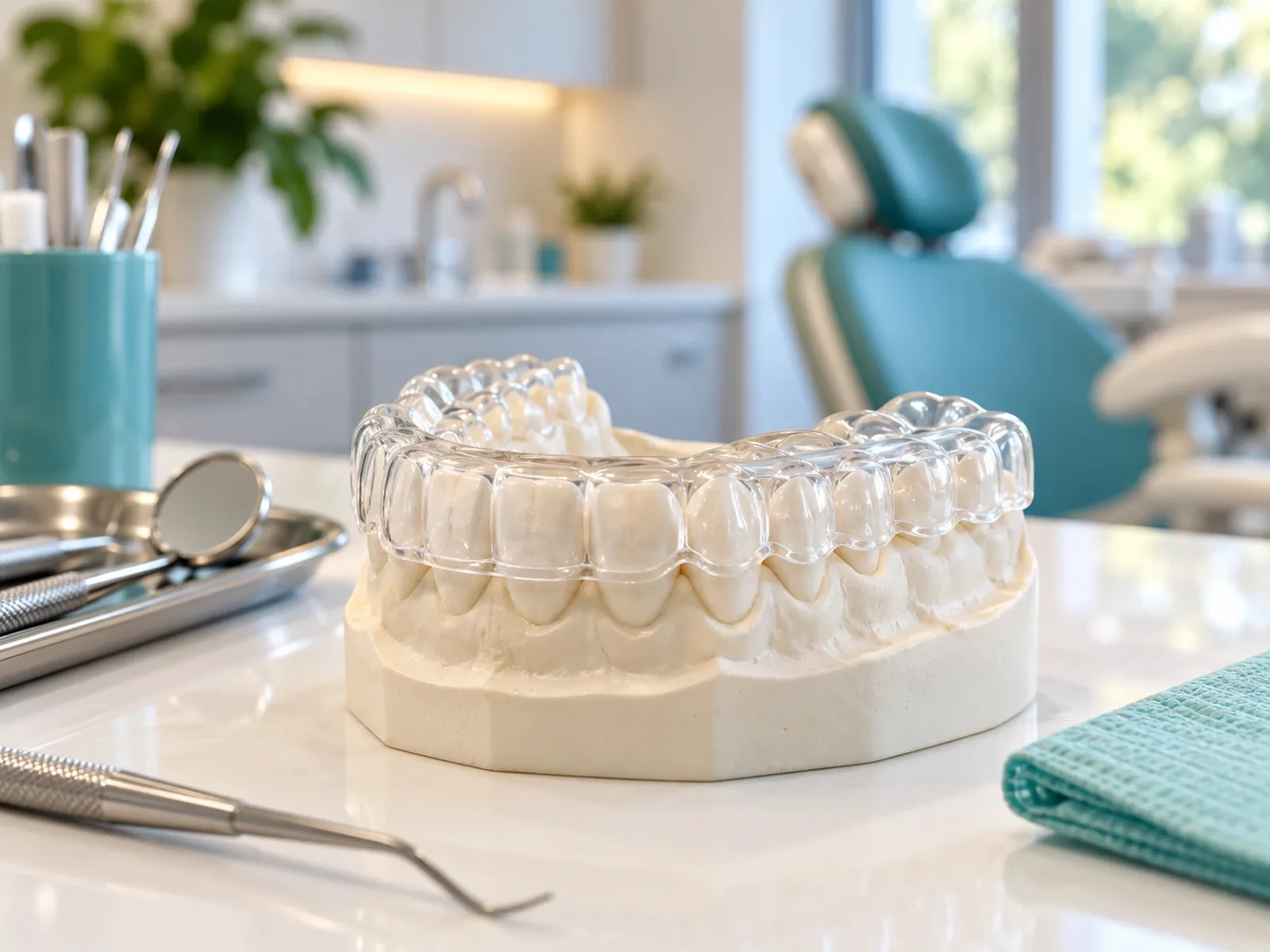
- An appliance in selected cases. A well-fitted stabilization splint or night guard can reduce the load on muscles and joints, especially for people who clench at night. It helps some patients and not others, should be reviewed rather than worn indefinitely without follow-up, and should never be promised as a cure. If an appliance causes pain or your bite feels different for more than a few minutes after removing it, stop wearing it and call.
When symptoms are severe, persistent or clearly involve the joint rather than the muscles, Dr. Zohdi will refer you to the right provider, such as an oral surgeon, an orofacial pain clinic or your physician. That is part of good care, not a dead end.
Be cautious about irreversible promises
Jaw pain attracts confident, expensive answers. Be wary of any plan that starts with permanently changing your teeth: grinding the bite into a new position, crowning many teeth, full orthodontic treatment or surgery offered as the cure for nonspecific jaw pain. Current evidence does not support irreversible bite changes as first-line treatment for most TMD, and a bite that was reshaped for a muscle problem cannot be put back.
Before agreeing to anything permanent, ask three questions: What is the exact diagnosis? What is the evidence that this treatment helps that diagnosis? What reversible options have been tried first? If the answers are vague, a second opinion is reasonable and no good clinician will object. Dental reconstruction can be entirely appropriate for worn or damaged teeth; it just needs its own dental justification rather than a promise about jaw pain.
Living with a clicking jaw
If your click doesn’t hurt, the usual advice is to leave it alone, avoid very wide opening and extreme foods, and report any change: new pain, a click that turns into catching, or a reduction in how far you open. Clicks can come and go for years. There is no evidence that "fixing" a click that doesn’t hurt prevents future problems, and attempts to do so carry their own risks.
Sources and further reading
General information, not a diagnosis. Read how we create and review our dental guides.