Jaw Pain, Teeth Grinding and Protective Dental Care in Cleburne
Grinding, jaw-joint pain and sports injuries get lumped together under 'TMJ care,' but they are separate problems with separate answers. Start with the symptom you actually have.
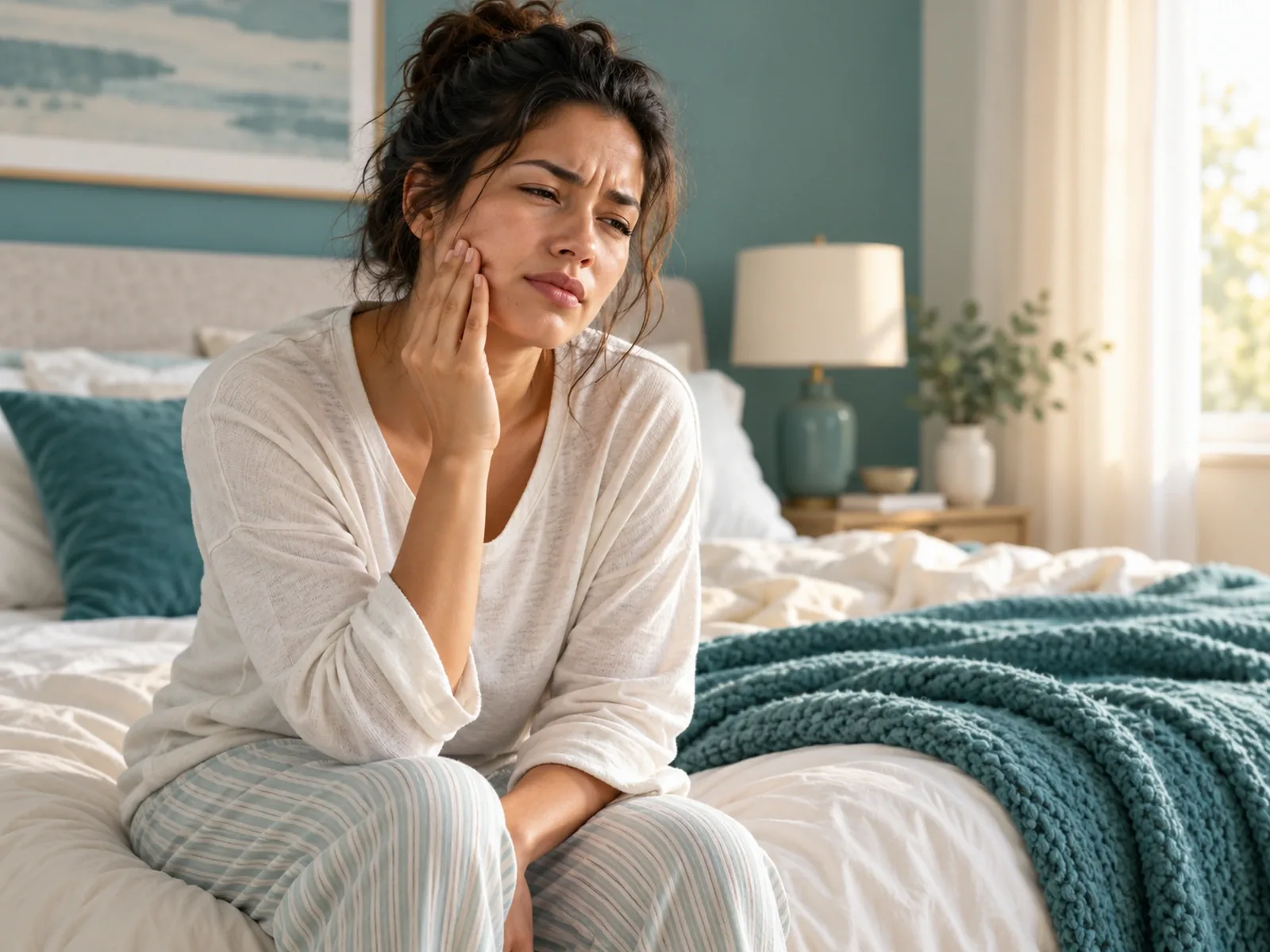
Jaw pain that is worse in the morning, a jaw that clicks when you yawn, teeth that keep chipping, a child who needs protection for football season: these all end up under the heading "TMJ," and they are not the same problem. Some are about the jaw joint, some about the muscles that move it, some about the teeth themselves, and one is simply about preventing injury. Treating them as one condition leads to the wrong appliance for the wrong job.
At Cleburne Dental, Dr. Zohdi starts with the symptom you actually have, works out which structure is responsible, and begins with care you can reverse. This overview explains the jaw joint, how grinding fits in, what the first visit involves and which of the four detailed guides applies to you. It is one of the dental services we offer.
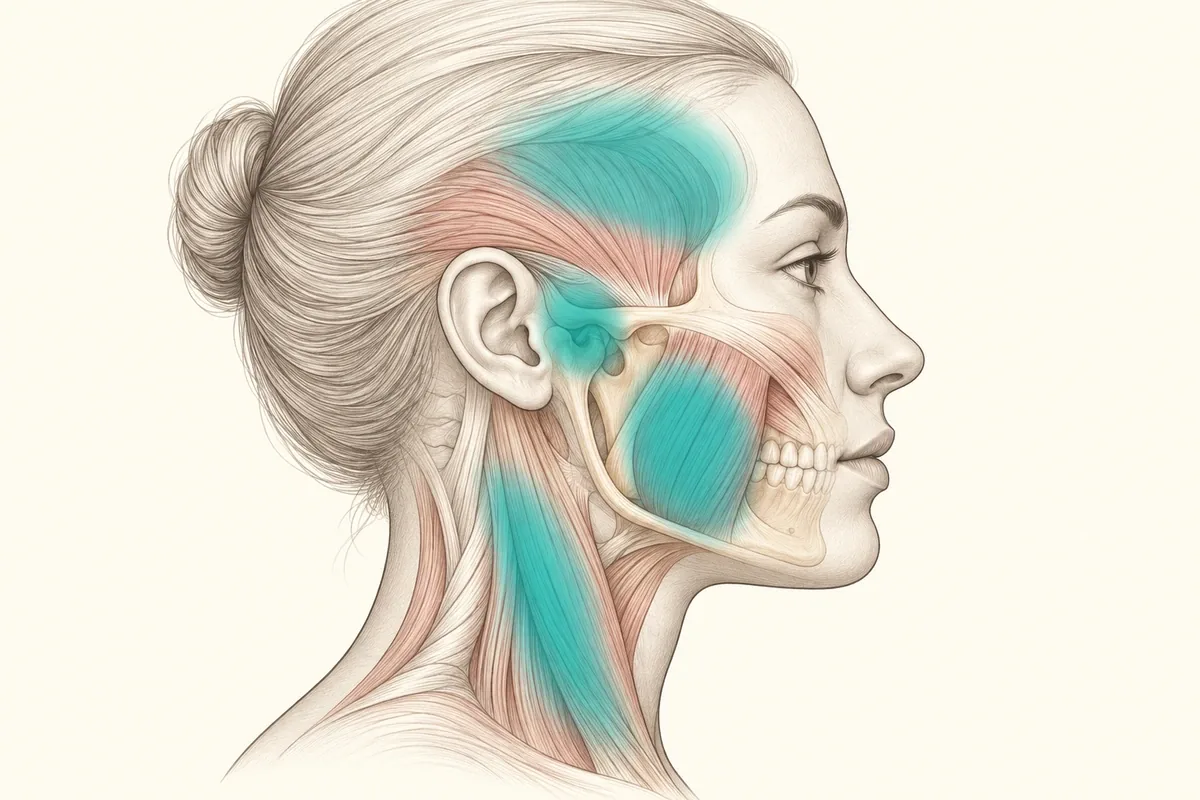
The temporomandibular joint (TMJ) is the hinge in front of each ear where the lower jaw meets the skull. A small disc cushions the joint, and large muscles in the cheek and temple do the work of chewing and clenching. Because those muscles attach near the temple, ear and neck, jaw problems can be felt across the side of the head, which is why many patients do not realize their symptoms have a dental connection.
Illustration: where jaw-muscle and joint pain is commonly felt: the temple, just in front of the ear, the cheek and the side of the neck. Educational diagram, not a patient image.
Disorders of the joint and its muscles are called temporomandibular disorders (TMD). Common signs include:
jaw pain, stiffness or soreness, often worse on waking,
clicking, popping or grating when you open or close,
difficulty opening fully, or a jaw that catches or locks,
pain or pressure around the temples or cheeks,
ear pain or a feeling of fullness without an ear infection,
neck and shoulder tension,
morning headaches, and
teeth that feel sore or sensitive with no cavity to explain it.
Most TMD is muscular rather than a damaged joint, and most of it improves with conservative care. Clicking without pain, on its own, usually needs no treatment at all. Pain, locking, limited opening or a sudden change is the reason to be seen. Our guide to jaw pain and clicking explains how the assessment separates muscle from joint and what first-line care looks like.
Grinding and clenching
Bruxism, the grinding or clenching of teeth, is both a cause and a companion of jaw muscle pain. Many people grind in their sleep without knowing it until Dr. Zohdi spots the flattened chewing surfaces, chipped edges and worn fillings that give it away. Others clench all day while concentrating. Left alone, heavy grinding wears enamel, cracks teeth and breaks restorations.
Worn teeth do not prove grinding by themselves; acid erosion from diet or reflux can look similar, and the two often overlap. Sleep bruxism is also sometimes a clue to disturbed breathing during sleep. Our bruxism guide explains how the cause is sorted out, what helps for nighttime versus daytime habits, and when a sleep apnea evaluation matters more than a guard.
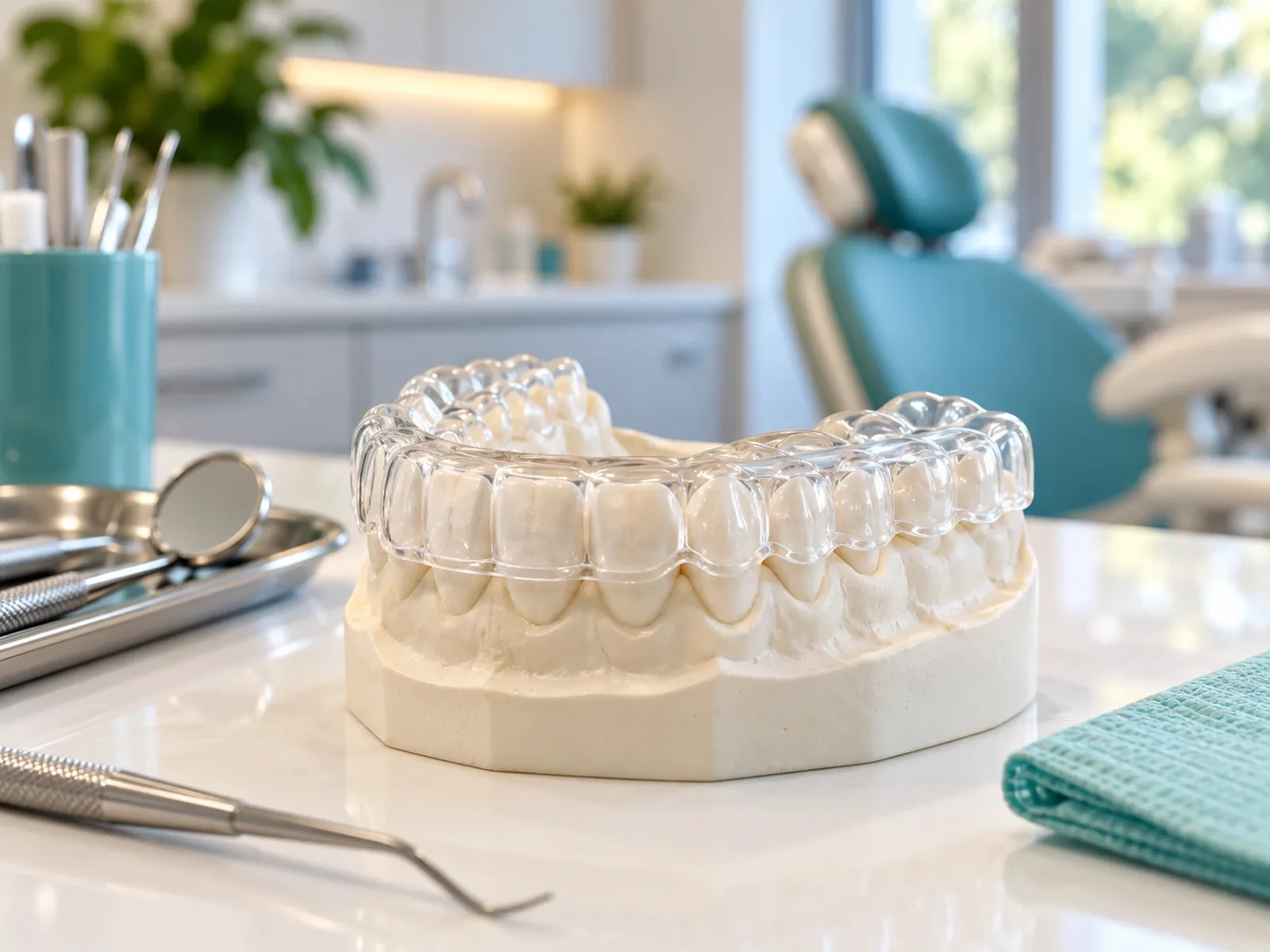
A custom night guard protects teeth and dental work by taking the grinding force onto a replaceable layer of acrylic. It is genuinely useful for the right patient. It is also widely oversold: it does not stop grinding, it is not a cure for every jaw pain, and a standard guard does nothing for snoring or sleep apnea. Fit, bite adjustment and follow-up are what make it work.
Headaches and the jaw
Chronic headaches bring many patients to a TMD evaluation, and sometimes the connection is real. Chewing muscles held tense all night can produce a dull headache at the temples on waking, and reducing clenching load can ease it. A dental evaluation can establish whether the jaw muscles are contributing.
What a dentist cannot do is diagnose or treat migraine, which is a medical condition with its own causes and treatment. Persistent or severe headaches should always be evaluated by your physician, and if a jaw component is confirmed, dental care is one part of the plan alongside medical care, not a replacement for it.
What the first visit involves
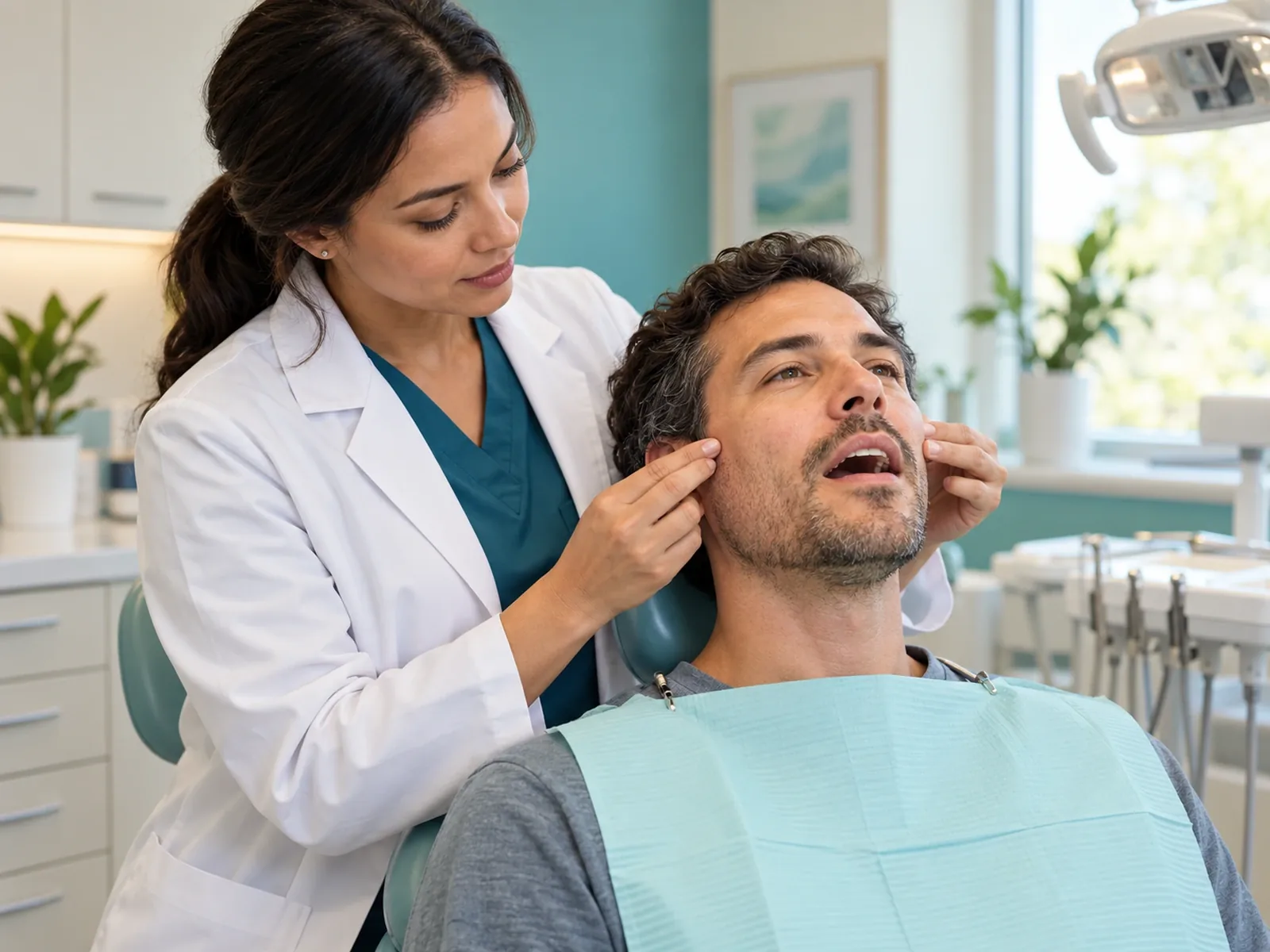
A TMD or grinding evaluation at our Cleburne office is a conversation first and an examination second. Expect to describe where it hurts, when, what changes it, whether anyone has heard you grind, how you sleep and any injuries or dental work. Dr. Zohdi then examines how far and how smoothly the jaw opens, feels the joints and the chewing muscles for tenderness, checks the teeth for wear, cracks and how they meet, and reviews any existing appliances you bring in. X-rays are used when the joint, the teeth or a possible crack need a closer look.
Depending on the findings, the assessment may also use digital bite-force analysis to map how evenly the teeth meet, joint and muscle analysis to measure jaw function, and brief low-level electrical muscle relaxation before bite records are taken. These tools add information in selected cases; they do not replace the history and the hands-on exam, and not every patient needs them.
You should leave with a plain-language diagnosis (mostly muscle, mostly joint, grinding damage, something else) and a plan that starts with the least invasive option.
Conservative care first
For most jaw pain, first-line care is reversible: softer food, warm compresses for tight muscles, gentle controlled movement, keeping the teeth apart during the day, short courses of over-the-counter pain relief, attention to sleep and stress, and sometimes physical therapy. A well-fitted stabilization splint or night guard may be added to reduce the load at night. For acute muscle or joint inflammation, therapeutic laser treatment may be offered; our laser dentistry page explains where lasers help and where they do not.
Be cautious about plans that begin by permanently changing your teeth. Grinding the bite into a new position, crowning many teeth, orthodontics or surgery should not be a first-line cure for nonspecific jaw pain, and a reshaped bite cannot be undone. When symptoms are severe, involve the joint itself or do not respond, Dr. Zohdi will refer you to an oral surgeon, an orofacial pain clinic, a physical therapist or your physician.
Protection during sport
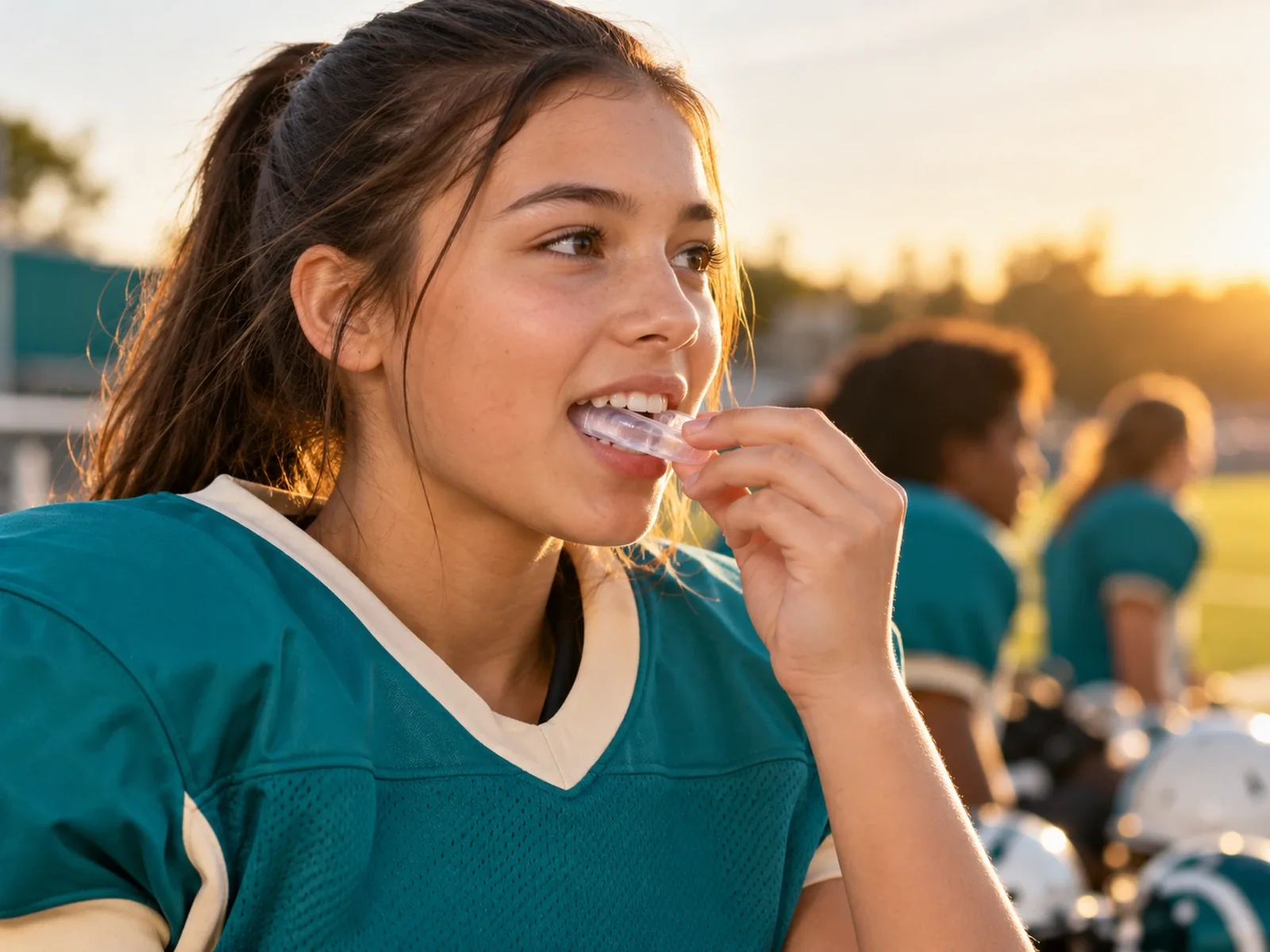
A sports mouthguard is a different device for a different purpose: absorbing a blow. It is thicker and more resilient than a night guard, and the two are not interchangeable. A custom guard fits closely enough to be worn through practice as well as games. Children and athletes in braces need their guard checked often as teeth move. No guard prevents every injury; a hard hit still needs a dental check, and a knocked-out permanent tooth needs attention within the hour.
Which appliance for which job
Appliance
Purpose
Not for
Night guard
Protecting teeth and dental work from grinding
Stopping grinding, curing jaw pain, sleep apnea, sport
TMD stabilization splint
Reducing load on jaw muscles and joints, under follow-up
Not if it doesn’t hurt and your opening is normal. Report new pain, catching, locking or reduced opening.
Can a dentist cure my migraines?
No. A dentist can determine whether jaw-muscle tension is contributing to your headaches and treat that part. Migraine itself needs medical evaluation and care.
Will a night guard stop me grinding?
No. It protects your teeth from the grinding, which is still well worth doing.
Should my child wear a mouthguard for basketball?
Yes. Basketball and soccer cause many dental injuries, even though leagues rarely require guards for them.
If your jaw aches, your teeth are wearing down or your family needs protection for the season, request an evaluation at our Cleburne office. We will work out which problem you actually have and start with the care that fits it.