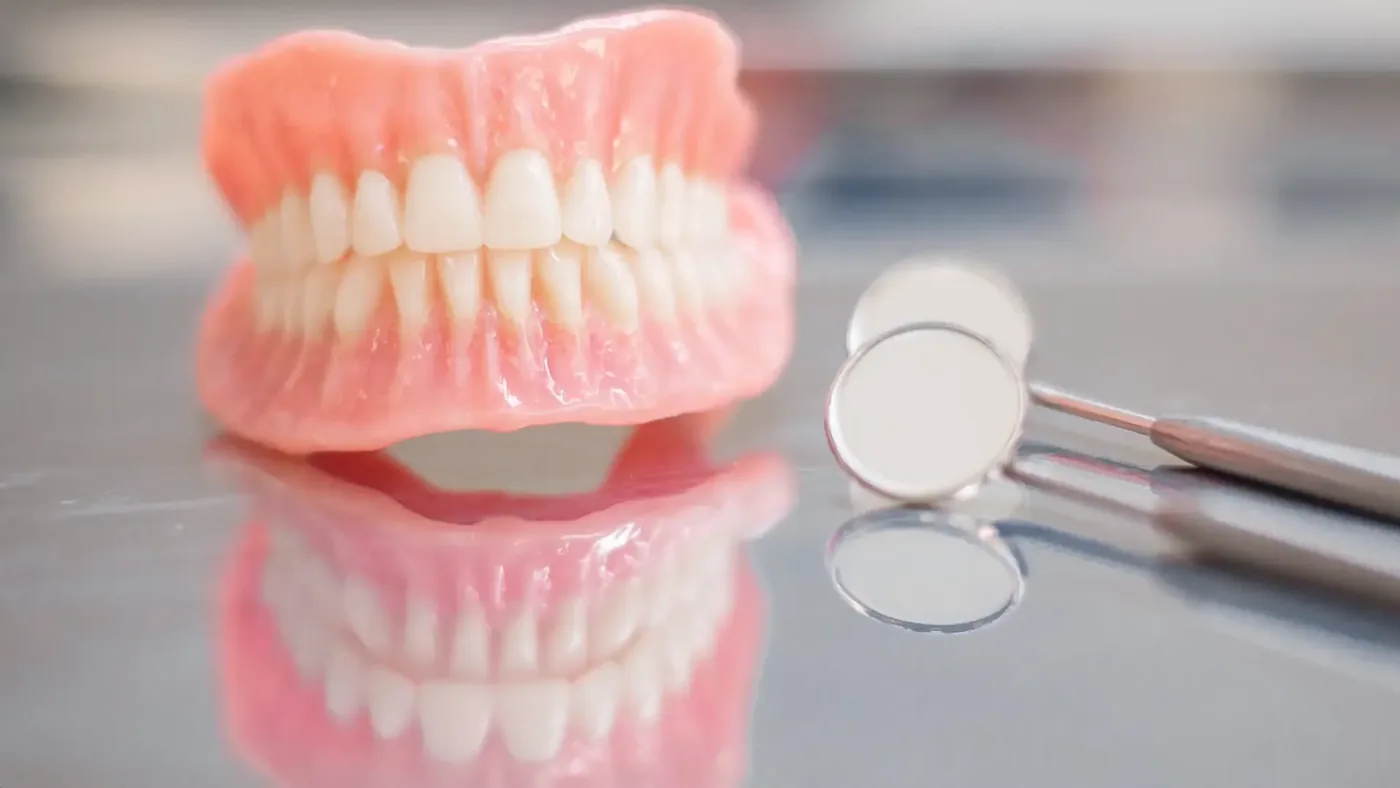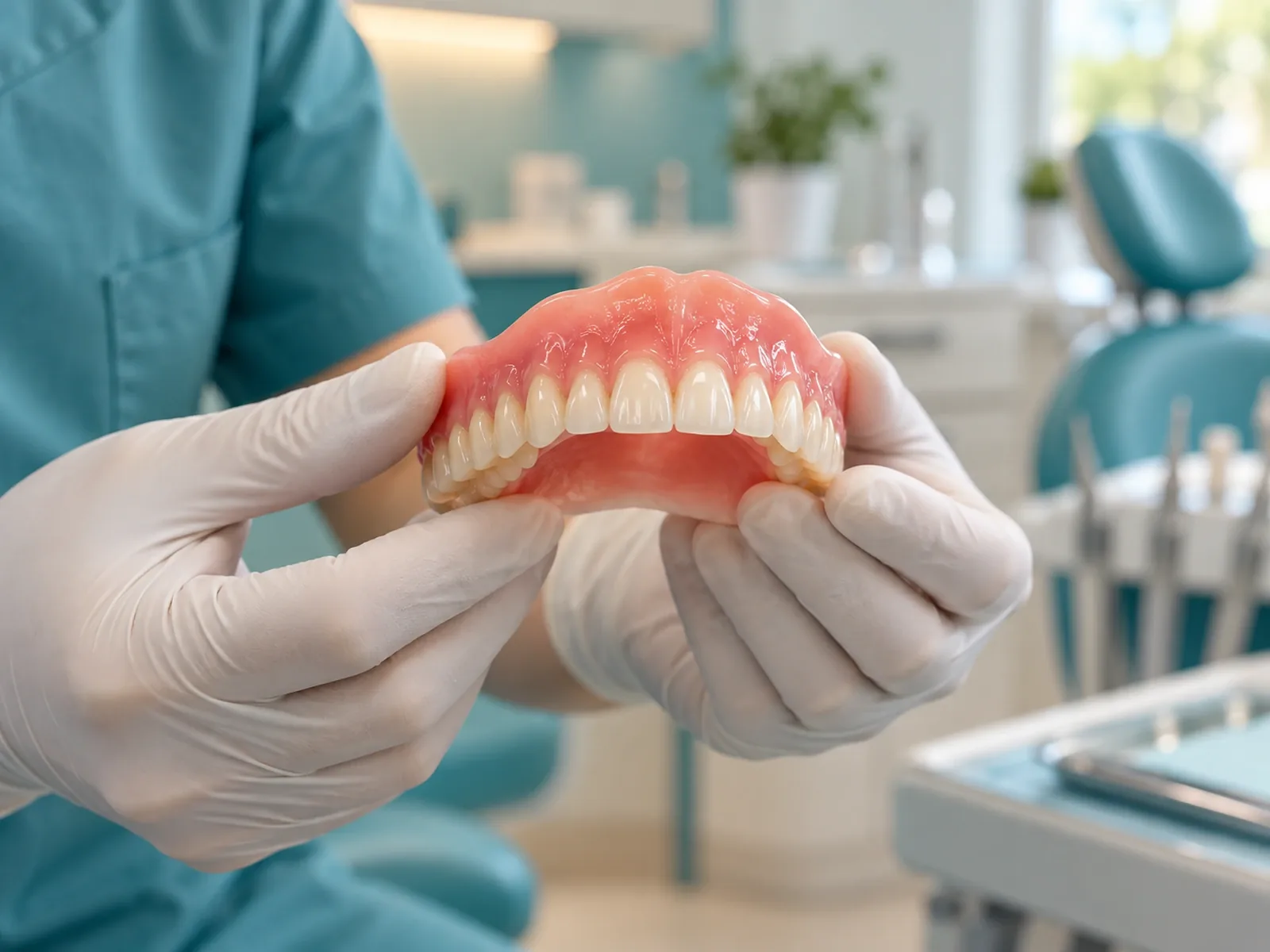
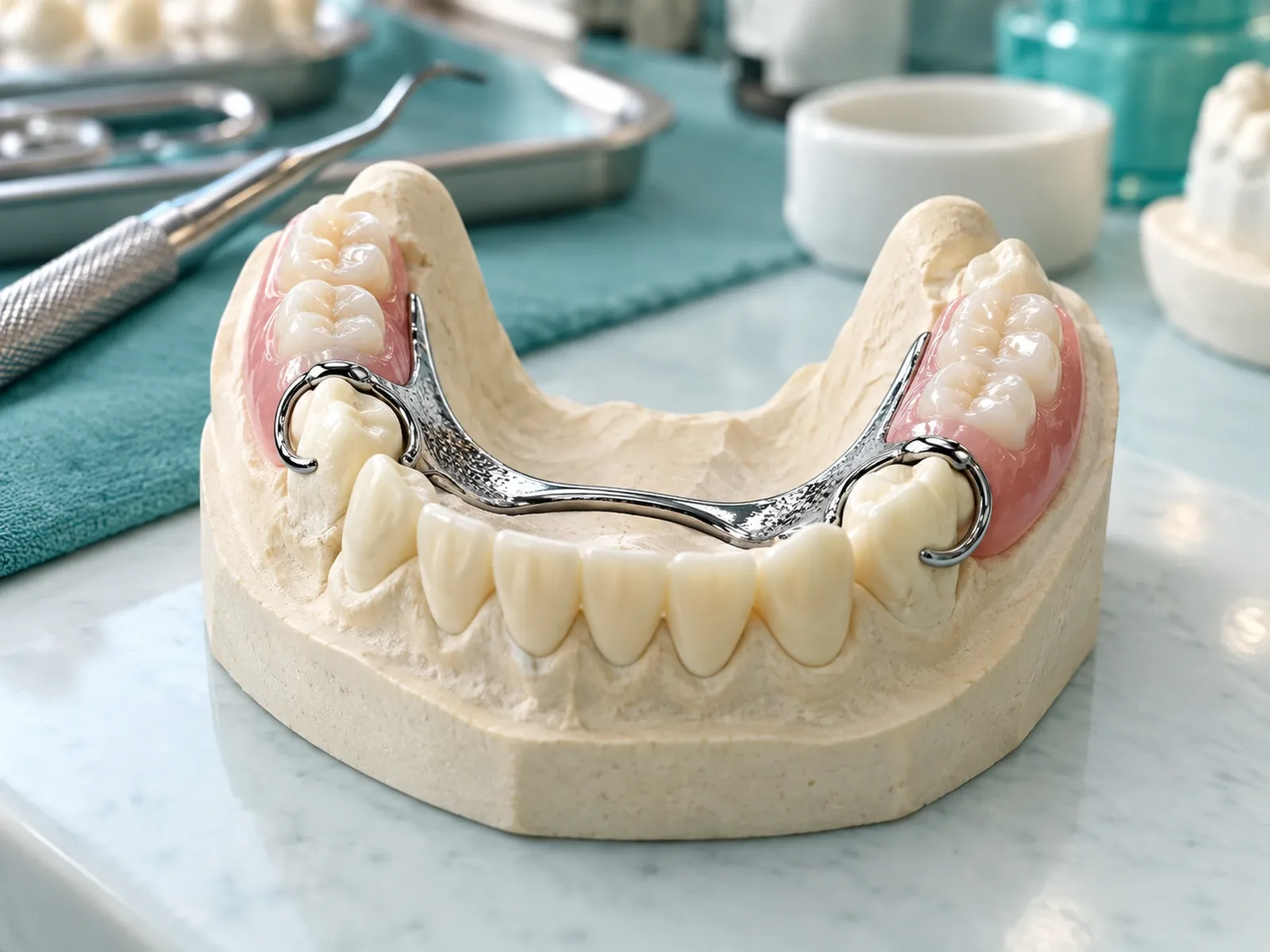
A partial denture is a removable appliance that replaces some missing teeth while working around the teeth you still have. It fills the spaces so you can chew and speak more normally, it keeps neighbouring teeth from drifting into the gaps, and it comes out for cleaning.
What makes a partial different from a complete denture is that it does not stand on its own. It rests on your gums and holds onto your natural teeth with clasps or small attachments. That means the health of those teeth decides how well the partial works and how long it lasts. A good partial is designed around the mouth it will live in, not simply shaped to fill the holes.
This guide explains how partials stay in place, why your remaining teeth are examined so carefully first, what the visits involve, how to live with the appliance day to day, and how it compares with a bridge or implants. For the other types, see our guide to denture options.
Who a partial denture suits
A partial is worth discussing when you are missing several teeth, in one area or scattered through the arch, and the remaining teeth are stable. It tends to make sense when:
- Several teeth are missing and a bridge would need to span too far or lean on weak teeth.
- You would like to replace teeth without surgery.
- Cost or health considerations make implants less practical right now.
- You may lose more teeth in the coming years and want an appliance that can sometimes be adapted.
If very few teeth remain, or the ones left are loose or badly broken down, a complete denture or an implant-supported denture may be the more honest recommendation.
What holds a partial in place
Every partial uses some mix of three ideas: support from the gums under the replacement teeth, support from small rests that sit on your natural teeth, and retention from clasps or attachments that grip those teeth.
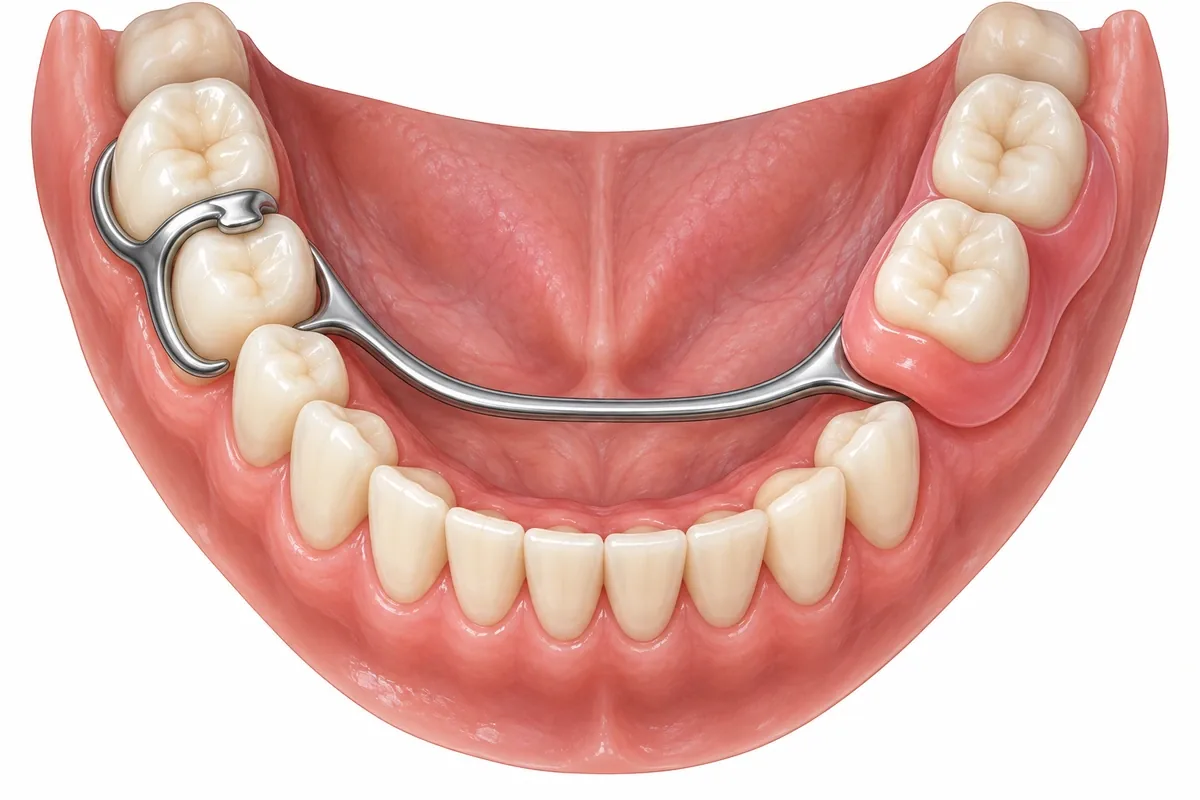
The way those pieces are built gives you the main partial-denture types:
| Type | Strengths | Trade-offs |
|---|---|---|
| Cast metal framework with acrylic saddles | Thin, strong, rests transfer chewing force well to teeth; usually the most durable | Metal clasps can show on front teeth; higher lab cost |
| All-acrylic partial | Lower cost, quick to make, easy to add teeth to; often used as a transitional appliance | Bulkier, weaker, relies more on the gums; wire clasps may loosen |
| Flexible nylon-type partial | Gum-coloured clasps blend in; comfortable and light | Hard to adjust or reline, cannot usually be added to, relies on tissue for support |
Labels such as "metal-free" or "flexible" describe a material, not a guarantee that the design suits your mouth. Ask where the clasps will sit, which teeth will carry rests, and how the partial will be adjusted or repaired later. Those answers matter more than the marketing name.
Your remaining teeth are assessed first
Before a partial is designed at our Cleburne office, Dr. Zohdi examines the teeth that would support it. Decay, gum disease, mobility, old fillings that are failing and an uneven bite all affect whether those teeth can take the extra load a clasp places on them.
Sometimes that means treatment comes first: a filling or crown to strengthen a clasp tooth, periodontal treatment to stabilize the gums, or occasionally a small reshaping of a tooth so a rest has a proper seat. A partial built on an untreated mouth usually fails quickly and can take the supporting teeth with it.
Ask about the outlook for each supporting tooth. If one is likely to be lost in a few years, the design can sometimes plan for that. If several are doubtful, a different approach may serve you better.
What happens at your visits
The sequence varies with the type of partial, but a typical plan looks like this:
- Exam, X-rays and planning. We map which teeth are missing, assess the supports, and talk about appearance, including where any clasps would be visible when you smile.
- Preparing the teeth. For a cast framework, small rest seats and sometimes minor reshaping are made on the supporting teeth. This is usually minor and conservative.
- Impressions and bite records. Detailed impressions capture both the teeth and the gums. A bite record sets how the partial meets the opposing teeth.
- Framework try-in. With a metal partial, the bare framework is checked for fit before the teeth are added. This is the moment to catch a rocking frame or a clasp that is too tight.
- Tooth try-in and delivery. The replacement teeth are checked for shade and position, then the finished partial is fitted and adjusted.
- Follow-up. Clasp tension, pressure spots and the bite are fine-tuned over the first weeks as you wear it in real life.
Living with a partial day to day
Learn to insert and remove the partial with your fingers, seating it along the path we show you. Never bite it into place; that bends clasps and can crack the base. Do not try to tighten or loosen a clasp yourself.
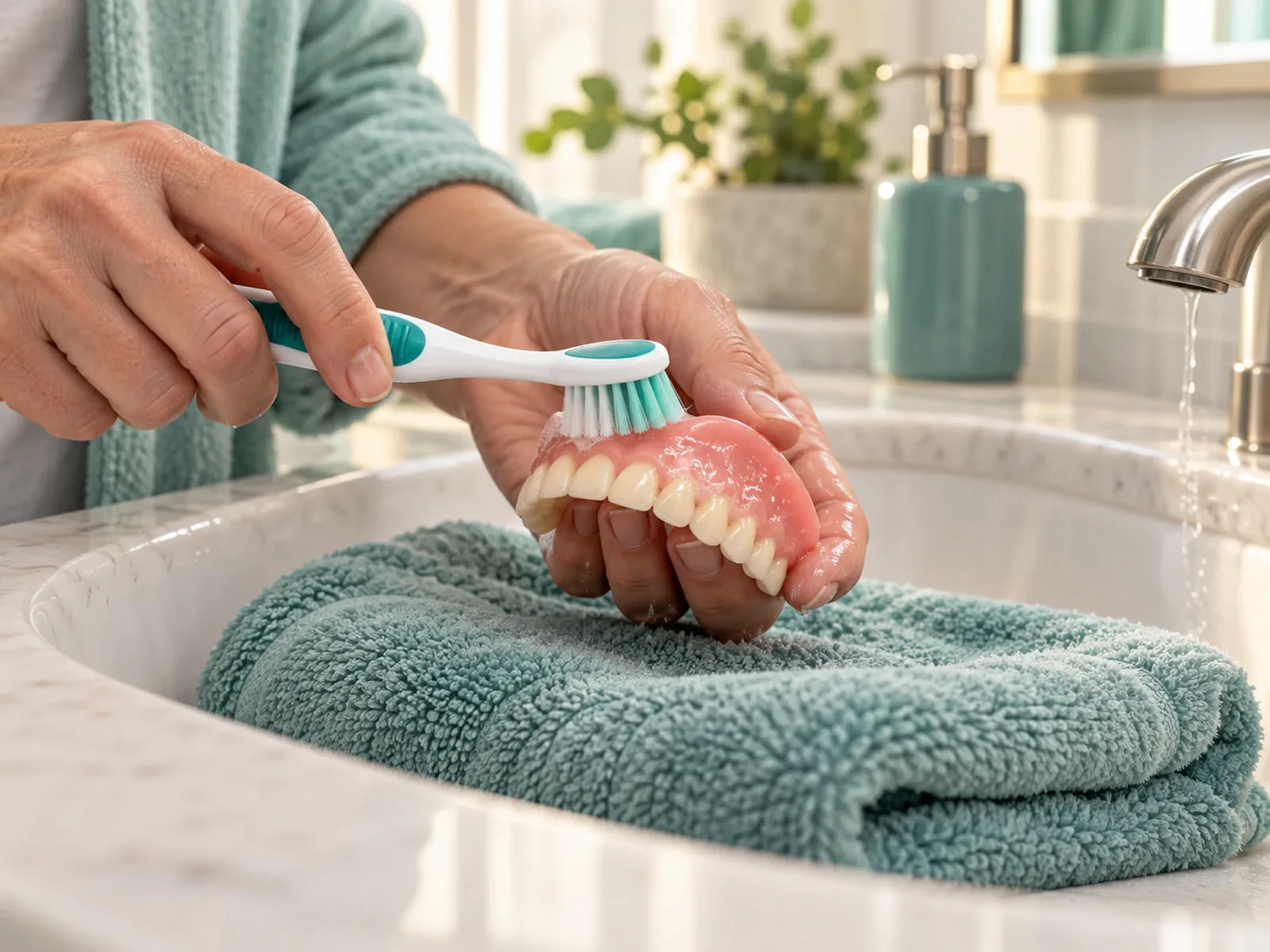
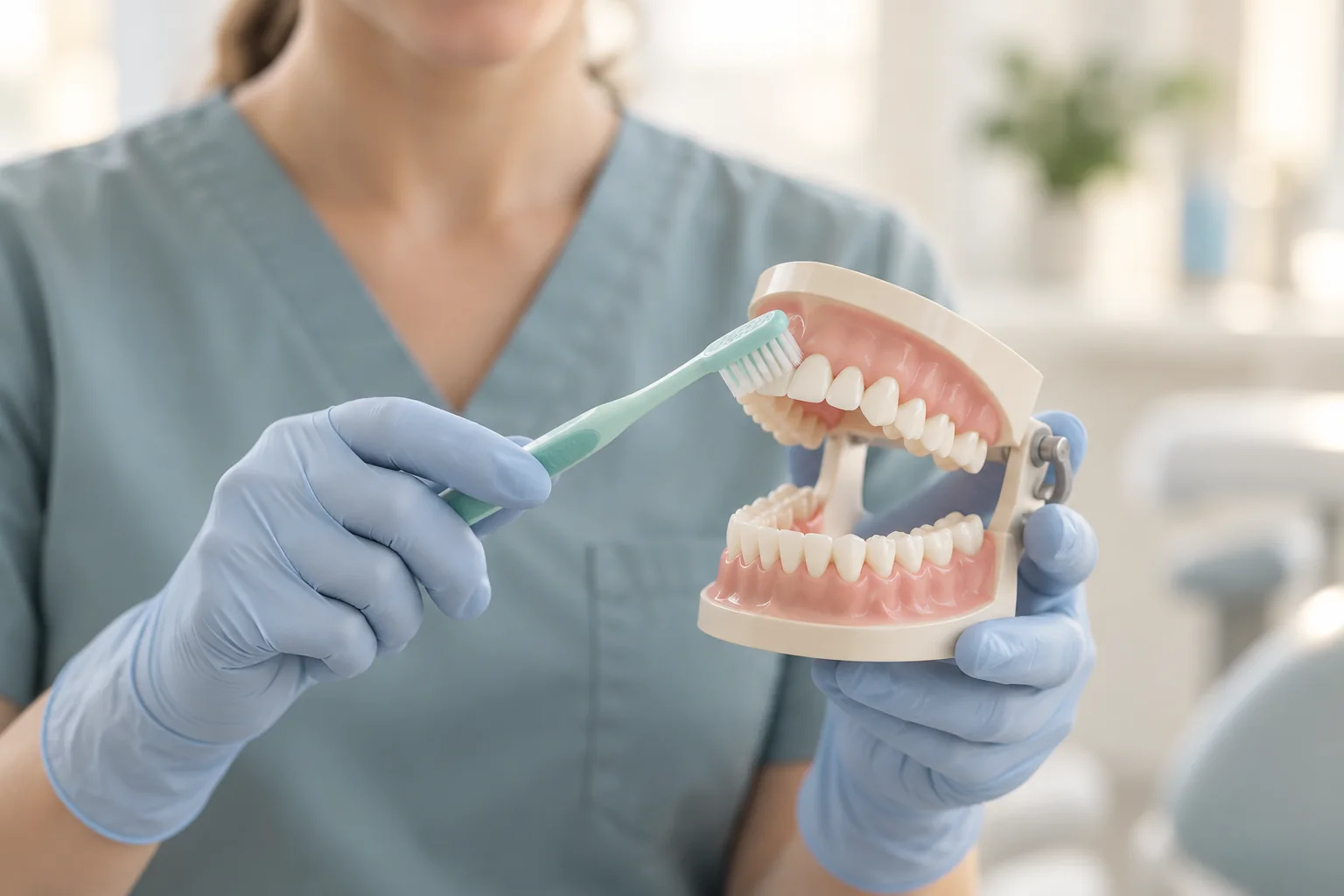
Clean the partial over a towel or a sink of water so a slip does not break it. Brush it with a soft denture brush and a non-abrasive cleaner, then brush your natural teeth carefully, paying extra attention to the surfaces where clasps and rests sit. Those spots trap plaque, and the partial does not protect the teeth it touches from decay or gum disease. Our denture care guide goes into products, soaking and storage.
Most people are asked to take the partial out at night so the gums and the supporting teeth get a rest. Follow the specific instructions you are given.
Keeping it working over time
Teeth and gums keep changing, so a partial that fit perfectly can start to feel different. A loose clasp can often be tightened at a short visit. A saddle that no longer meets the gums may need a reline. A broken clasp or a chipped tooth is usually a repair question. When a supporting tooth is lost, some partials can have a tooth added, but that depends on the design, which is one reason to ask about it at the planning stage.
Keep up regular exams even when the partial feels fine. We check the supporting teeth, the bite and the gums under the saddles, where problems can hide. Our guide to getting used to new dentures covers the early adjustment period in more detail.
What affects the cost
Prices depend on the type of partial, the number of teeth replaced, the lab work involved and whether any supporting teeth need treatment first. A cast framework costs more than an acrylic transitional partial but usually lasts longer and treats the supporting teeth more kindly. Dental plans often cover partials with limits on replacement frequency. See our insurance page for how we help you understand your benefits before starting.
Alternatives to compare
A partial is one of three common ways to replace several teeth. A fixed dental bridge is cemented onto the neighbouring teeth and does not come out, but it requires those teeth to be reshaped and works best for short spans. Dental implants for several missing teeth stand on their own without touching the other teeth, but involve surgery, healing time and a higher upfront cost.
Compare them on the things that matter to you: whether the replacement comes out, what happens to the natural teeth, how easy it is to clean, how it looks when you smile, and total cost over the years rather than the first bill.
Sources and further reading
General information, not a diagnosis. Read how we create and review our dental guides.