
A dental abscess is a pocket of pus caused by a bacterial infection. Most begin in one of two places: inside a tooth whose nerve has died from deep decay, a crack or an old injury, or in a deep gum pocket beside a tooth. From either starting point the infection can build pressure in the bone, push through to form a bump on the gum, or spread into the soft tissues of the face.
Abscesses do not announce themselves consistently. Some cause a throbbing ache that keeps you up at night; others cause only a small gum pimple, a salty or bad taste, or a tooth that feels slightly raised when you bite. Because the infection does not go away on its own and can spread, a suspected abscess is a dental emergency that should be examined promptly rather than watched. During office hours, Monday through Thursday, 8:00 AM to 5:00 PM, call us at (817) 641-6261.
Go to the nearest emergency room or call 911 if you have trouble breathing or swallowing, swelling under the tongue or in the floor of the mouth, swelling spreading quickly across the face or down the neck, swelling that reaches the eye or affects your vision, a high fever with chills, or you feel very unwell. These signs mean the infection is spreading and needs medical care now, not a dental appointment later.
Signs that point to an abscess
Any of the following, alone or together, deserves a call:
- A deep, throbbing ache in a tooth or the jaw, often worse when lying down.
- A tooth that is tender to tap or feels "tall" when you close your teeth.
- A pimple-like bump on the gum that may come and go, sometimes with a bad taste or visible drainage.
- Swelling of the gum, cheek or jaw, or a tender lump under the jaw.
- Lingering sensitivity to heat, or a tooth that stopped responding to cold after being very sensitive.
- Fever, feeling run down, or swollen glands in the neck.
- Difficulty opening your mouth fully.
People with diabetes, those on chemotherapy or immune-suppressing medicines, and anyone with a heart valve condition or recent joint replacement should mention it when calling, because an infection can progress faster or carry extra risk, and it changes how quickly we want to see you.
Where an abscess comes from
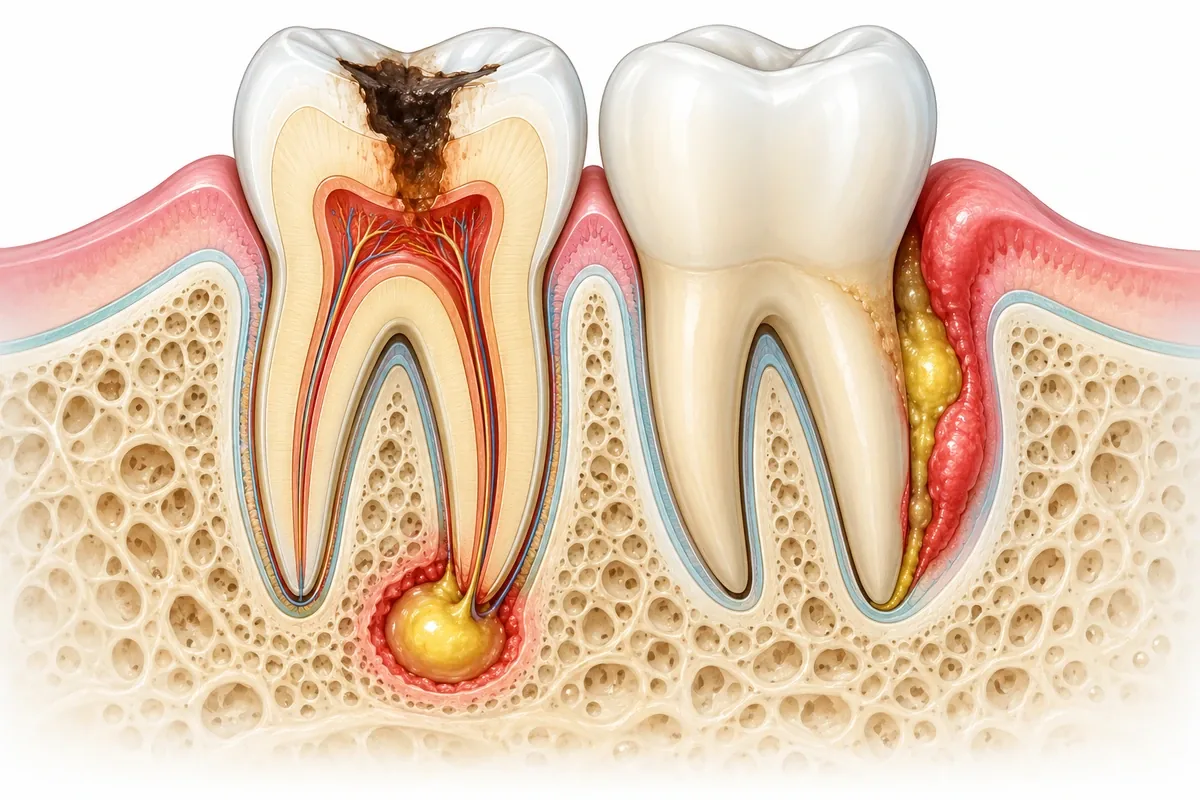
The two main types look alike from the outside but are treated differently:
- A tooth (periapical) abscess forms at the tip of the root when bacteria reach the pulp through decay, a crack, or a failed filling, and the nerve dies. The infection then leaks out of the root tip into the bone.
- A gum (periodontal) abscess forms in a deep pocket between the gum and the root, often in someone with gum disease, or when food or debris becomes trapped in the pocket.
A third situation, infection in the gum flap over a partly erupted wisdom tooth, behaves like a gum abscess and is covered on our wisdom teeth page.
Why a draining gum bump still matters
When an abscess finds a path through the gum and drains, the pressure drops and the pain often eases dramatically. Many people assume the problem has resolved. It has not. The gum bump is simply a vent. The dead tissue or infected pocket feeding it is still there, and the bump will refill, or the infection will quietly keep eroding bone around the root.
A gum pimple that appears, drains and disappears on a cycle is one of the clearest signs of a tooth that needs root canal treatment or removal. Please do not squeeze, puncture or lance it yourself; that can push bacteria deeper and does nothing about the source.
What you can do while arranging care
- Rinse with warm salt water, half a teaspoon in a cup of warm water, several times a day.
- Use a cold compress on the outside of the face if there is swelling. Avoid heat on the face, which can draw infection outward.
- Take an over-the-counter pain reliever according to the label, after checking with a pharmacist if you have other conditions or medicines.
- Sleep with your head slightly raised to reduce throbbing.
- Keep brushing and flossing gently; a clean mouth lowers the bacterial load.
Please do not take antibiotics left over from a previous illness, and do not treat pain relief as a cure. Call us even if the symptoms ease overnight.
Treatment must address the source
The guiding principle is simple: remove the cause and let the body clear the rest. Antibiotics alone fail because they travel in the bloodstream, and the dead pulp inside a tooth has no blood supply for them to reach. They can calm spreading infection and are used when there is fever, facial swelling, or a medical reason, but they are a bridge to treatment, not a substitute for it.
Depending on the type and extent of the abscess, the plan may include:
- Draining the infection, either through the tooth when a root canal is started, through the gum pocket, or occasionally through a small incision in the gum.
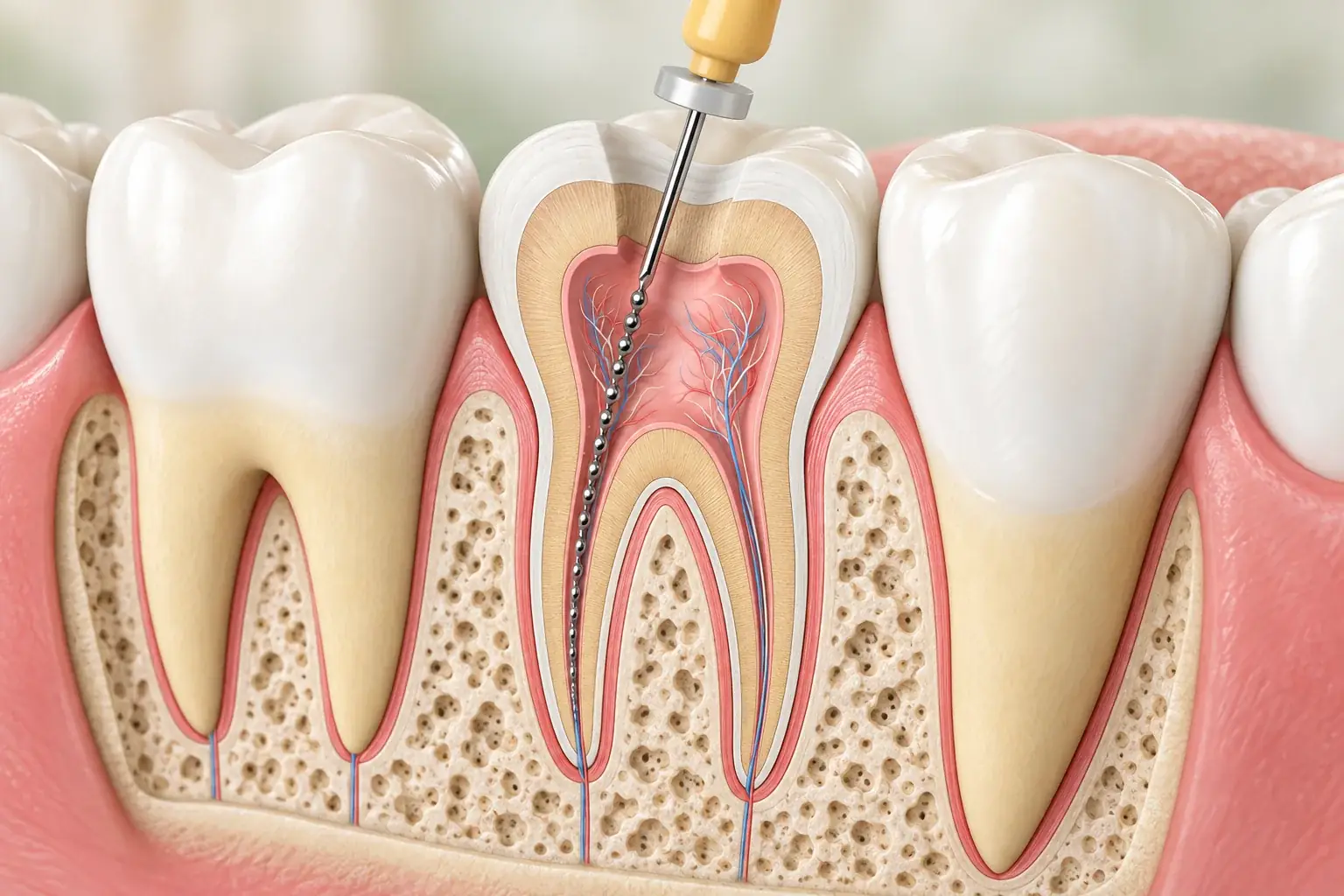
- Root canal treatment for a tooth abscess when the tooth can be restored. The infected pulp is removed, the canals are cleaned and sealed, and the tooth is later protected with a crown. Our root canal treatment page describes the steps.
- Periodontal treatment for a gum abscess, typically cleaning the pocket thoroughly and then addressing the underlying gum disease. See our gum care overview.
- Extraction when the tooth is too broken down, fractured through the root, or has lost too much supporting bone to be kept. Our tooth extractions page explains what to expect, and we will discuss replacement once the infection is gone.
- Antibiotics in the situations above, with clear instructions to finish the course even as symptoms fade.
A tooth that already had a root canal can also abscess years later if a canal was missed or the seal has leaked; see root canal retreatment.
What the examination can clarify
At the visit in our Cleburne office, Dr. Zohdi will examine the tooth and gums, tap and test the suspect tooth and its neighbors, measure the gum pockets, and take an X-ray of the area to look for the dark spot at the root tip that marks infection in the bone. The findings tell us which type of abscess it is, whether the tooth is restorable, and how urgent the next step is.
We will explain the immediate step to control the infection and the follow-up needed to finish the job. If the tooth can be saved, ask what restoration it will need afterward. If removal is recommended, the discussion about an implant or bridge can wait until the infection has cleared; today's priority is getting you out of pain and stopping the spread.
Recovery and follow-up
Most people feel markedly better within a day or two of drainage or the first stage of a root canal. Swelling should shrink steadily. Finish any antibiotics as prescribed, keep the area clean, and keep the follow-up appointment even if you feel fine, because an unfinished root canal or an untreated gum pocket will reinfect. Call us if swelling grows instead of shrinks, fever appears or returns, or pain increases after an initial improvement.
What affects the cost
The emergency exam and X-ray are the starting point. The larger cost is the treatment of the source: a root canal and crown on one end, an extraction on the other, with gum treatment somewhere between. Back teeth cost more to treat than front teeth, and insurance plans often cover these categories at different levels. We provide a written estimate before treatment and explain insurance and financing options.
Sources and further reading
- NHS: Dental abscess
- American Association of Endodontists: What is a root canal?
- Mayo Clinic: Tooth abscess
- American Association of Endodontists: Abscessed teeth
General information, not a diagnosis. Read how we create and review our dental guides.