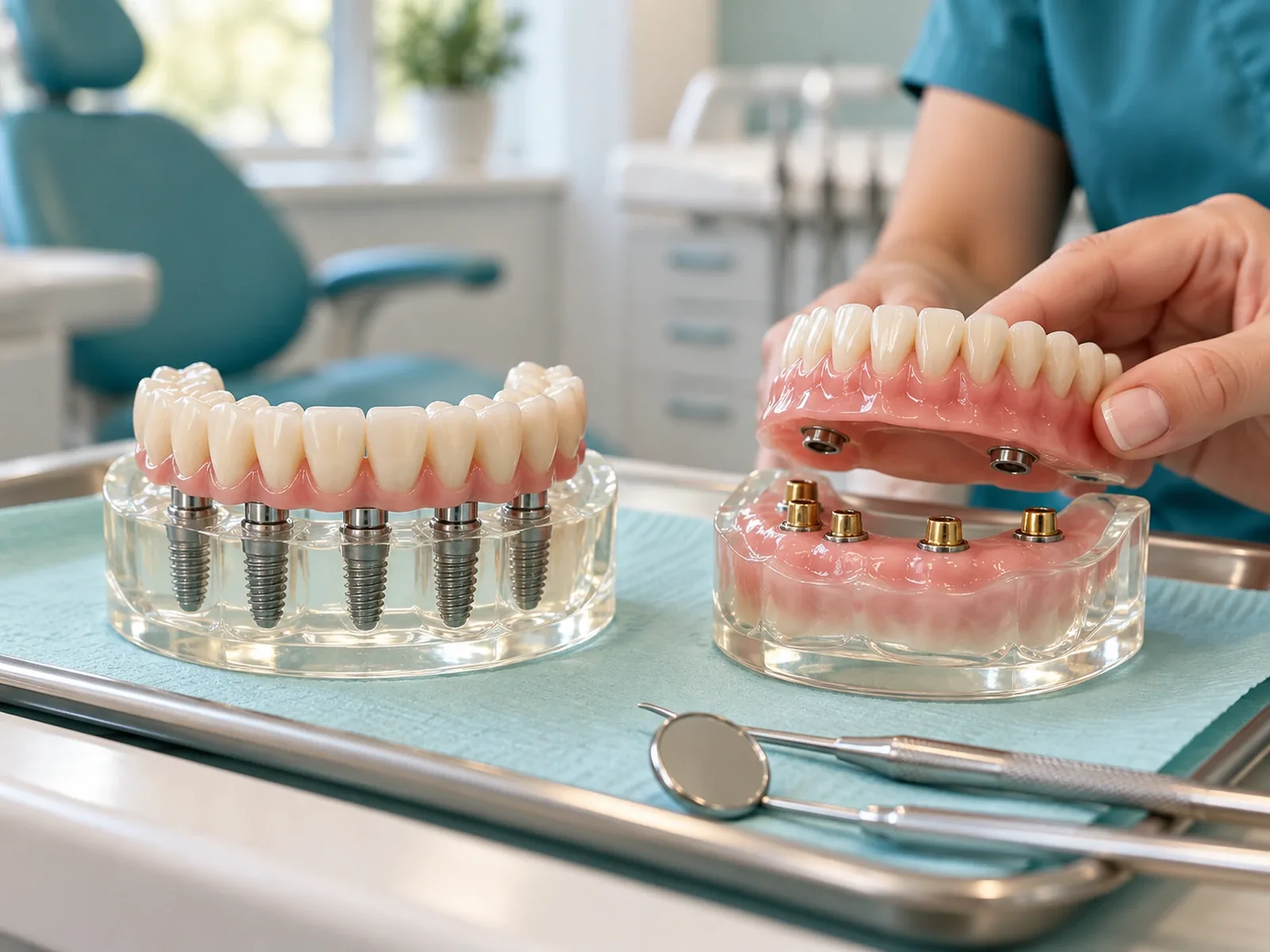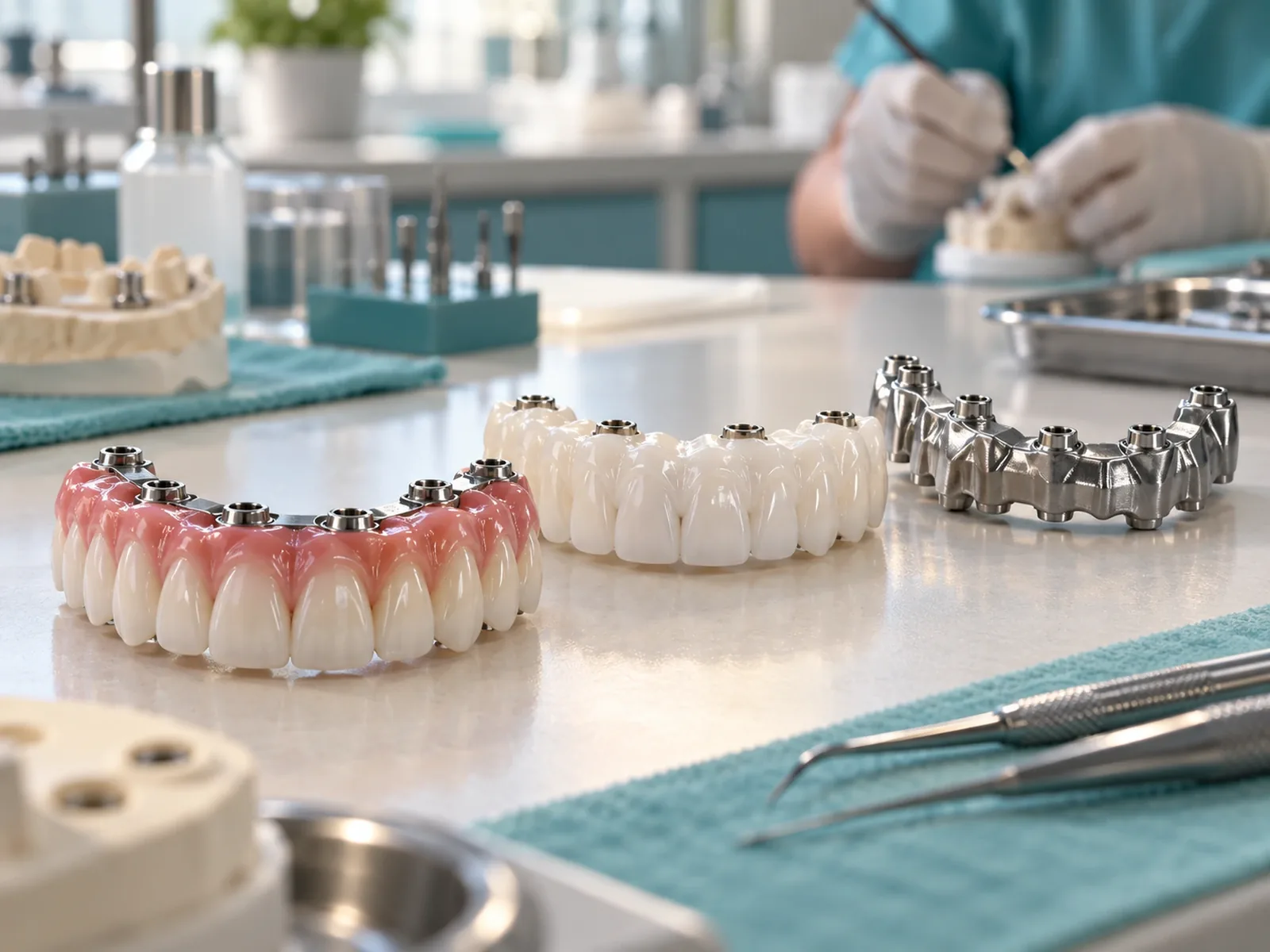

If you have been told you need "All-on-4" by one office and "All-on-6" by another, it is natural to assume one of them is cutting corners or one is overselling. Usually neither is true. The number of implants supporting a full arch of teeth is an output of planning, not a product tier you pick from a menu.
Four implants can carry a full set of upper or lower teeth very well in the right jaw. Six can be the better design in a different jaw. The useful question is not "which number is better?" but "why does this number and this arrangement fit my bone, my bite and the teeth being made for me?" This guide walks through how that decision is made so you can judge whether a proposed plan has been explained, not just named.
If you are still deciding whether a full arch is right for you at all, start with our overview of full-arch dental implants. This page assumes you are past that point and are now comparing designs.
What the labels mean
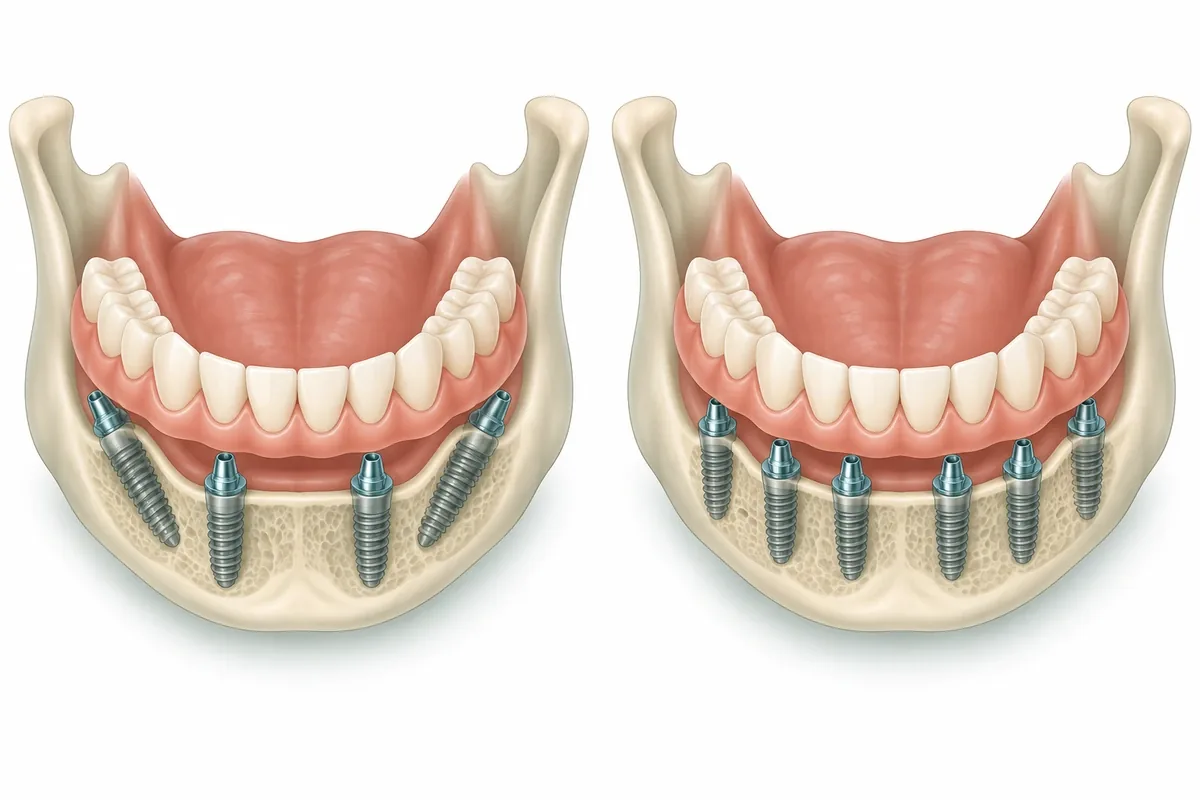
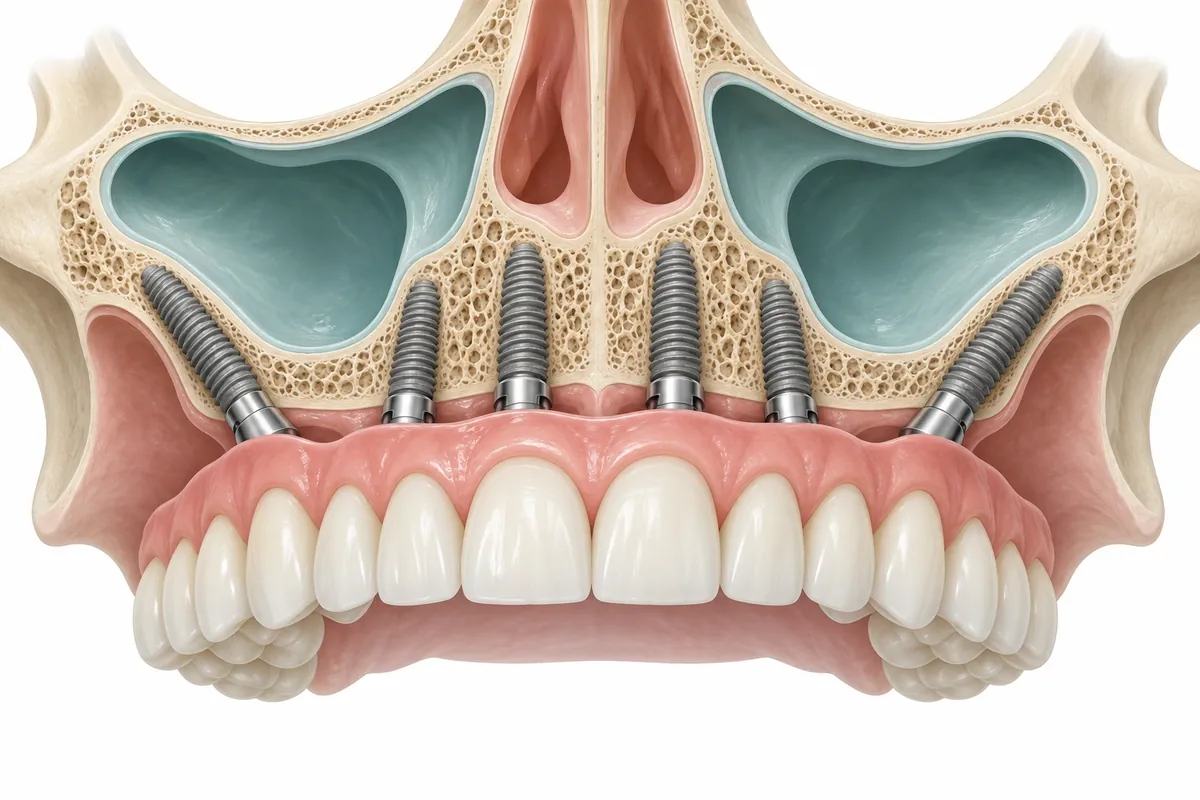
All-on-4 is a specific, well-documented treatment concept: four implants per arch, with the two back implants deliberately tilted to reach denser bone and avoid the sinus (upper jaw) or the main nerve (lower jaw). A single bridge is attached to all four, which spreads chewing forces across the whole arch.
All-on-6 simply means six implants supporting one bridge, usually spaced more evenly and often placed upright. It is a common design, but it is not a trademarked protocol in the same way.
All-on-X is the catch-all. The "X" is a placeholder for whatever number the plan calls for. When you see this phrase, it means "a full-arch bridge on implants," nothing more. It does not tell you how many implants, what material, or whether you can have teeth the same day.
Planning starts with the final teeth
Good full-arch planning runs backward. Dr. Zohdi first works out where your teeth need to be for you to speak, chew and smile naturally. That decides the shape of the bridge, how much lip support it needs to provide, how much vertical room there is between the jaws, and where the chewing forces will land.
Only then does the question become: where can implants be placed that will support that bridge safely? The answers depend on:
- Bone volume and density. The front of both jaws usually has the deepest, most reliable bone. The back of the upper jaw sits under the sinus; the back of the lower jaw sits over the nerve that gives feeling to your lip and chin. Both limit how far back an upright implant can go.
- How far the bridge extends behind the last implant. Teeth that hang past the rearmost implant are called a cantilever. A short cantilever is normal; a long one puts leverage on the implants and the screws that hold the bridge.
- Your bite. Heavy clenching or grinding, a strong jaw, or natural teeth in the opposing arch all raise the load the implants must carry.
- Cleaning access. More implants mean more spots where plaque collects under the bridge. A design you cannot keep clean is not a good design regardless of count.
Why four can be enough, and why it sometimes is not
Four implants splinted together into one rigid bridge behave as a unit. The angled rear implants let the bridge reach further back without surgery in the sinus or near the nerve, which is often why four implants can be placed without bone grafting in jaws that have lost bone over the years. For many patients, especially in the lower jaw, this is a sound and long-established design.
Four tends to become less attractive when:
- the bone in the front of the jaw is also thin, leaving little margin if one implant does not integrate;
- the bite is very heavy or there are strong natural teeth opposing the bridge;
- the arch is wide or the teeth need to extend far back, which would mean a long cantilever;
- the upper jaw has soft bone, where a wider spread of support is often preferred.
What six adds, and what it asks of you
Two extra implants can shorten the cantilever, spread forces more evenly, and give the plan some redundancy. If one implant later needs treatment, the bridge may still have enough support to keep working while that is addressed. That is a genuine advantage, but it is design-specific and should never be promised in advance.
Six implants also require six good sites. In the back of the upper jaw that may mean a sinus lift or ridge augmentation first, which adds a healing stage and cost. Six implants also mean more components to place, more connections to inspect over the years, and more places to clean. More is not free, clinically or financially.
| Factor | Leans toward four | Leans toward six |
|---|---|---|
| Bone in the back of the jaw | Limited; angled implants avoid sinus or nerve | Adequate, or grafting is planned anyway |
| Bite force | Moderate; opposing denture or implant bridge | Heavy clenching; natural teeth opposing |
| Arch size and tooth count | Smaller arch, shorter bridge | Wide arch, teeth needed far back |
| Appetite for grafting | Wants to avoid an extra surgical stage | Accepts grafting for wider support |
| Upper or lower jaw | Often sufficient in the lower jaw | More often chosen in the softer upper jaw |
These are tendencies, not rules. Your scan and your bite settle the question.
How to compare two plans honestly
When two offices give you different implant counts, ask each of them the same questions:
- Show me where each implant sits on my 3D scan and why it is there.
- How far will the teeth extend behind the last implant?
- Is grafting needed for this design, and is it included?
- What is the temporary tooth plan, and does the price include the final bridge?
- What happens if one implant does not integrate?
- How will I clean under this bridge, and can you show me on a model?
If one plan answers all six clearly and the other says "we always do six" or "four is all anyone needs," you have learned something more useful than the number. Our guide to what goes into full-arch cost covers how to line up two estimates so you are comparing the same scope.
A plan you can understand
A full arch is a major decision, and you deserve to see the reasoning behind every implant on the drawing. Dr. Zohdi plans each case from the teeth backward and will walk you through the scan so the number makes sense to you, whether it is four, six or something in between. If you would like that conversation, request a consultation at our Cleburne office and bring any plans you have already been given.
Sources and further reading
- FDA: Dental implants—what you should know
- American Academy of Periodontology: Dental implant procedures
- ADA MouthHealthy: Implants
General information, not a diagnosis. Read how we create and review our dental guides.