
Most people do not notice their teeth getting shorter. It happens over years: the front teeth lose their rounded edges and become flat, the back teeth lose their cusps, a corner chips and is smoothed off, then another. One day you see an old photograph and realize your smile looks different, or a dentist points out that your teeth have lost a measurable amount of their height.
Tooth wear is not a single diagnosis. Grinding and clenching, acid from the diet or from the stomach, and mechanical habits can each wear enamel, and they often work together. Rebuilding the shape of the teeth without understanding what wore them down leaves the new dental work facing exactly the same forces, and crowns and bonding can wear, chip, and fail just as the teeth did.
This page explains how Dr. Zohdi reads the pattern of wear at our Cleburne office, decides whether it is active, protects the teeth, and rebuilds them only as far as the situation calls for. When many teeth are involved, the work becomes part of a full-mouth reconstruction plan.
Three ways teeth wear down
Attrition: tooth against tooth. Grinding and clenching, especially during sleep, rub the chewing surfaces against each other. The result is flat, shiny facets that match up exactly when you close your teeth together. Front teeth lose their edges and may become the same length. Our bruxism page covers the habit itself.
Erosion: acid against tooth. Acid softens enamel so it dissolves or is rubbed away far more easily. The acid can come from outside (soft drinks, sports and energy drinks, citrus, wine, vinegar-based foods) or from inside (reflux, frequent vomiting). Eroded surfaces look smooth, rounded, and cupped rather than flat, and fillings can end up standing proud of the tooth around them.
Abrasion: something else against tooth. Hard toothbrushing, abrasive toothpaste, nail-biting, pen-chewing, pipe stems, and holding objects between the teeth all wear specific spots. Notches at the gumline are a classic sign.
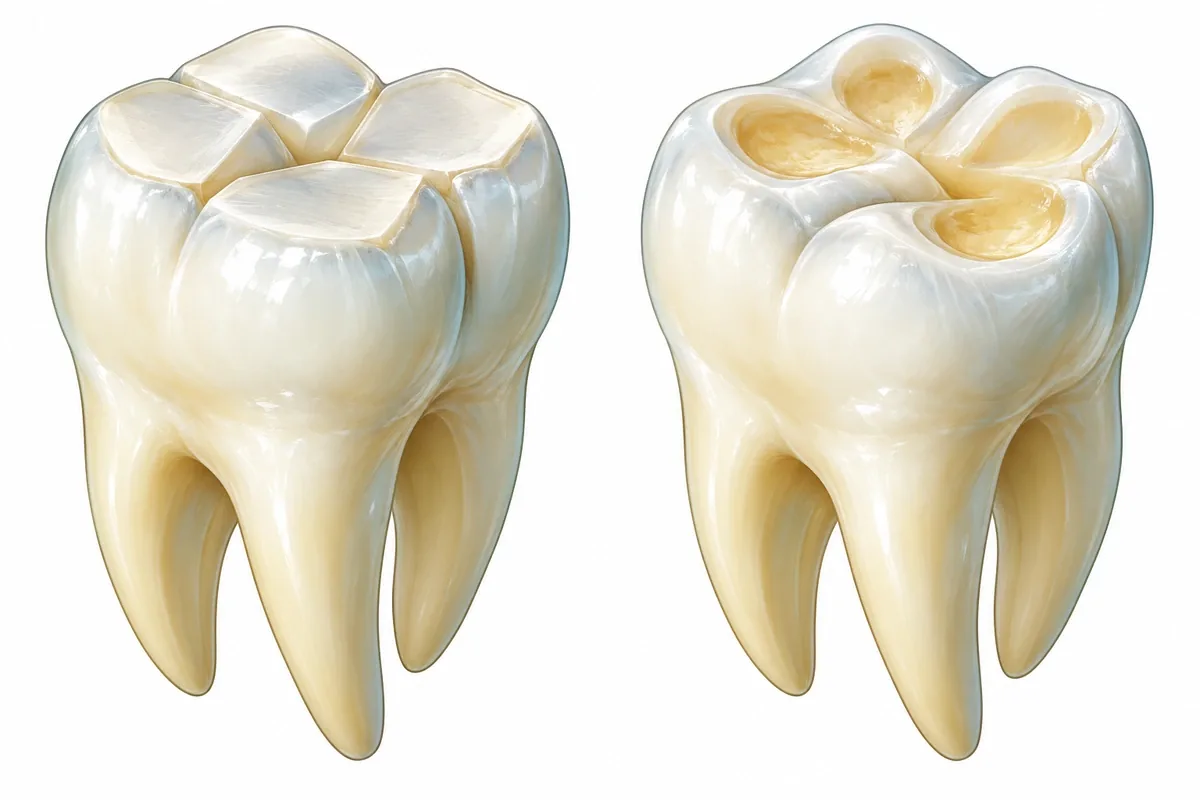
Most worn mouths show a mix. A person with nighttime reflux who also clenches will wear far faster than either cause would predict alone, because acid-softened enamel grinds away easily. This is why Dr. Zohdi asks about diet, heartburn, dry mouth, medications, and sleep as carefully as he examines the teeth.
Is the wear active or historical?
Wear that happened years ago and has stopped is a very different problem from wear that is still progressing. The examination looks for clues:
- Sharp versus rounded edges. Fresh facets have crisp borders; old ones soften over time.
- Sensitivity. Recently exposed inner tooth (dentin) is often sensitive to cold and sweet; long-exposed dentin usually is not.
- Matching fillings. If a filling has worn at the same rate as the tooth around it, the wear is probably ongoing; a filling standing above the surface suggests acid is dissolving the tooth around it.
- Muscle soreness or jaw fatigue on waking, scalloped tongue edges, and a partner who hears grinding point to active bruxism.
- Old records. Previous photographs, models, or scans let us measure change directly.
Sometimes a single visit cannot answer the question, and the right step is to document the teeth carefully and look again in several months. Monitoring is a decision, not a delay.
Control the cause and protect the teeth first
Before any tooth is rebuilt, whatever is wearing it down has to be slowed. Depending on the cause, that can include:
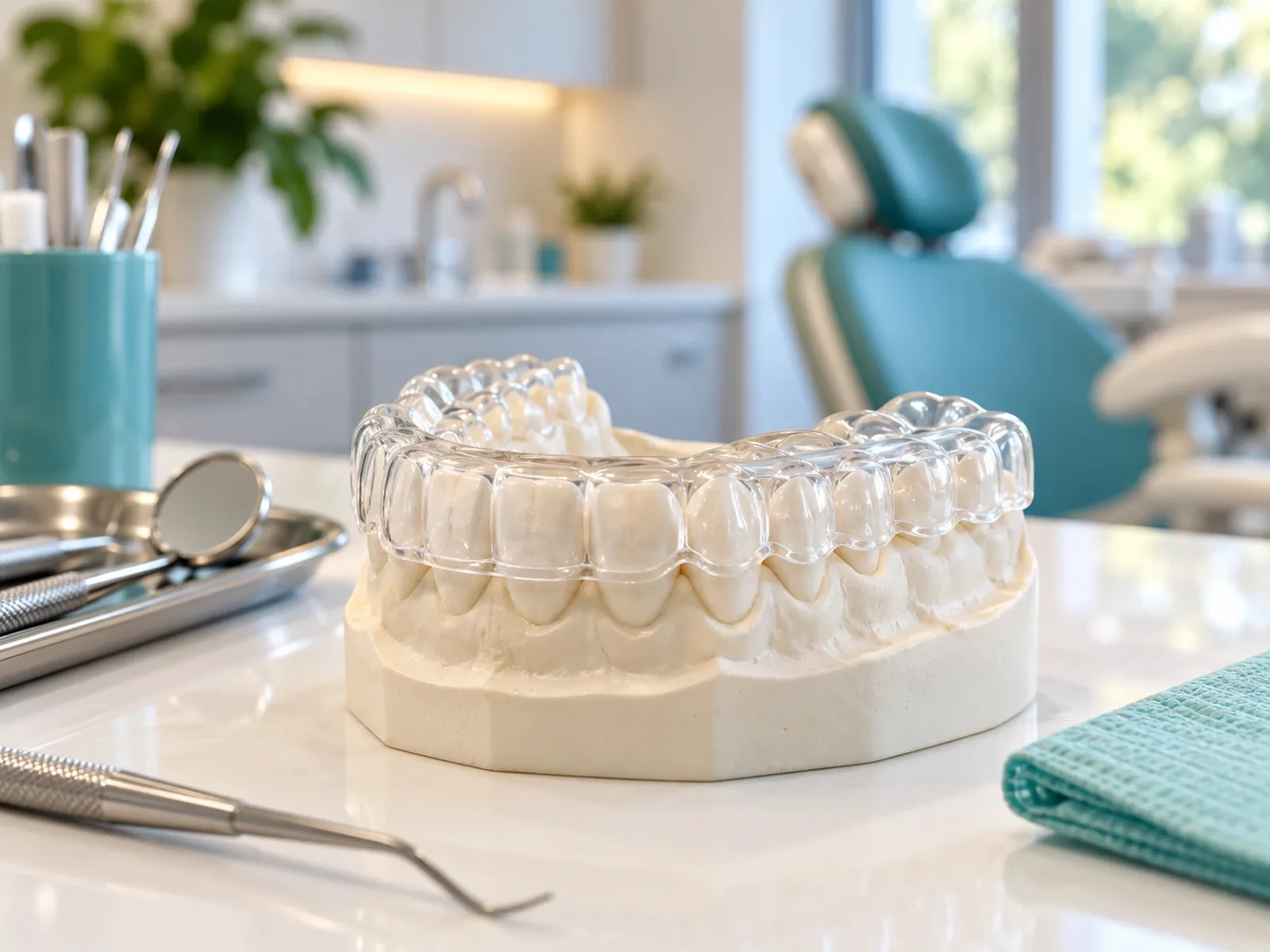
- A custom night guard to take grinding forces off the teeth during sleep. It protects enamel and restorations but does not stop the habit, and it does nothing for acid.
- Dietary changes: fewer acidic drinks, no sipping over hours, rinsing with water after acid, waiting before brushing after an acidic meal.
- Referral to your physician for reflux or other medical causes. Dental signs are sometimes the first clue to silent reflux.
- Treating dry mouth, since saliva is the mouth's natural acid buffer.
- Fluoride or desensitizing products to harden exposed surfaces and calm sensitivity.
- A softer toothbrush and gentler technique.
- A sleep assessment when snoring or daytime tiredness accompanies heavy grinding, because the two can be connected.
Stable wear with no sensitivity, no structural weakness, and no cosmetic concern may simply be protected and watched. The plan should say clearly why treatment is recommended now and what happens if it waits.
Rebuilding worn teeth
When restoration is needed, the guiding principle is to restore no more than the situation requires.
A few worn edges. Composite bonding can rebuild chipped or shortened front teeth conservatively, with little or no drilling. It is repairable and reversible, which makes it a good first restoration for worn teeth.
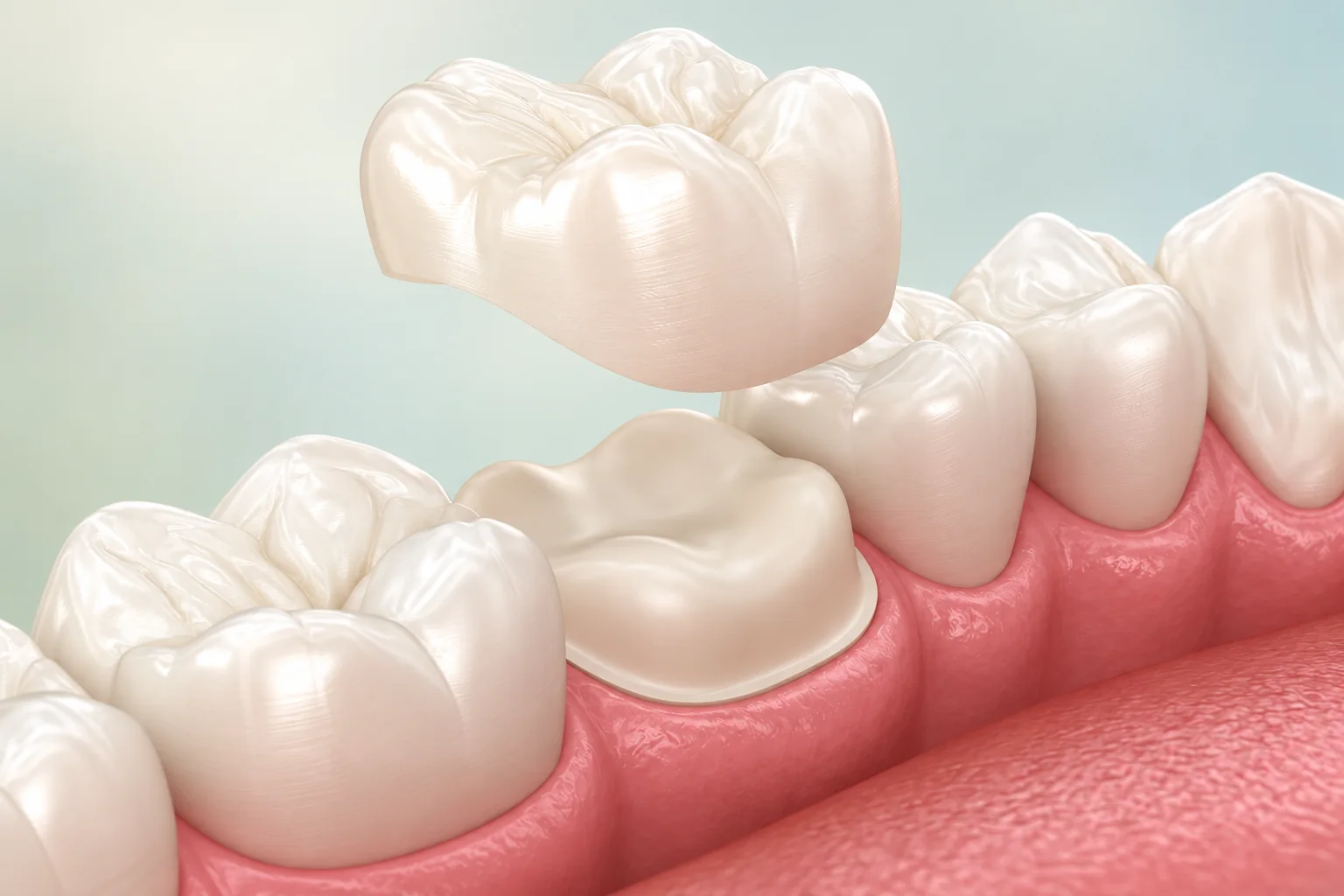
Worn chewing surfaces on several back teeth. Bonded onlays or crowns restore height and protect weakened cusps. The material choice balances strength against the opposing teeth with appearance.
Generalized wear across the mouth. When teeth have lost significant height everywhere, there is often no room to rebuild them without changing how the jaw closes. Restoring the bite to a new position is a major decision. It is tested first in temporaries, worn for weeks or months, so that comfort, speech, chewing, and jaw muscles can adapt and be assessed before anything is made in final materials. Our page on how reconstruction is sequenced explains that trial phase.
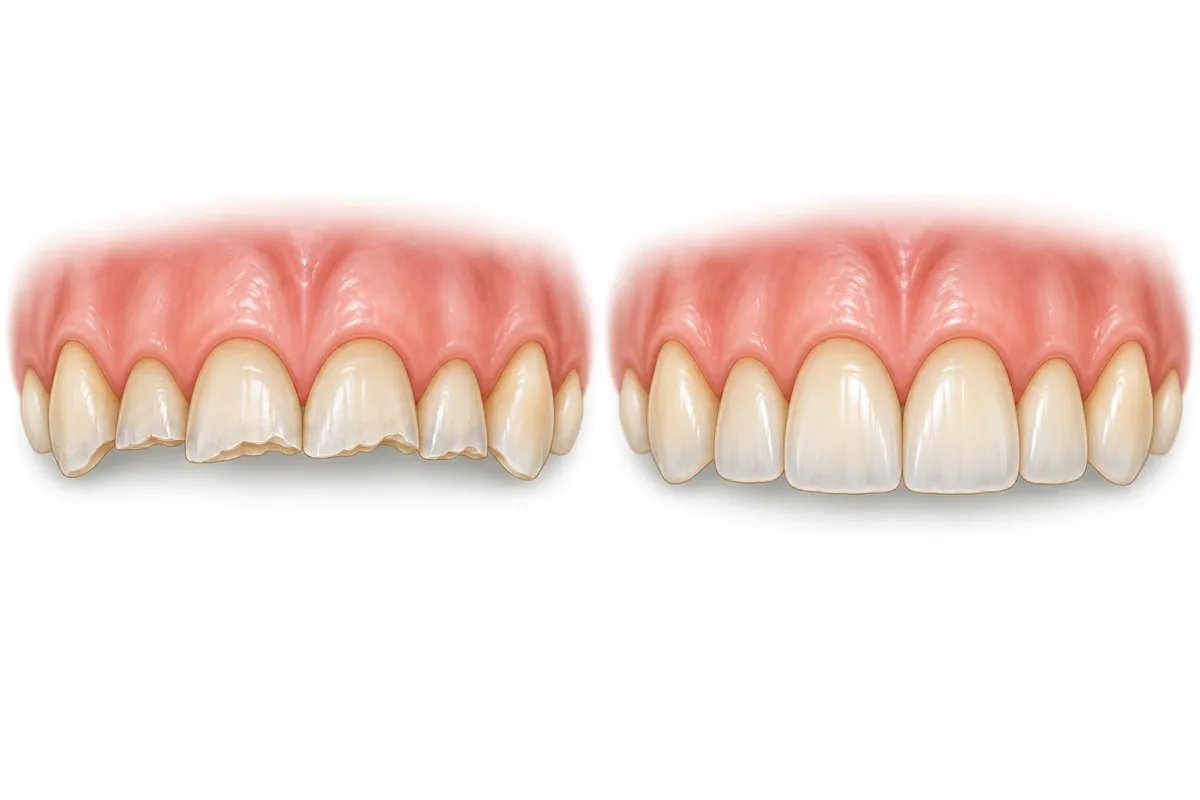
A photograph of your teeth from twenty years ago is useful context for the shape you are aiming for, but it is not a prescription. The right length depends on the space available, how much tooth remains, how your lips move, and what caused the wear.
Worn teeth and jaw pain
Worn teeth and jaw pain often appear together because clenching can cause both. That does not mean rebuilding the teeth will cure the jaw. Jaw joint and muscle problems need their own evaluation, and extensive bite changes should never be sold as a routine fix for nonspecific jaw symptoms. Our page on jaw clicking and pain explains what that assessment considers and how it fits alongside restorative planning.
Cost factors
The cost of treating worn teeth spans a very wide range because the treatment does. A night guard and monitoring is one end; rebuilding every tooth at a new bite is the other. Factors include how many teeth are involved, whether bonding or ceramic restorations are used, whether temporaries and a trial phase are needed, and whether any teeth need root canals or gum treatment first. Ask for an itemized plan that separates protection, repair, and elective improvement so you can see what each part costs. Our insurance and financing pages explain how we help with coverage and payment.
Sources and further reading
General information, not a diagnosis. Read how we create and review our dental guides.