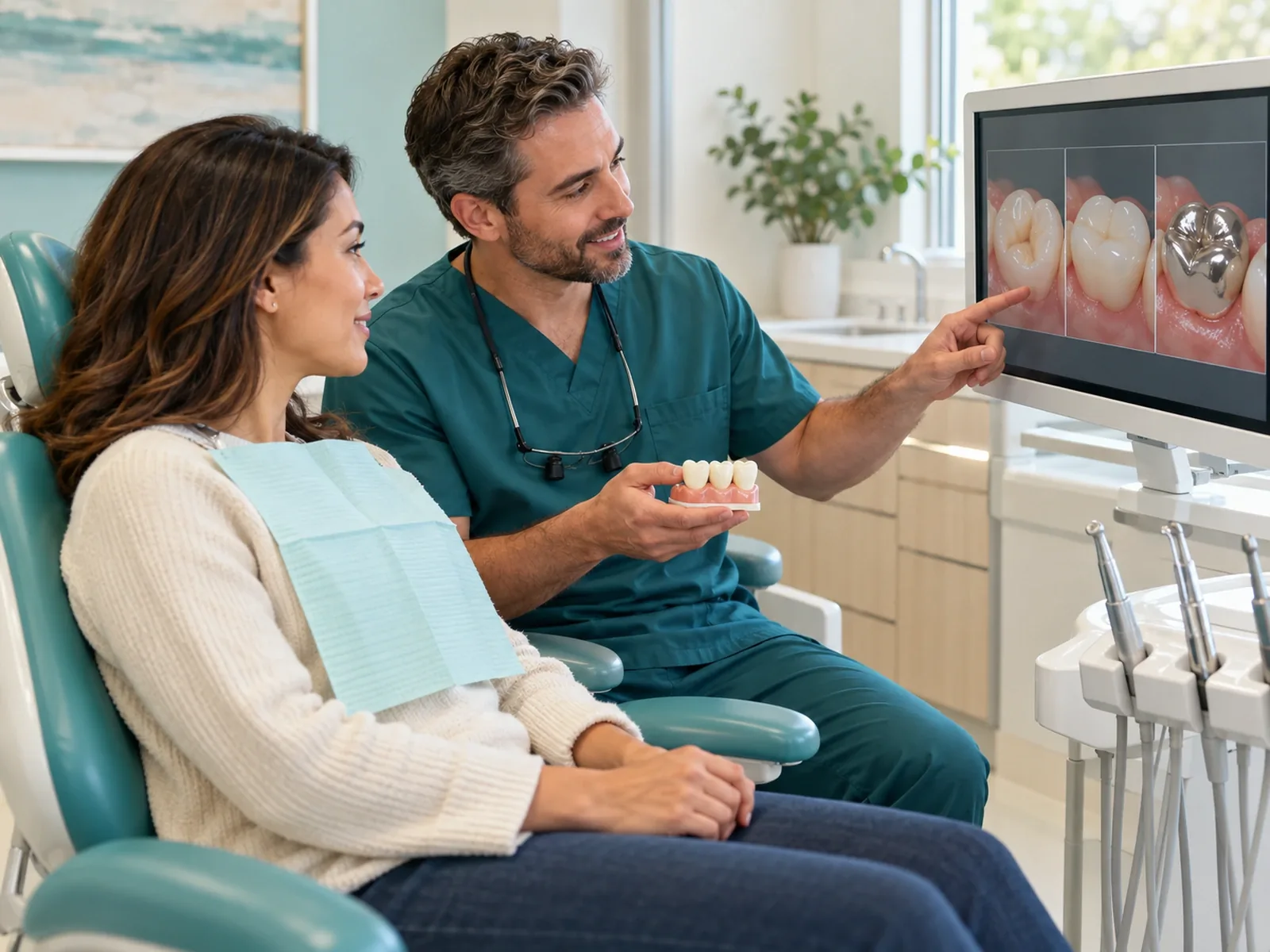
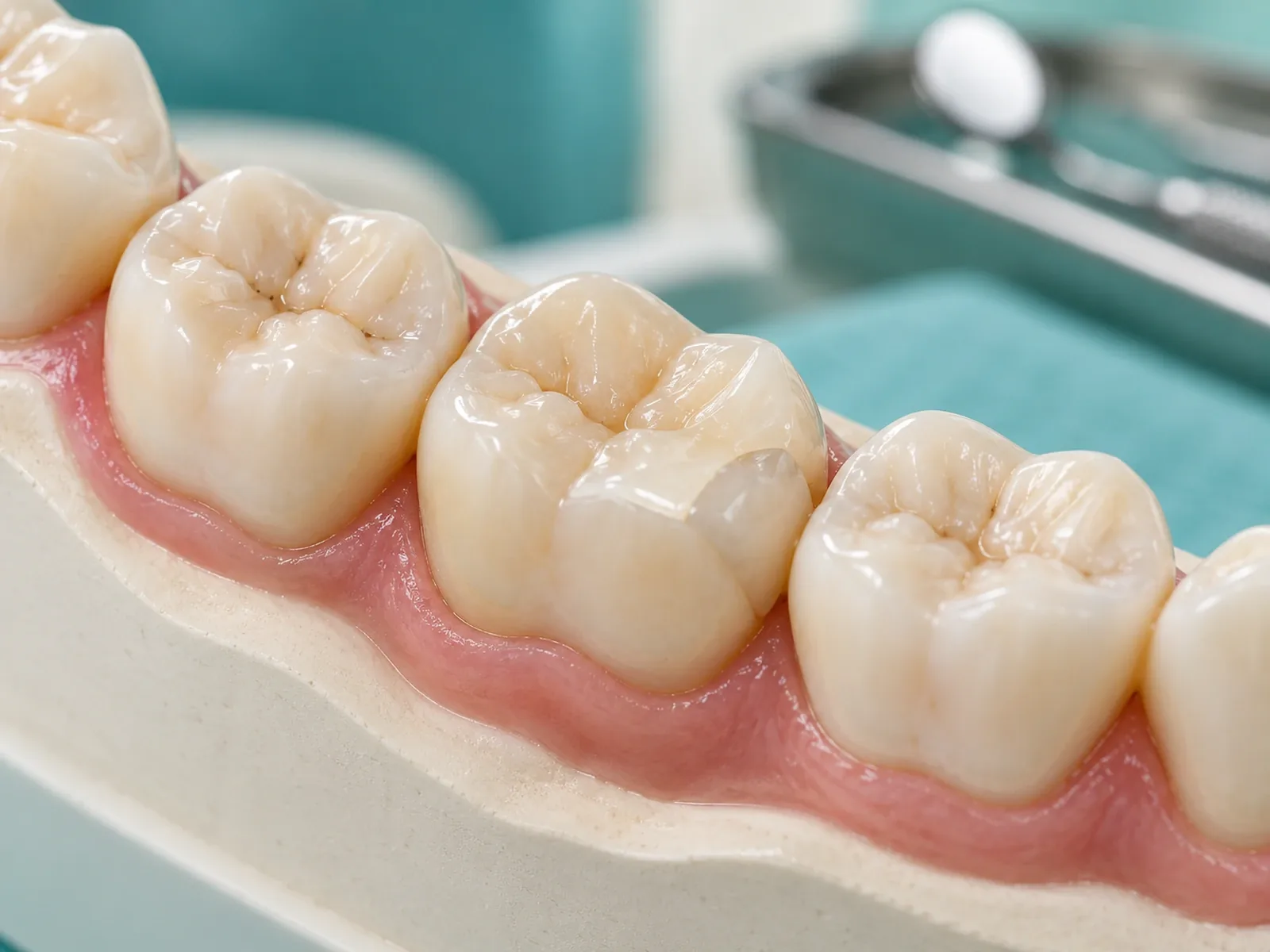
Some damaged back teeth sit in a middle ground. A filling would not give enough support, but a crown would mean grinding down healthy tooth that does not need to go. An inlay or onlay is designed for exactly that situation: a custom-made piece that repairs the damaged part of the tooth and protects the weak part while leaving the sound part alone.
Whether one is right for your tooth depends on how much strong structure remains and how much force the tooth takes. This page explains the difference between an inlay and an onlay, why partial coverage can be worth it, when it is not the right call, and what the appointments involve.
Filling, inlay, onlay, crown: a spectrum of coverage
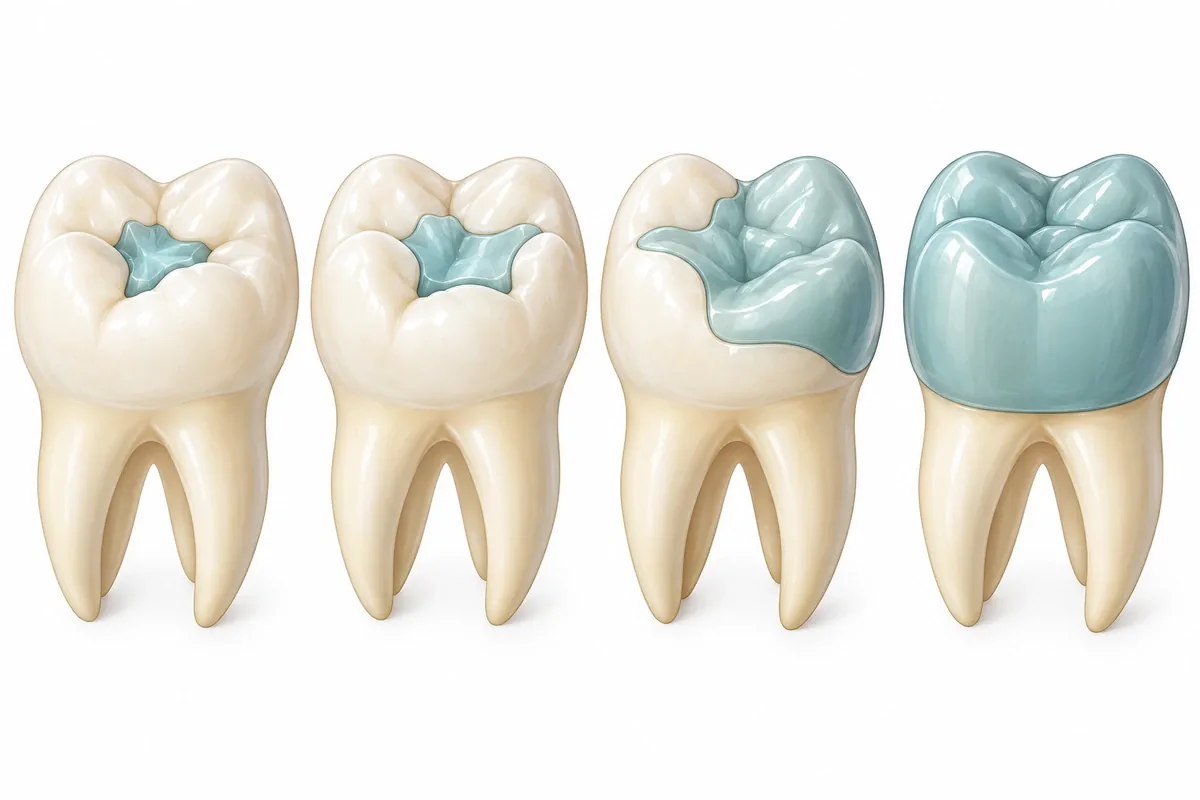
These four restorations are best understood as points on a scale of how much of the tooth is covered.
| Restoration | What it covers | Made where | Typical use |
|---|---|---|---|
| Filling | The cavity itself, shaped directly in the mouth | In the mouth, in one visit | Small to medium defects |
| Inlay | The area inside the tooth between the cusps | In a laboratory, then bonded in | Medium defect with all cusps still strong |
| Onlay | The inside area plus one or more cusps | In a laboratory, then bonded in | Larger defect with a weakened or missing cusp |
| Crown | The whole tooth above the gumline | In a laboratory, then cemented or bonded | Extensive damage, cracks, or after root canal treatment |
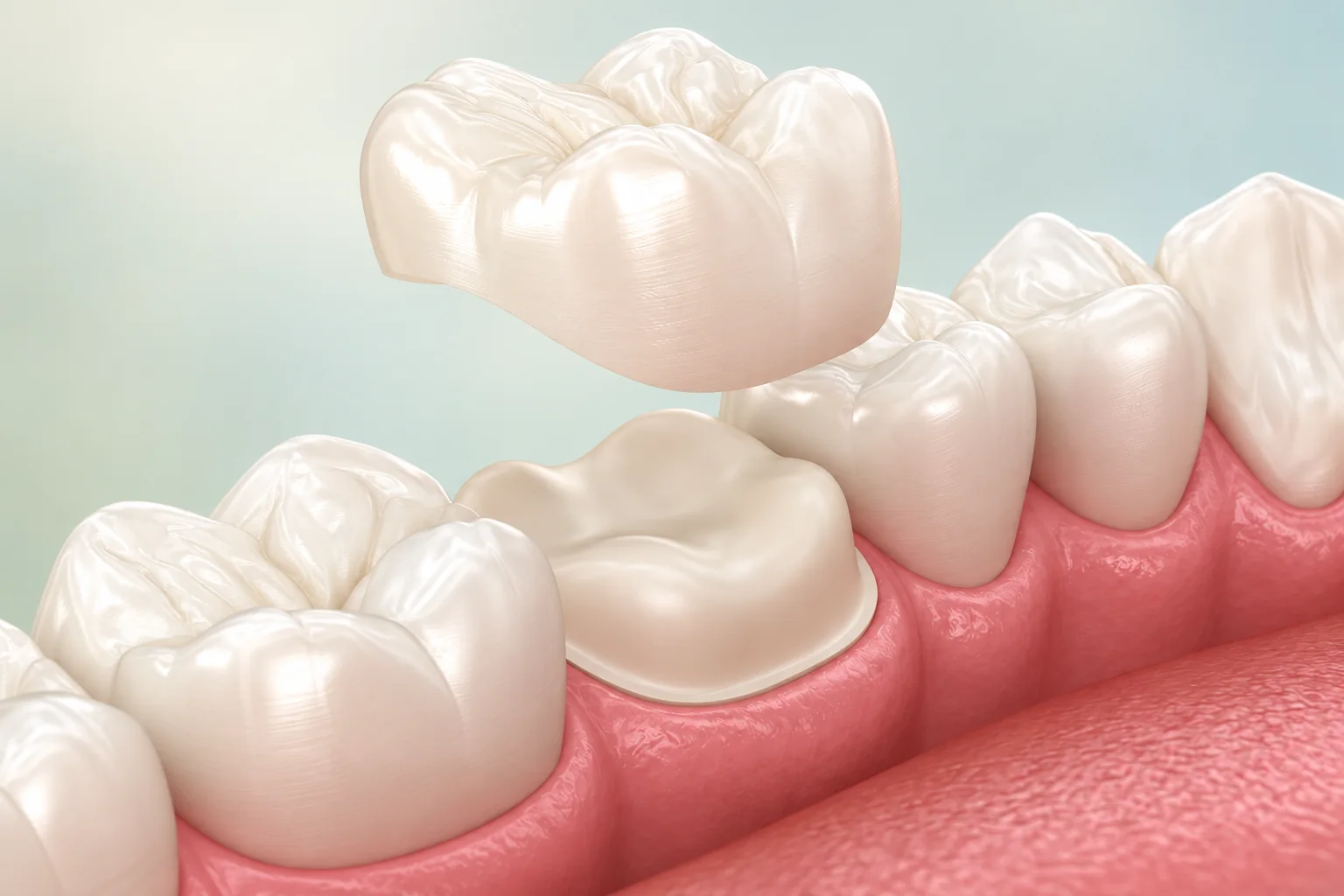
An inlay replaces what a large filling would replace, but because it is made outside the mouth from a solid block of ceramic or other material, it has better strength and a more precise fit than composite shaped by hand. An onlay goes further and covers a cusp that is too thin to survive chewing forces on its own. Onlays are sometimes called partial crowns, which is a fair description.
Why partial coverage may be worth considering
Healthy tooth is the one thing a dentist cannot put back. A full crown requires reshaping every surface of the tooth, including walls that may be perfectly sound. An onlay protects only the cusps that need it. For a molar with one cracked or missing cusp and three strong ones, that difference can be a lot of tooth kept.
There are other advantages to a lab-made restoration over a very large filling:
- Less shrinkage. Composite placed directly in the mouth shrinks slightly as it sets. A ceramic inlay is already solid when it is bonded, so the margins tend to seal better.
- Stronger under load. Ceramic made in a lab is denser and more wear-resistant than hand-placed composite, which matters on a molar that does the heavy chewing.
- Better contours. Contact points with neighboring teeth and the shape of the chewing surface are easier to get right outside the mouth.
Materials include tooth-colored ceramics such as lithium disilicate, zirconia, laboratory-processed composite, and gold. Gold has the longest track record and is very kind to the opposing teeth, but most patients today choose a ceramic that matches the tooth.
When an onlay is not the right choice
Preserving structure only helps if what remains is strong enough to do its job. An onlay may be the wrong tool when:
- A crack runs across the tooth or down toward the root, where full coverage is needed to hold the pieces together
- Decay extends well below the gumline, making a clean, dry margin hard to achieve
- So little tooth is left that the onlay would have nothing solid to bond to
- The tooth has had root canal treatment and is brittle; most back teeth in this situation do better with a crown
- You grind or clench heavily and the tooth takes extreme force
The reverse is also true. A small defect with strong walls does not need an onlay at all; a tooth-colored filling is the more conservative choice. Our filling-versus-crown guide explains the findings that move a tooth along the scale. If a piece of your tooth has just broken off, see what to do about a broken tooth first.
What happens at the appointments
An inlay or onlay follows a process similar to a crown and usually takes two visits at our Cleburne office.
First visit. The tooth is numbed with local anesthetic. Dr. Zohdi removes decay or old filling material and shapes the tooth so the restoration will seat cleanly, taking away only what is damaged or too thin to keep. An impression records the prepared tooth and your bite, and a temporary filling or cover protects the tooth in the meantime.
Between visits. Chew carefully on that side and avoid sticky foods that could pull the temporary off. Some cold sensitivity is normal. Call if the temporary comes loose.
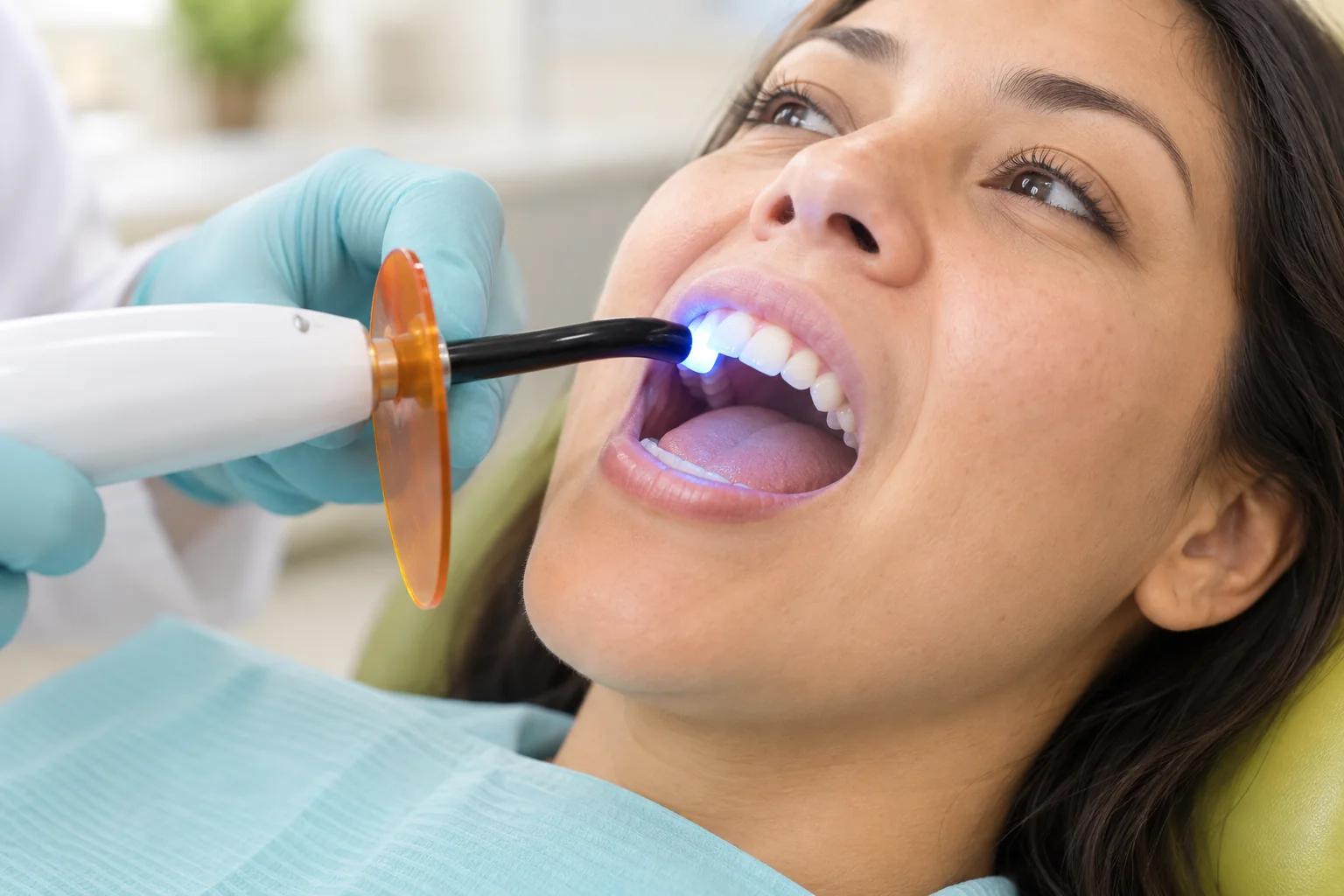
Second visit. The temporary is removed, the inlay or onlay is tried in, and the fit, contacts, and color are checked. It is then bonded to the tooth with a strong adhesive cement, the bite is adjusted, and the margins are polished.
Caring for an inlay or onlay
Brush twice a day, clean between your teeth daily, and keep up regular exams and cleanings. The ceramic will not decay, but the natural tooth at its edges can. Report new sensitivity, a rough edge you can feel with your tongue, or a change in your bite.
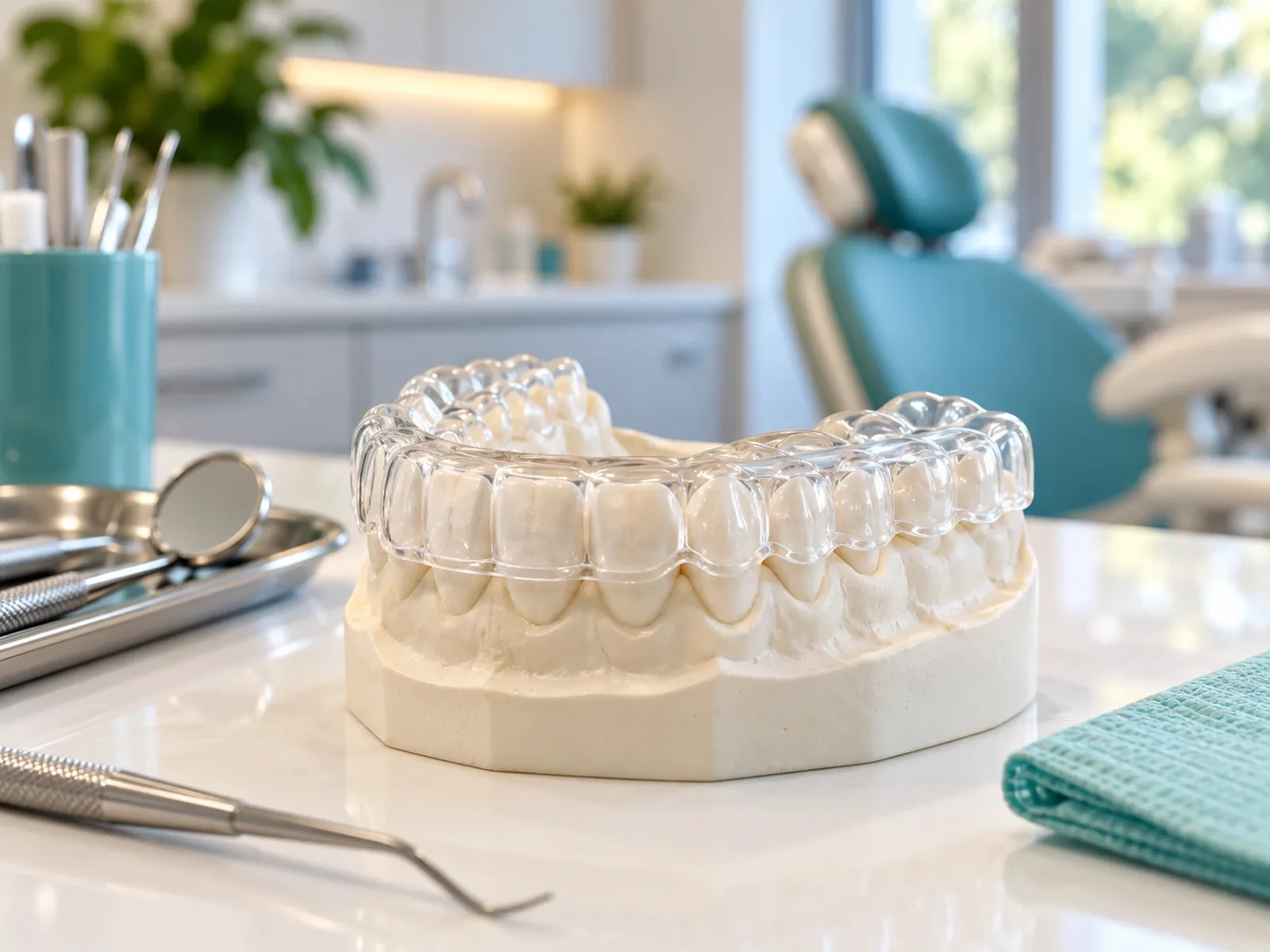
If you grind your teeth, a night guard protects the restoration and the tooth under it. Ceramic is hard but can chip under the forces of grinding, just as natural enamel does.
Cost factors
An inlay or onlay usually costs more than a filling and about the same as or slightly less than a crown, because it involves laboratory work and two visits. Dental insurance treats these restorations differently from plan to plan; some cover an onlay like a crown, others pay toward a filling and leave the difference to you. Our team checks your benefits before treatment so you know the estimate in advance. See insurance and financing.
The comparison worth making is not between material names but between designs: how much tooth each option saves, how well it protects the weak area, and how long it is likely to last on your tooth.
Sources and further reading
General information, not a diagnosis. Read how we create and review our dental guides.