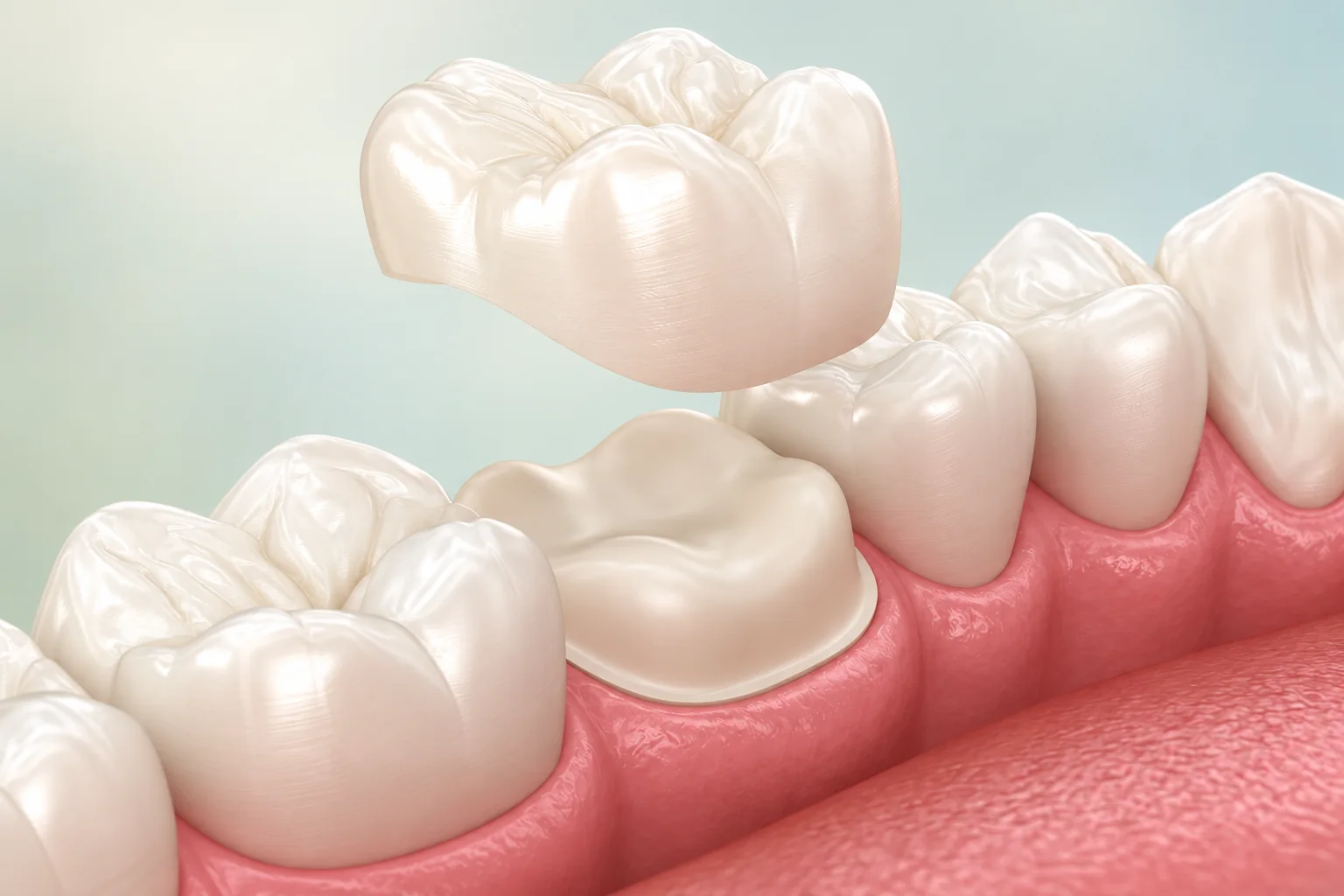

When a dentist says a tooth needs a crown rather than a filling, it can sound like an upsell. Sometimes it is worth asking about. But the choice between a filling and a crown is not really a choice between a smaller and a larger bill. It is a judgment about whether the tooth that remains can reliably hold a repair on its own, or whether it needs to be wrapped and protected so it does not break.
This page explains what Dr. Zohdi actually looks at when making that call, the findings that point toward each option, the middle ground of an onlay, and what to ask if the recommendation changes once the tooth is opened. The goal is for you to understand the reasoning well enough to agree with it or question it.
What matters more than the size of the hole
A cavity's visible size is a poor guide to how much repair a tooth needs. Two teeth with identical-looking holes can be in very different shape underneath. What matters is what is left:
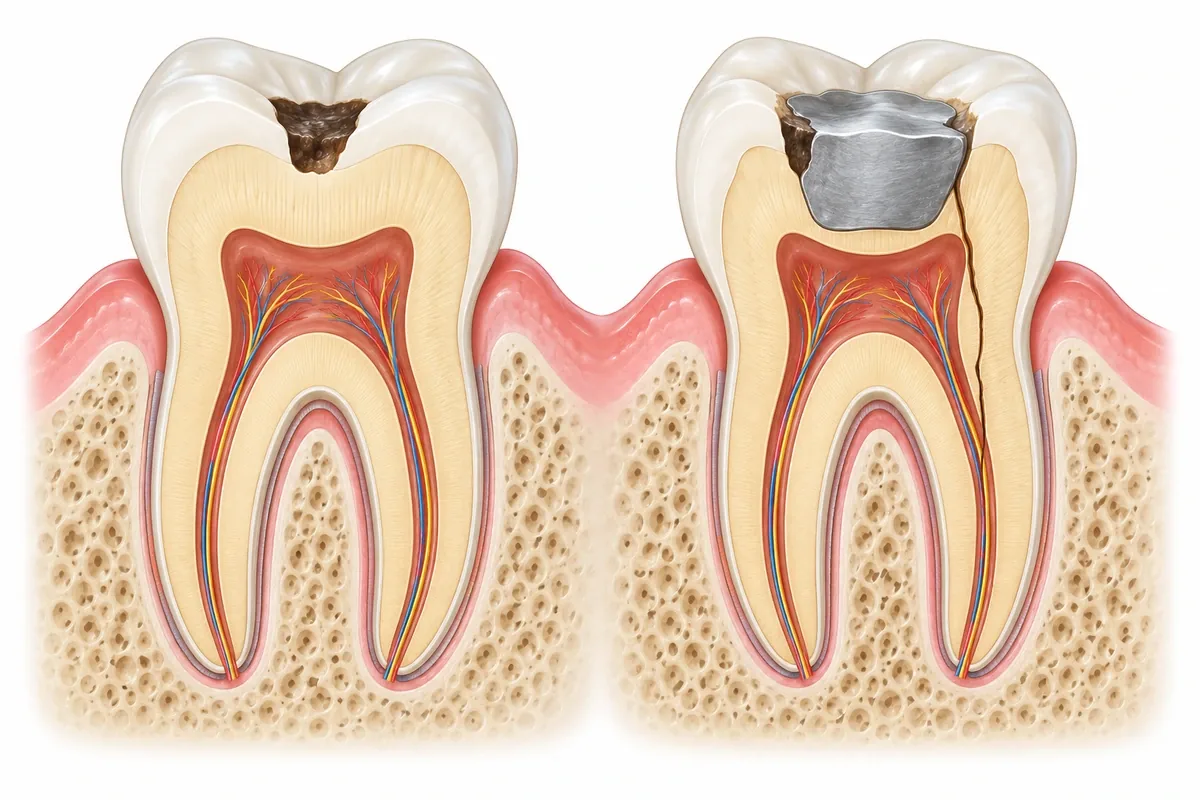
- How thick the remaining walls are. A filling sits inside the tooth and relies on the walls around it. Thin walls flex under chewing and eventually crack away from the filling.
- Whether any cusp is weakened or missing. The cusps are the points on a back tooth that do the chewing. A cusp undermined by decay or already broken needs to be covered, not just filled beside.
- Whether there are cracks. A crack line in enamel or dentin is a fault that chewing forces will open further. Fillings do not hold cracks closed; coverage does.
- What is already in the tooth. A large old filling means the tooth has already lost much of its natural structure. Each replacement removes a little more.
- Where the tooth is and how it bites. Molars take far more force than front teeth. A tooth that hits first when you close, or that you grind on, is under more strain.
- Decay under an old filling. On an X-ray and in the mouth, decay beneath a restoration often turns out larger than it looked.
- The health of the nerve and gums. A tooth that needs root canal treatment or has gum problems changes the plan regardless of the cavity.
When a filling is likely enough
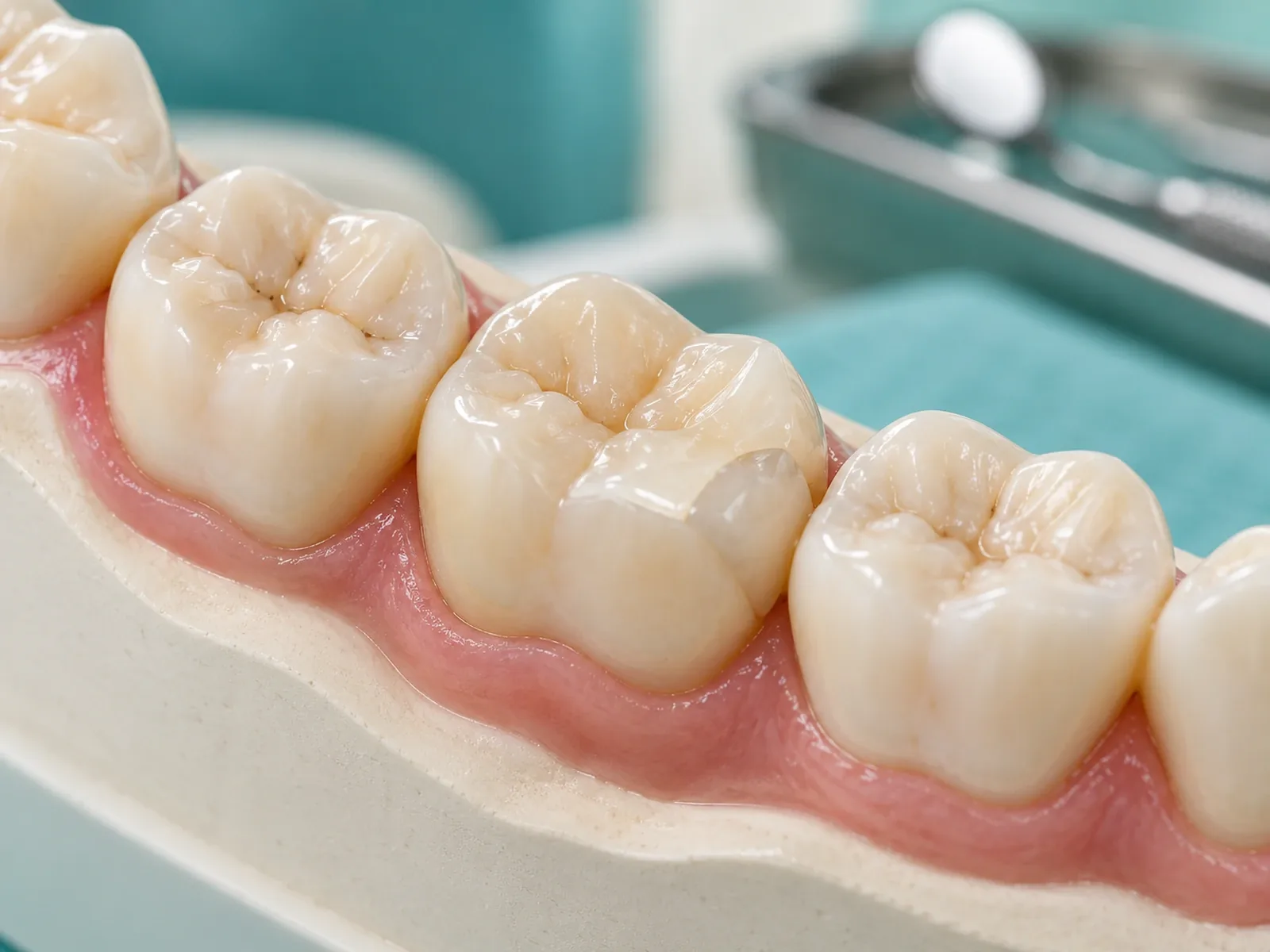
A tooth-colored filling is usually the right repair when the cavity is small to medium, the walls around it are thick and sound, there are no cracks, all the cusps are intact, and the tooth can be kept dry while the composite is bonded. In that situation a filling keeps the most natural tooth, is finished in one visit, and can be repaired later if an edge chips.
A filling can also be reasonable for a somewhat larger defect in a front tooth or premolar that does not take heavy force. The point is that the filling only has to replace what is missing; the tooth is still doing the structural work.
When cusp coverage or a crown may be the better call
A filling does not reinforce a thin wall or hold a cracked cusp together. When any of the findings above are present, covering the weak part is what protects the tooth. There are two ways to do that:
- An onlay covers the chewing surface and the weak cusp or cusps while leaving strong walls untouched. It is the conservative choice when part of the tooth is compromised and part is sound.
- A crown covers the whole tooth above the gum. It is the choice when damage or cracks involve most of the tooth, when very little structure remains, or after root canal treatment on a back tooth.
One pattern deserves a specific mention: the tooth that keeps breaking. If a filling has been replaced two or three times because a piece of tooth chipped off each time, making the filling bigger again is unlikely to end the cycle. Each round removes more tooth, and eventually a cusp fractures below the gum where it is much harder to fix. Covering the tooth sooner usually saves tooth in the long run.
Coverage has limits too. A crown cannot make an unrestorable tooth restorable. If a crack runs into the root, the bone around the tooth is badly damaged, or there is almost nothing left above the gum, a crown is likely to fail, and the honest conversation is about whether to save or remove the tooth.
A quick comparison
| Filling | Onlay | Crown | |
|---|---|---|---|
| What it does | Replaces missing tooth | Replaces missing tooth and covers weak cusps | Covers and protects the whole tooth |
| Tooth removed | Only the damaged part | Damaged part plus thin cusps | An even layer from every surface |
| Visits | One | Usually two | Usually two |
| Best when | Walls thick, no cracks | Some cusps weak, others strong | Most of the tooth compromised |
| Relative cost | Lowest | Middle | Highest |
How Dr. Zohdi reaches a recommendation
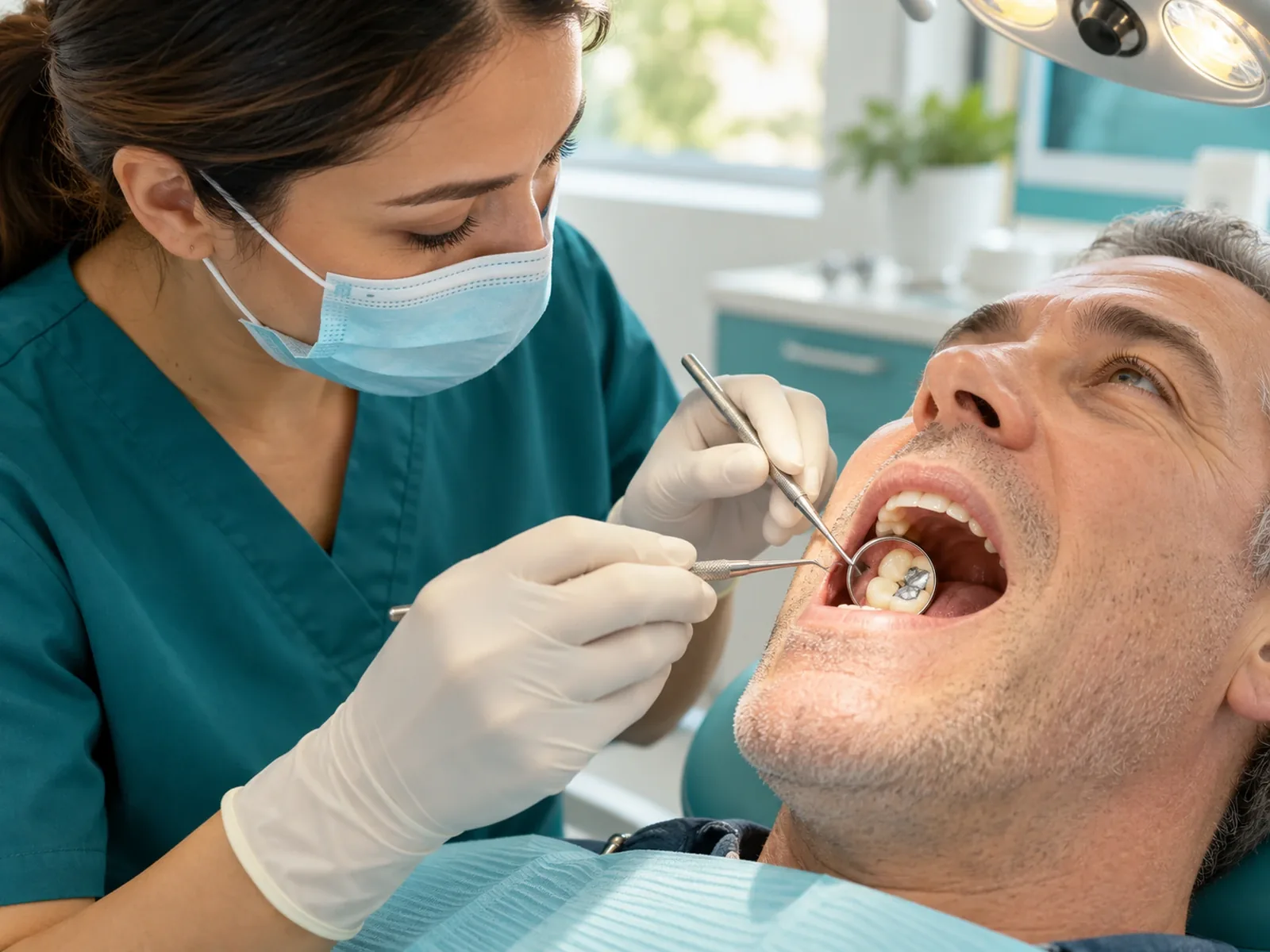
At our Cleburne office the decision starts with an examination and X-rays to see how deep the decay goes and what sits under any old filling. Dr. Zohdi checks each cusp, looks for crack lines under magnification and good light, and may ask you to bite on a small plastic instrument one cusp at a time; sharp pain on release points to a cracked cusp. He also looks at your bite and asks about grinding, which you may not know you do.
You should leave the conversation knowing three things: what he found, why that finding points to a filling, an onlay, or a crown, and what would happen if you chose the smaller repair anyway. If the answer to the third question is "it will probably work for a while," that is useful information too.
When the plan changes during treatment
Sometimes a tooth is opened for a filling and the decay turns out to be deeper, a crack appears, or a wall crumbles. This is common and does not mean anything went wrong; some findings are simply not visible until the old material is out.
What should happen next is a pause. Dr. Zohdi will show you what he found, explain how it changes the options, and let you decide before any additional procedure begins, whenever the situation allows. Your estimate should leave room for that discussion. If a new recommendation arrives without an explanation of the new finding, it is fair to ask for one.
Sources and further reading
General information, not a diagnosis. Read how we create and review our dental guides.