
A dental bridge replaces one or more missing teeth with a fixed restoration that is cemented in place and does not come out. In a conventional bridge, the teeth on either side of the gap are reshaped and crowned, and a replacement tooth (called a pontic) is joined to those crowns so the pieces work as one unit. Bridges have been used for generations, and for the right gap, with healthy neighboring teeth, they remain a sound option.
The key word is neighboring. A bridge borrows strength from the teeth next to the space, so their condition is central to the decision. This page explains how a bridge works, when it makes sense compared with an implant or partial denture, what the appointments look like, how to clean under one, and what tends to go wrong when it is not looked after.
How a bridge works
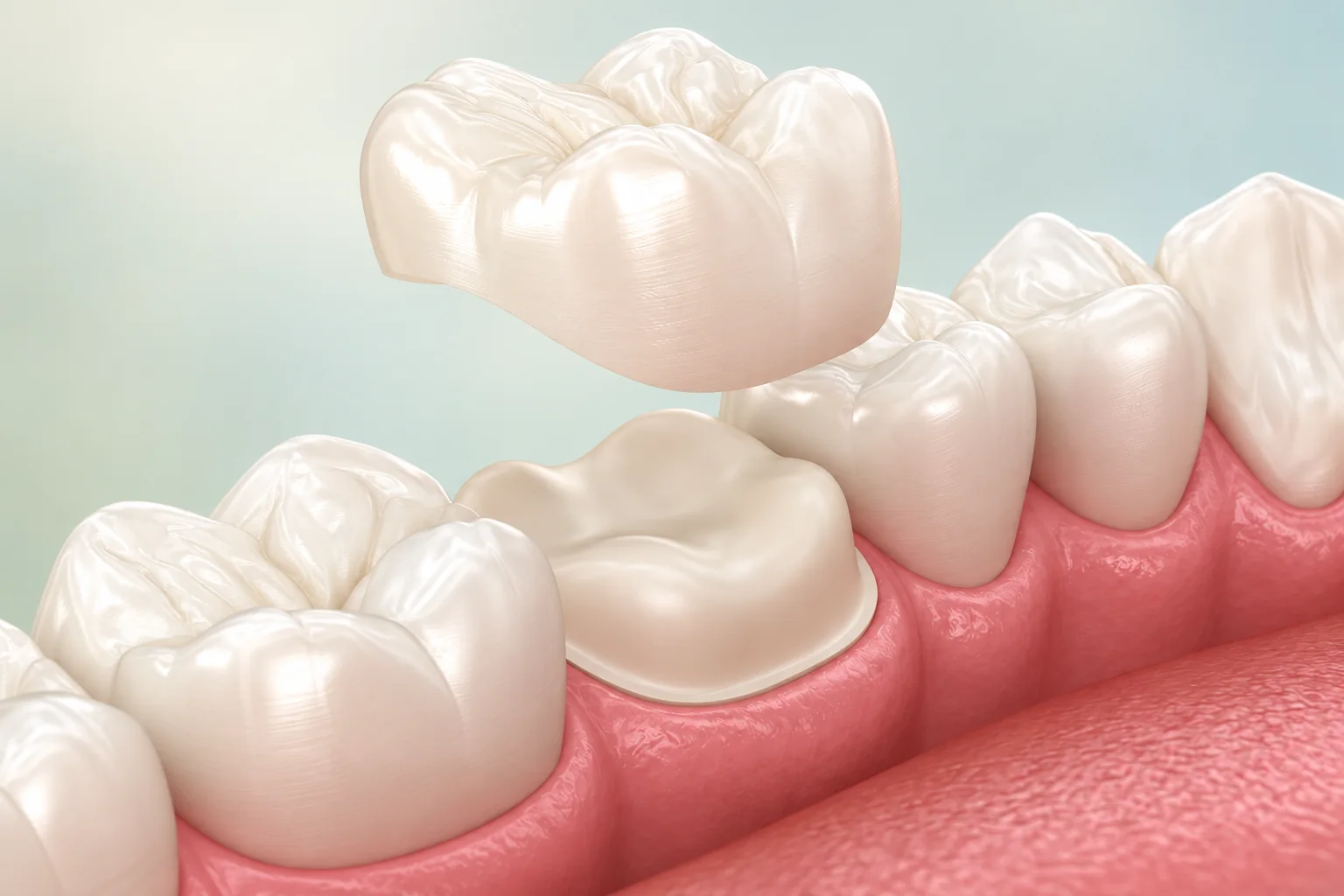
A bridge has three parts. The abutments are the supporting teeth (or implants) on each side of the gap. The pontic is the replacement tooth that fills the space. Connectors join them into a single piece. The whole unit is made in a dental laboratory from porcelain, zirconia, or porcelain bonded to a metal core, and then cemented onto the prepared abutment teeth.
Not every bridge is built the same way:
- Conventional bridge: crowns on both sides of the gap, the most common design.
- Cantilever bridge: anchored on one side only. Used in limited situations where the forces are light, because it puts a lever-like strain on a single anchor.
- Resin-bonded (Maryland) bridge: a replacement tooth with thin wings bonded to the back of the neighboring teeth. It needs very little tooth reshaping, so it is mostly used for front teeth, but it comes loose more easily than a conventional bridge.
- Implant-supported bridge: anchored on implants instead of natural teeth, which leaves the neighbors untouched. See replacing several missing teeth with implants.
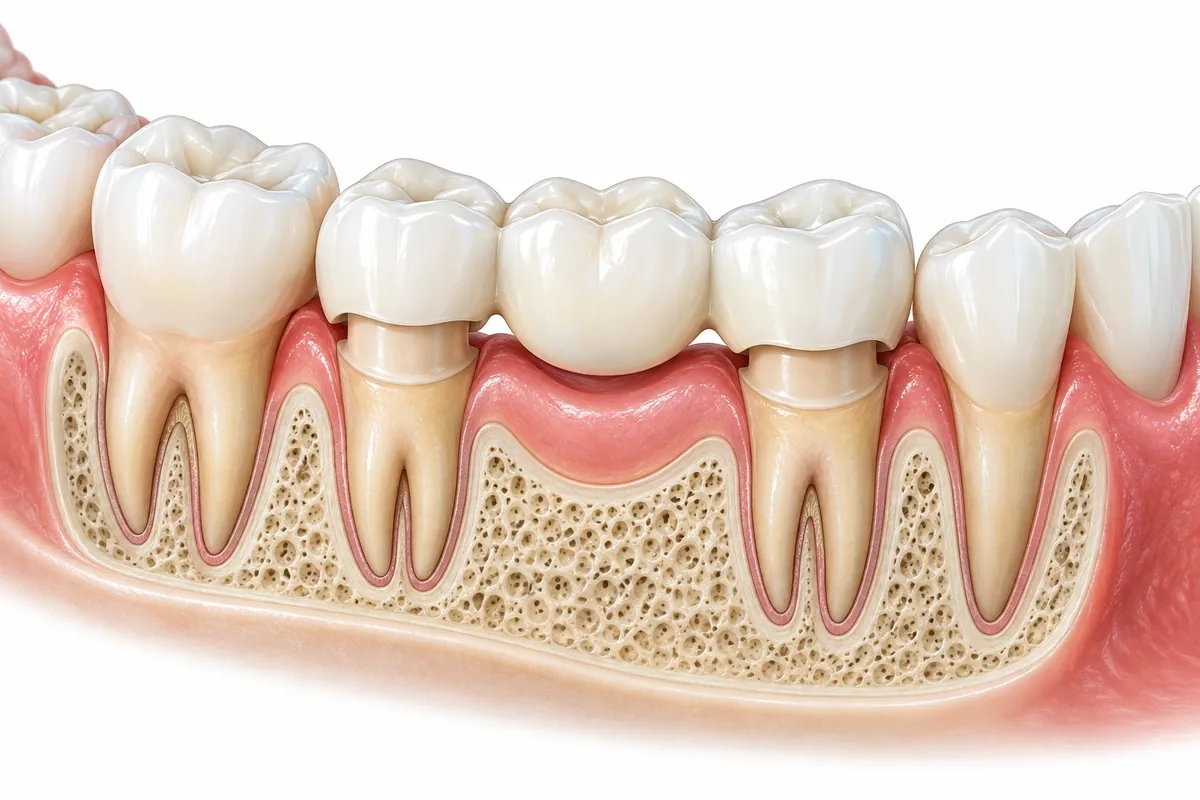
Look at the whole space before deciding
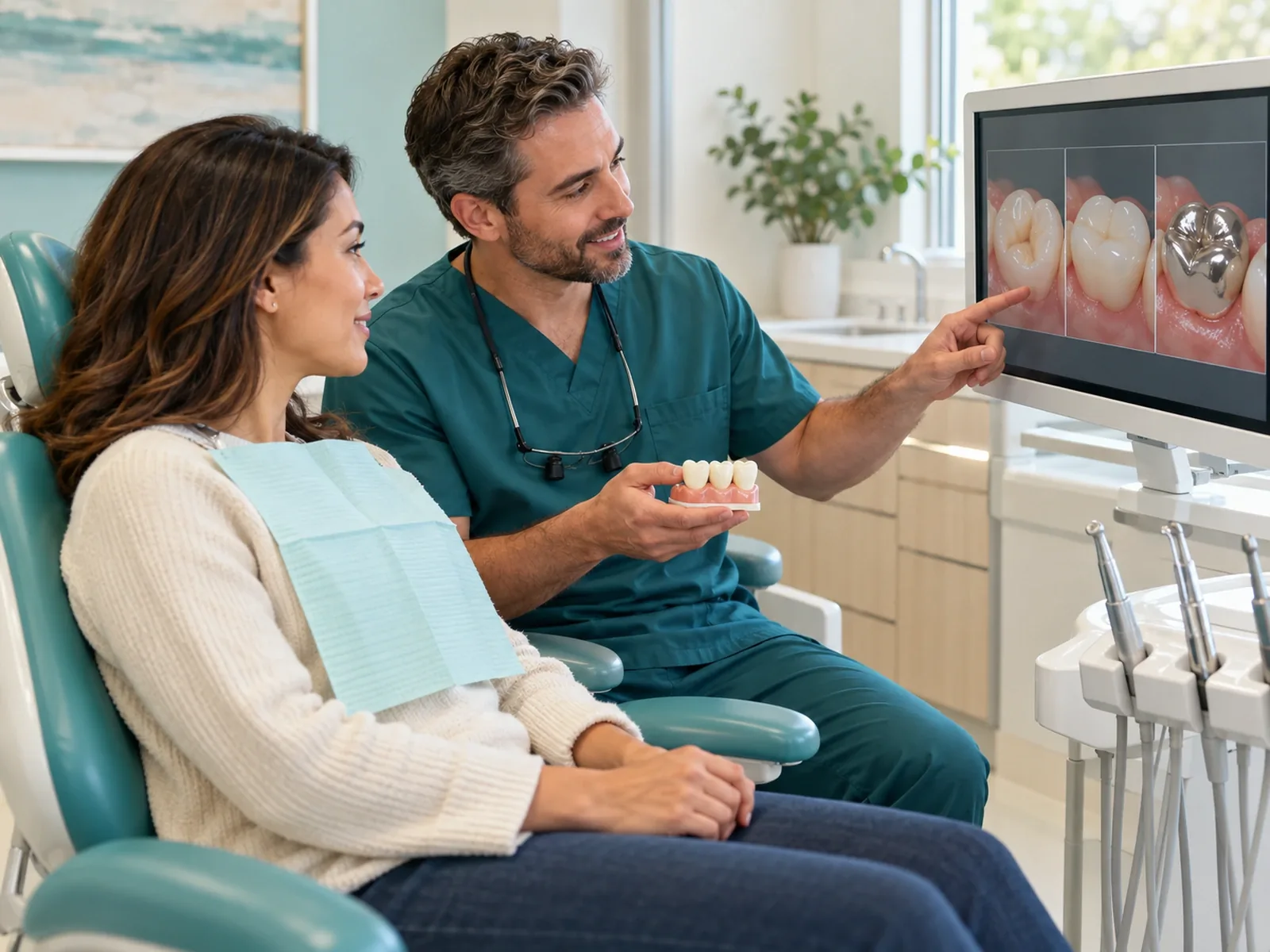
Dr. Zohdi evaluates the number and position of the missing teeth, your bite, the gum and bone around the gap, and above all the teeth that would carry the bridge. A longer span puts more strain on its anchors, and a bridge in the back of the mouth takes more chewing force than one in front.
The condition of the anchor teeth changes the conversation. A neighbor that already has a large filling or an old crown is a natural abutment; crowning it costs little in healthy tooth. An intact tooth that would be cut down only to hold a bridge is a bigger sacrifice, and that is often the moment an implant becomes the more conservative choice.
Two questions worth asking before any tooth is prepared: How does this plan affect each supporting tooth? And what happens if one of them develops decay or needs root canal treatment later? Because the pieces are joined, a problem with one anchor can mean remaking the whole bridge.
Bridge, implant, or partial denture?
Each way of replacing a missing tooth has a different profile. The right comparison includes surgery, healing time, daily cleaning, future repair, and the health of your existing teeth, not only the first fee.
| Fixed bridge | Single implant | Removable partial denture | |
|---|---|---|---|
| Uses neighboring teeth | Yes, they are reshaped and crowned | No | Rests on them with clasps, no reshaping |
| Surgery | None | Yes, implant placement and healing | None |
| Time to finished tooth | Usually a few weeks | Several months including healing | A few weeks |
| Daily cleaning | Must clean under the pontic | Like a natural tooth | Removed and cleaned separately |
| Replaces the root | No | Yes | No |
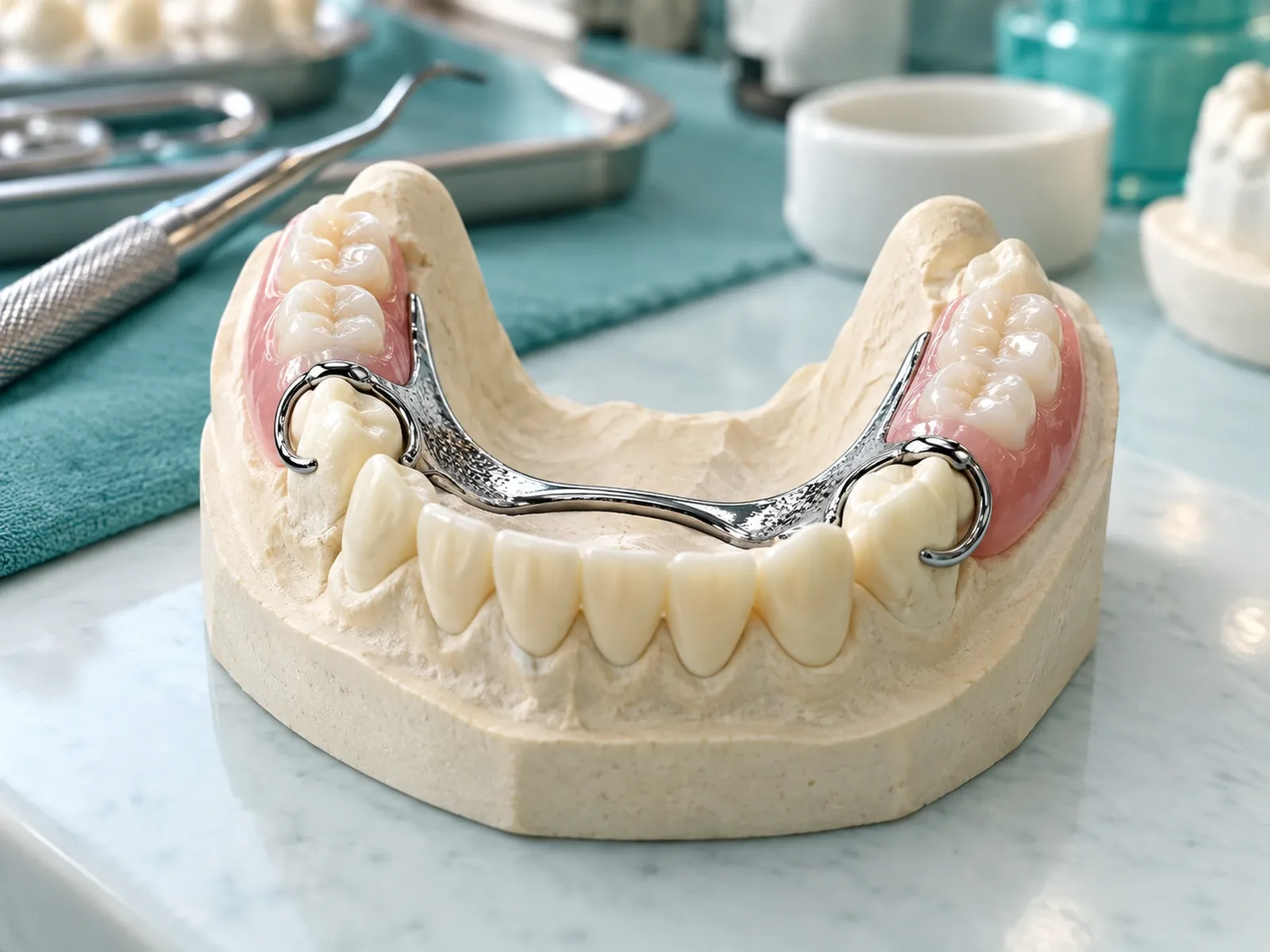
A single implant and crown replaces a tooth without touching its neighbors and helps preserve the bone in the gap. A removable partial denture can replace several teeth in different places at a lower cost but has to come out for cleaning. Our implant-versus-bridge guide goes through the trade-offs in more depth, and if a tooth has just been removed, see planning replacement after an extraction.
What to expect at your visits
Getting a conventional bridge at our Cleburne office usually takes two appointments, with laboratory time in between.
- Consultation and planning. Dr. Zohdi examines the gap and the anchor teeth, takes X-rays, and talks through bridge, implant, and removable options with you. If a bridge is the plan, you will know which teeth will be prepared and why.
- Tooth preparation. With the area numbed by local anesthetic, the abutment teeth are reshaped by removing a thin layer of enamel so the crowns that hold the bridge can fit. If the bridge will sit on implants, this step is not needed.
- Impressions. A precise impression records the prepared teeth, the gap, and the teeth you bite against. This becomes the blueprint for the bridge.
- Temporary bridge. A temporary protects the prepared teeth and gums and lets you chew while the final bridge is made.
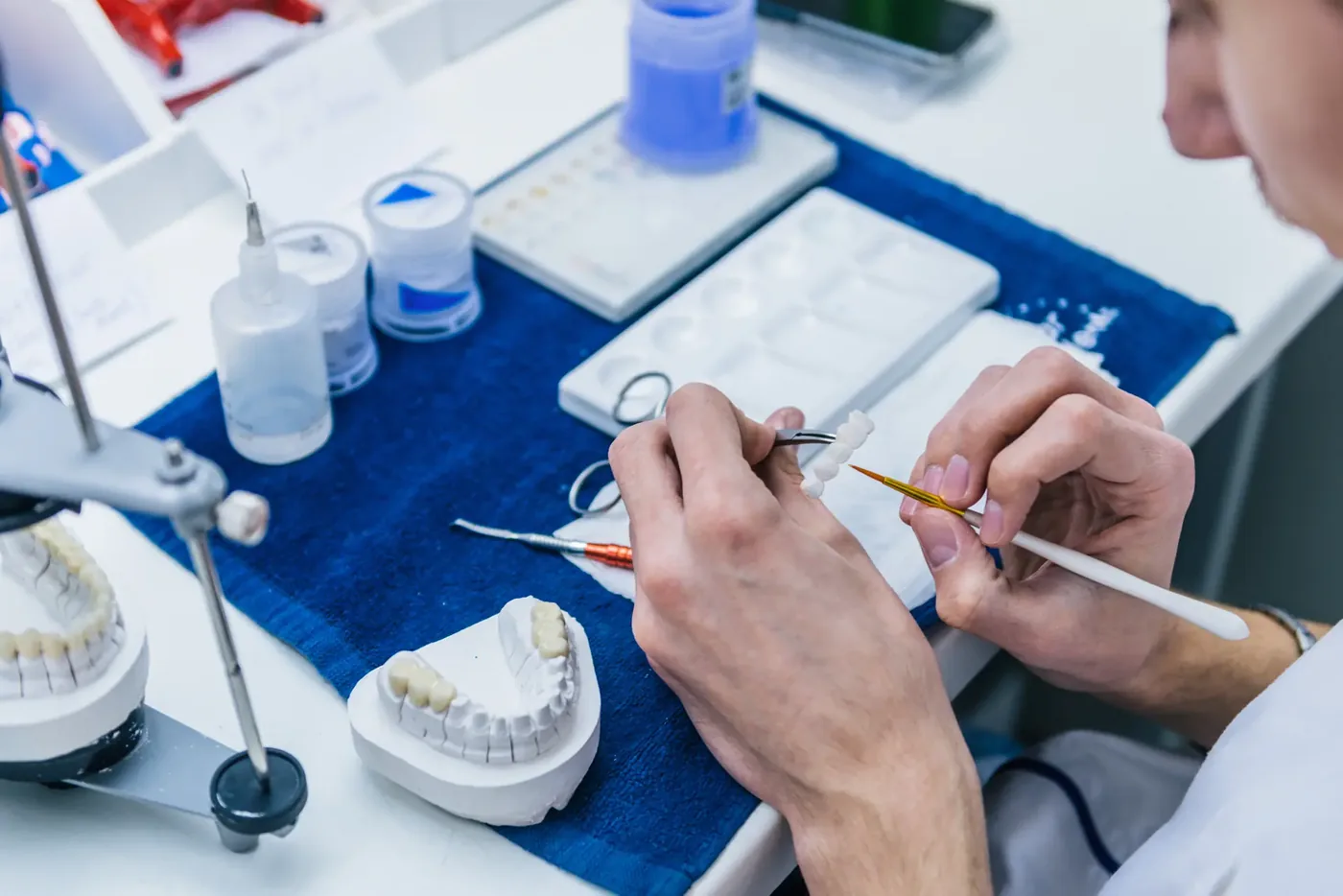
- Laboratory fabrication. The bridge is custom made to match the color, shape, and size of your natural teeth.
- Placement. The temporary comes off, the final bridge is tried in, and the fit, contacts, color, and bite are checked and adjusted before it is permanently cemented.
- Follow-up. You are shown how to clean under the bridge, and the bite is rechecked at your next visit.
Cleaning underneath is essential
A fixed bridge does not come out, so plaque and food collect under the pontic and around the anchor teeth where ordinary floss cannot reach. You need a tool that fits your bridge: a floss threader that carries floss under the pontic, pre-cut floss with a stiff end, small interdental brushes, or a water flosser. Ask for a demonstration with the tools that match your actual bridge; it takes a minute to learn and matters more than anything else you can do for it.
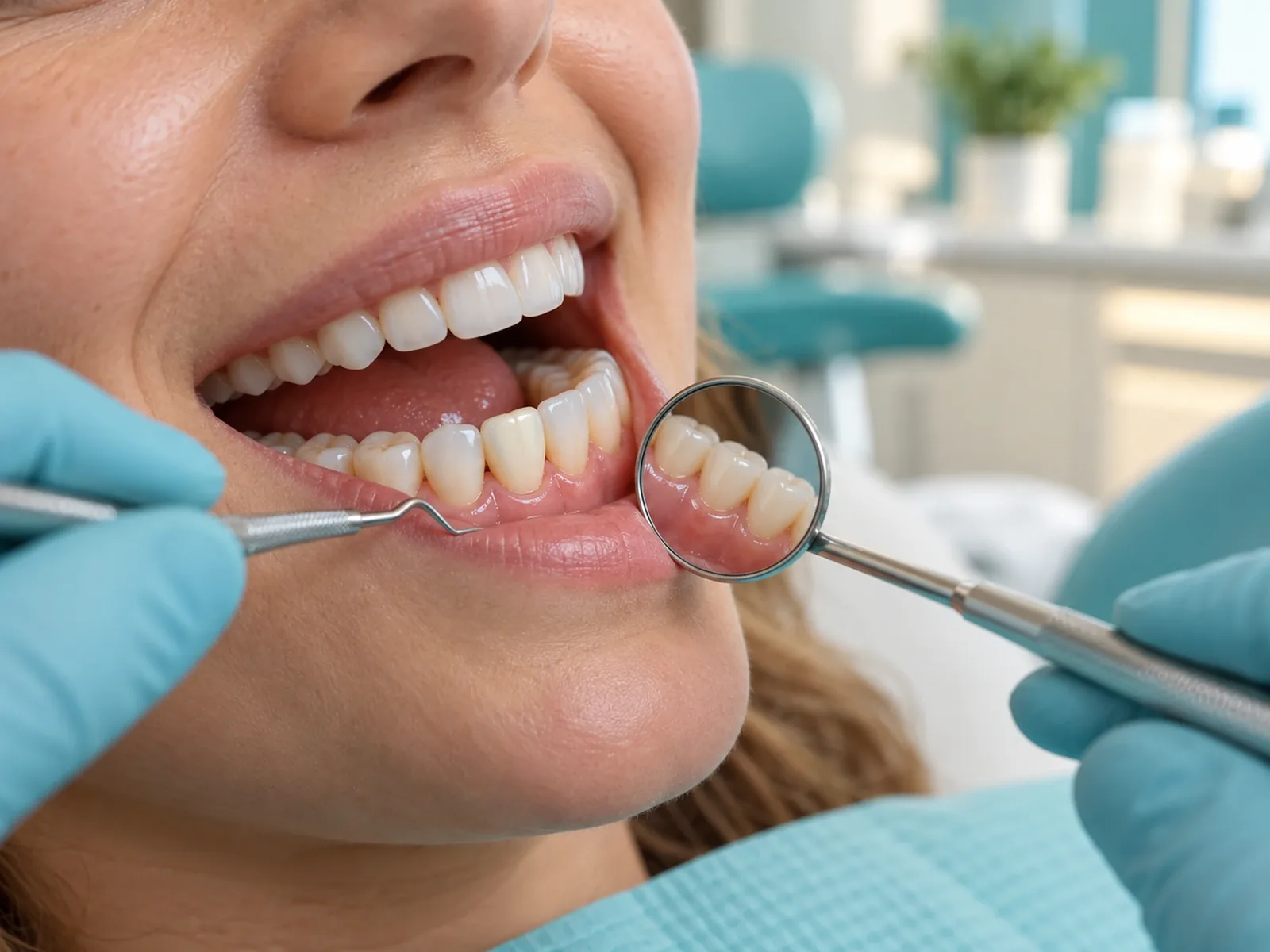
Food trapping, gums that bleed around the anchors, a bad taste, or a change in how your bite feels all deserve a look. A bridge can stay firmly attached while decay quietly develops at the edge of an anchor crown, so regular exams still matter even when everything feels fine.
How long a bridge lasts and what can go wrong
Well-made bridges on healthy anchors often serve for many years. When they fail, it is usually for one of these reasons:
- Decay at the anchor margins, the most common cause, and the one daily cleaning prevents
- An anchor tooth that develops a nerve problem and needs root canal treatment through or around the bridge
- Loosening of the cement, which can let bacteria under the crowns even if the bridge feels firm
- Chipped porcelain, especially in people who grind; a night guard protects the bridge as well as your other teeth
- Changes in the bone and gum under the pontic, which can open a small gap under the replacement tooth over time
Cost factors
The fee depends on how many units the bridge has (a single missing tooth usually means a three-unit bridge), the material, and whether the anchor teeth need other treatment first. Many insurance plans contribute toward bridges. Our team checks your benefits before treatment and explains the estimated out-of-pocket cost, and financing is available; see insurance and financing.
Sources and further reading
General information, not a diagnosis. Read how we create and review our dental guides.