
Glen Rose is the Somervell County seat, sitting where US-67 meets SH-144. It is a small town, about 2,700 people at the 2020 census, but it carries a lot of traffic for its size: visitors heading to Dinosaur Valley State Park and the Paluxy River, families in Glen Rose ISD, ranching households, and shift workers at the Comanche Peak nuclear plant. If that describes you and you are weighing implants or dentures, the first question is usually not "can a Cleburne dentist do this" but "how many trips will this take, and how do I fit them in."
Cleburne Dental has one office, at 302 N Ridgeway Dr, Cleburne, TX 76033. There is no Glen Rose branch, no local phone number and no staff based in Glen Rose. Everything on this page happens in Cleburne. Use the full address in your maps app rather than guessing from the town square, because starting points around Glen Rose vary a great deal.

Why this treatment is a sequence, not a visit
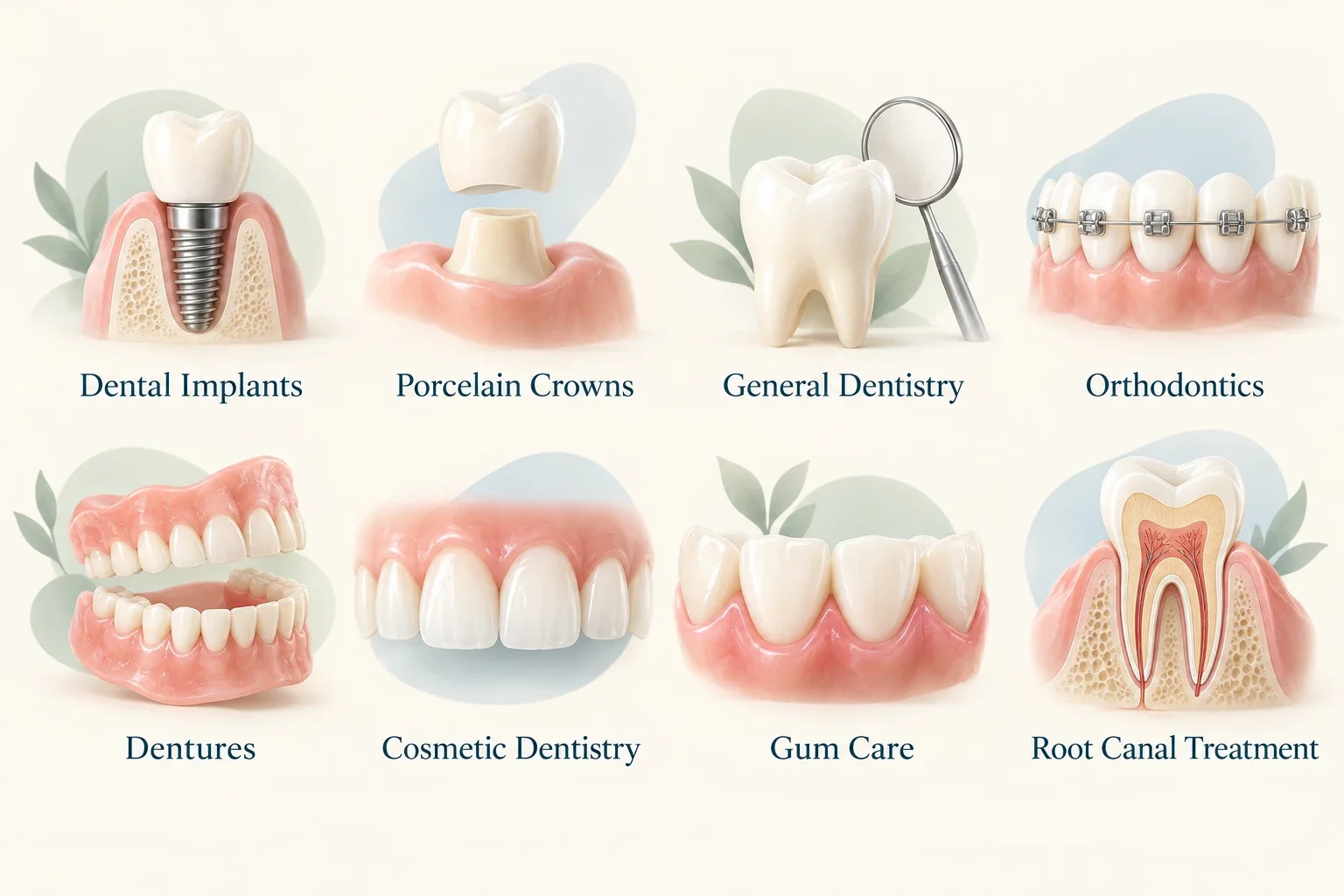
Tooth replacement almost always happens in stages with healing time in between. A single implant, for example, usually involves a consultation with imaging, possibly an extraction or bone grafting, the implant surgery itself, a healing period of a few months, then impressions and the final crown. The implant treatment timeline explains why each stage has to wait for the one before it.
Dentures have their own rhythm. An immediate denture is placed the day teeth are removed, but the gums shrink as they heal, so sore-spot adjustments and eventually a reline are expected, not a sign something went wrong. A conventional denture needs several fitting appointments before delivery. Same-day implant teeth give you a temporary set on surgery day, but the final set comes later.
Planning around shift work and the tourist season
Two patterns come up often in a town like Glen Rose: rotating shifts and seasonal hours. Comanche Peak runs around the clock, and tourism businesses are busiest on spring and summer weekends. Our office is open Monday through Thursday, 8:00 AM to 5:00 PM, so weekend and evening appointments are not available. Here is how to make that work:
- Share your rotation at the consultation. If you know your shift pattern several weeks out, we can place surgery and healing checks on days that are already off rather than asking you to burn leave.
- Put surgery on a day with a quiet day after it. You will want a day of rest after implant placement or extractions. Read recovering from implant surgery before you choose the date.
- Group what can be grouped. Impressions, bite checks and a hygiene visit can sometimes share a day. Healing checks cannot be rushed, and lab work takes time, so ask what can and cannot be combined rather than assuming.
- Plan denture adjustments as short visits. A sore spot is usually a quick fix, but it does require you in the chair. Build one or two of these into the first month after delivery.
- Avoid your busiest season for the surgical stage if you work in hospitality. A spring-break weekend is a hard time to be on soft foods and taking it easy.
Getting your records to Cleburne
If you have seen a dentist recently, ask that office to send your most recent X-rays, any 3D scan, your treatment notes and your periodontal chart. You have a right to copies of your own records, and most offices can transfer them electronically within a few days. Recent images often do not need to be retaken, which saves a visit.
Bring a current list of medications and any medical conditions, especially anything affecting healing such as diabetes, blood thinners or osteoporosis medication. Bring your existing denture or partial if you have one, even if you hate it; it tells us a lot about your bite and what did not work. Our new patient page lists the paperwork you can complete ahead of time.
If something goes wrong between visits
Being a county away from your dentist feels different when a temporary comes loose or a denture rubs raw. Here is the plan:
- During office hours (Mon–Thu, 8–5): call (817) 641-6261. Many problems can be triaged by phone, and we can tell you whether it needs to be seen that day or can wait for your next scheduled visit.
- A sore denture spot: leave the denture out as much as you can, rinse with warm salt water, and do not file or trim it yourself. Call for an adjustment.
- A loose temporary crown or healing cap: keep it, avoid chewing on that side, and call. Our lost crown or filling guide covers what to do until you are seen.
- After hours: see what to do when a dental problem happens after hours.
- Go to the nearest emergency room or call 911 for trouble breathing or swallowing, swelling spreading quickly toward the eye or neck, bleeding that will not stop with firm pressure, or major facial trauma. Do not drive to Cleburne for those.
Keeping your own teeth when that is the better option
A consultation sometimes shows that a tooth you assumed was lost can be kept with a crown or root canal treatment. Saving a tooth is often fewer visits than replacing it. Our guide on whether a tooth can be saved lists the questions worth asking before anything is removed. If a plan from another office involves many teeth, a second opinion is reasonable, and bringing their estimate lets us compare like with like.
Sources and further reading
- Visit Glen Rose: Welcome
- Wikipedia: Glen Rose, Texas (US-67 and SH-144 junction, Somervell County seat, 2020 census population, Comanche Peak, tourism)
- Texas Parks and Wildlife: Dinosaur Valley State Park
- Texas Tribune Public Schools Explorer: Glen Rose ISD
- MouthHealthy (ADA): Dental emergencies
General information, not a diagnosis. Read how we create and review our dental guides.