
Grandview is a small city in southeastern Johnson County, where Interstate 35W passes along its east side and US 81 runs through the center. The 2020 Census counted 1,879 residents, and Grandview ISD has a strong reputation among families in the county. It is the kind of town where many households have young children and plan their week around school. Cleburne Dental is located at 302 N Ridgeway Dr, Cleburne, TX 76033. That is our only office; there is no Grandview branch.
This page is written for Grandview parents. It covers when a child's dental care should start, which preventive steps matter most in the school years, what an early orthodontic check does and does not mean, and what to do in the few emergencies that really are urgent for children, when you are some distance from a dentist.
When a child's dental care should begin
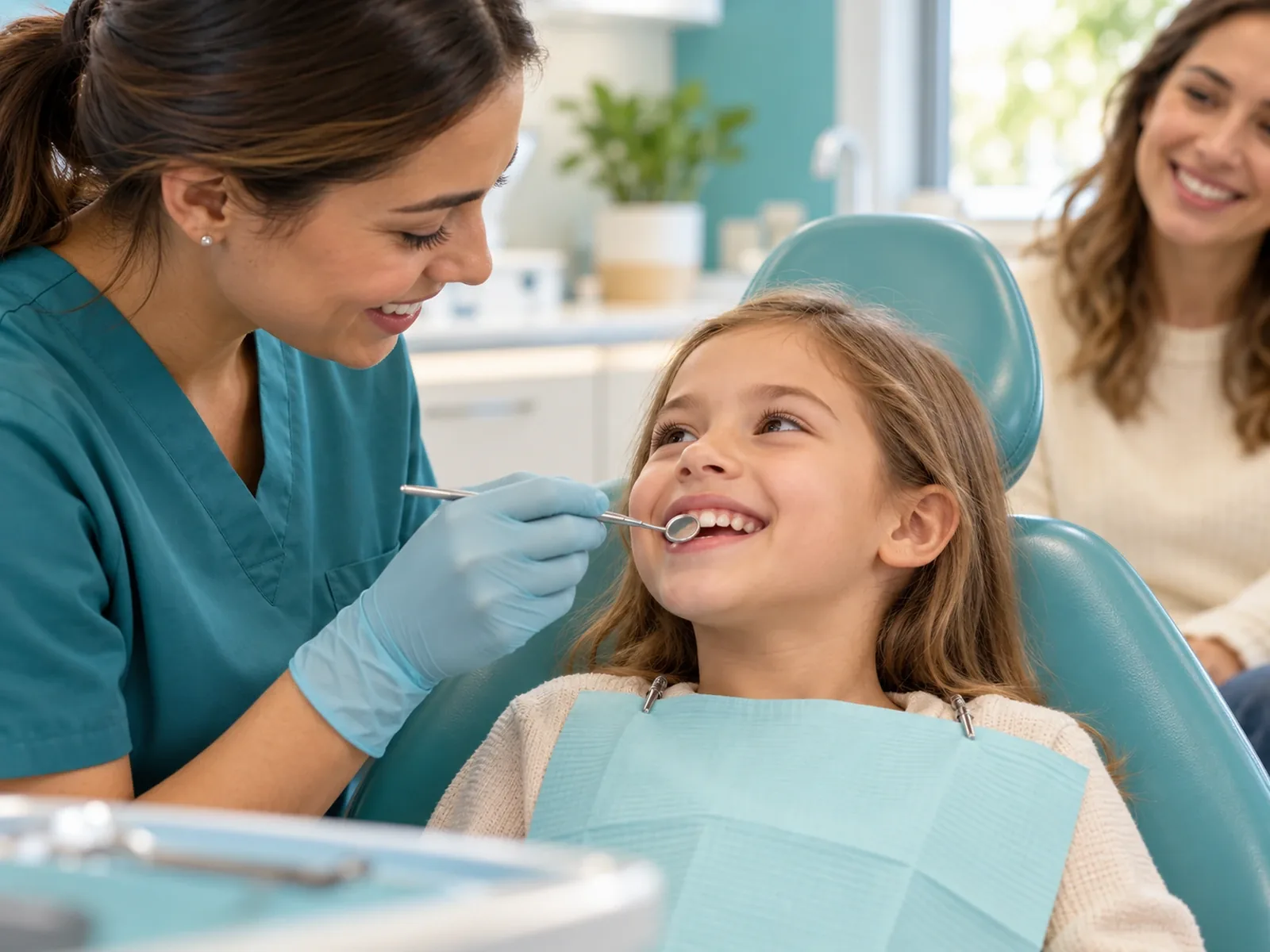
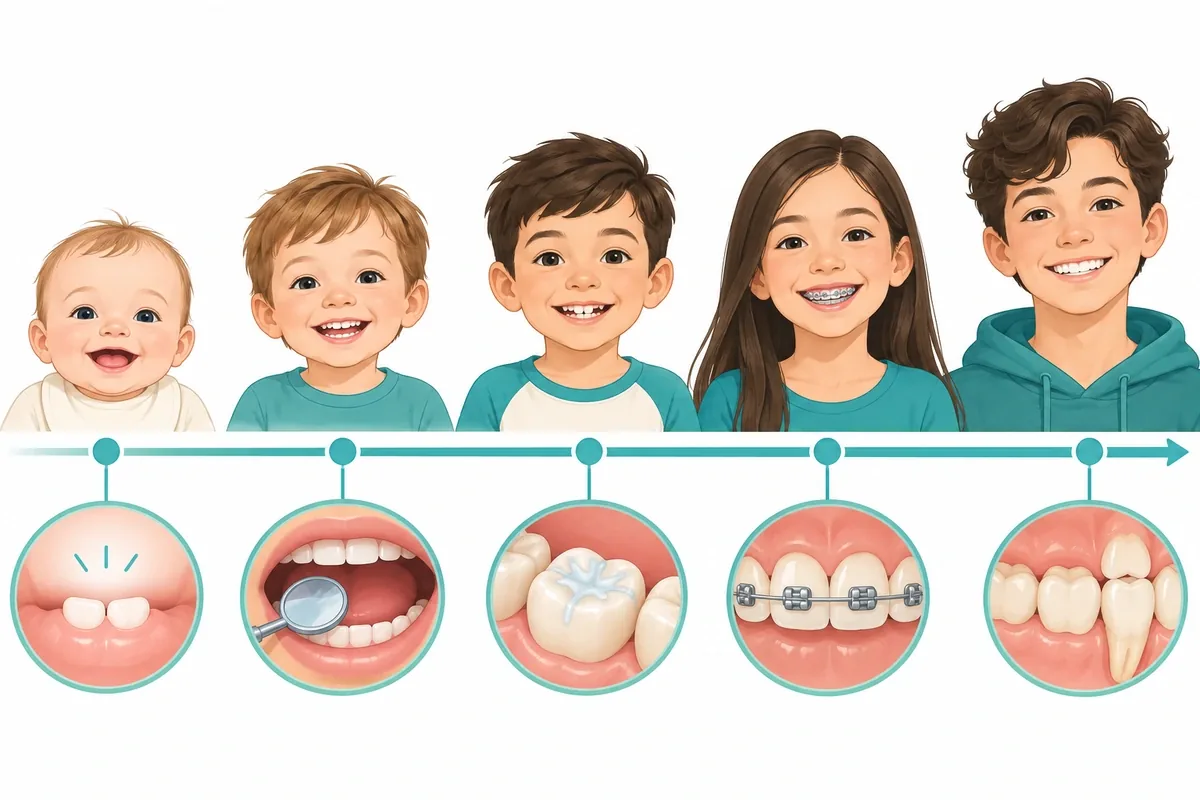
Pediatric dentists and the American Dental Association recommend a first visit by the first birthday, or within six months of the first tooth appearing. That seems early to many parents, but the first visit is mostly about the parent: how to clean small teeth, how feeding and bottles affect decay, and what to expect as more teeth come in. Our children's dentistry guide describes how these visits are kept short and friendly.
Starting early also builds familiarity. A child who has been in the chair for a few easy visits handles a filling much better later than one whose first experience is a toothache. If your child is older and has never been, that is fine too; the first visit is still a gentle look and a conversation.
Prevention that does the most in the school years
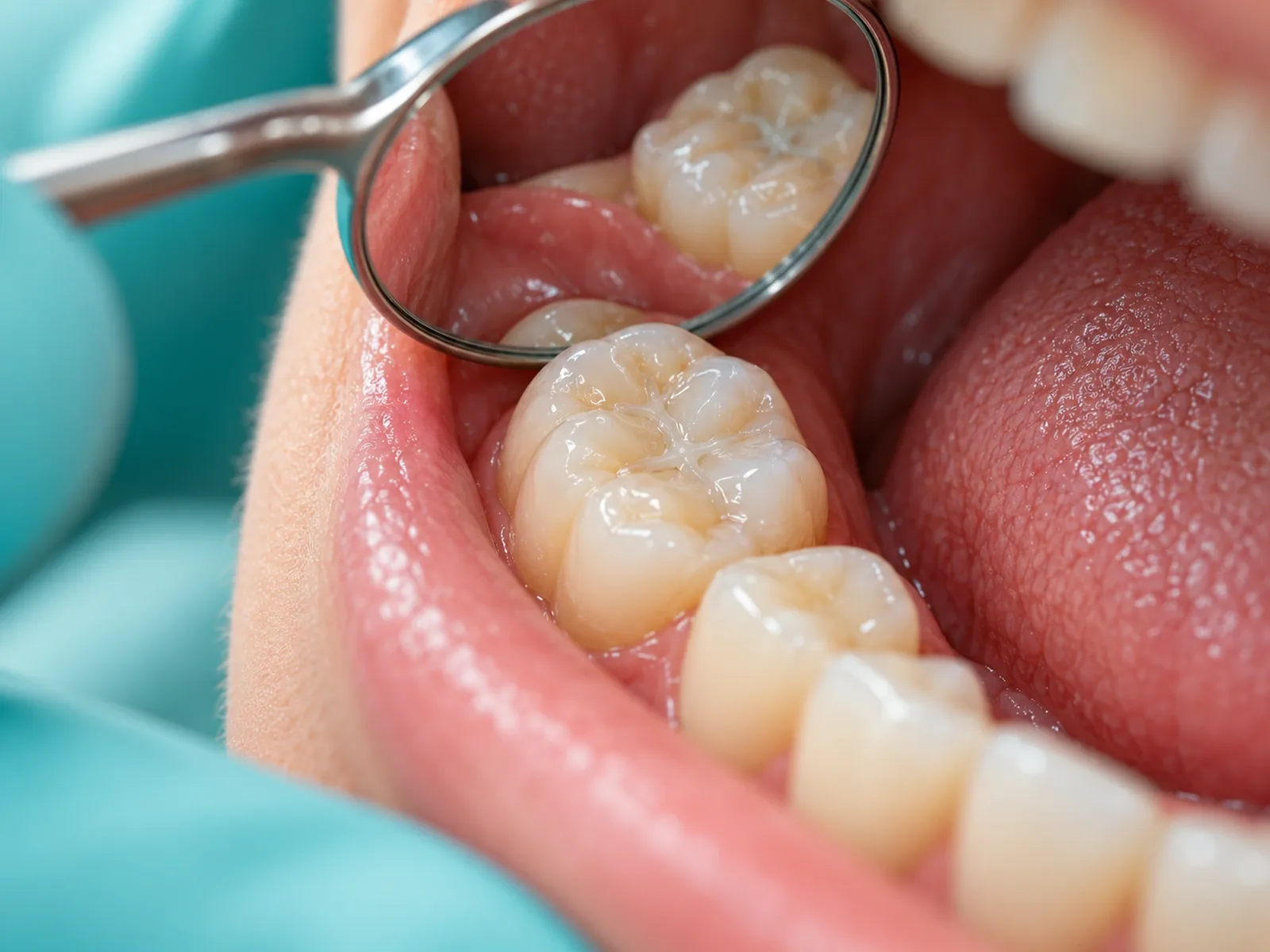
Two things protect children's teeth more than anything else a dental office does. Sealants are thin coatings painted into the grooves of the back teeth, where most childhood cavities start. The first permanent molars come in around age six and the second set around age twelve, and those are the two moments to ask about sealing them. The dental sealants guide explains how they work and how long they last.
Fluoride strengthens enamel and can reverse very early decay. Many children get enough from toothpaste and tap water, but some benefit from a fluoride varnish at checkups. Whether your household uses well water, as some rural Johnson County homes do, is worth mentioning, because well water is not fluoridated. The fluoride treatments guide explains who benefits most.
Regular exams and cleanings tie this together. Children's visits are usually spaced six months apart, but a child with several cavities may be seen more often for a while.
The orthodontic check around age seven
The American Association of Orthodontists recommends a first orthodontic evaluation by about age seven, when the first permanent molars and front teeth are in. For most children the result is "let's watch this," not braces. The point is to spot the handful of problems that are easier to guide early: a crossbite, a very narrow upper jaw, or a habit that is shaping the bite. Our early orthodontic evaluation guide explains what the dentist is looking for.
If early treatment is suggested, ask exactly which problem it addresses and whether a second phase will likely still be needed later. The Phase I orthodontics and palatal expanders guides cover the common early appliances and the questions to ask before agreeing to one.
Planning visits from Grandview
Our hours are Monday through Thursday, 8:00 AM to 5:00 PM. For young children, a morning appointment, when they are rested, usually goes better than a late afternoon one. Longer visits such as fillings are easier during a school break; a sealant check or a quick orthodontic look can fit after school. Tell us when you book how many children are coming and what each needs, so appointments can be grouped where the schedule allows.
Use the full address, 302 N Ridgeway Dr, Cleburne, TX 76033, in your maps app; the contact page has parking and entrance details. Our new patient page lists the forms and the information to bring, and the insurance page explains how children's benefits are checked.
Children's dental emergencies when you are far from the office
Most childhood dental mishaps can wait for a call. A few cannot. A knocked-out permanent tooth is the one to know by heart: pick it up by the crown, not the root; rinse it gently if dirty; put it back in the socket if the child is old enough to hold it there, or keep it in milk; and call (817) 641-6261 immediately. The chance of saving it drops quickly with time. A knocked-out baby tooth is not put back, because doing so can damage the adult tooth forming beneath it, but the child should still be checked. The knocked-out tooth guide walks through each step.
A chipped or broken tooth should be looked at, but it is usually not an emergency; save any pieces and avoid chewing on that side. The broken tooth guide explains what to watch for. For any child in sports, a custom mouthguard prevents most of these injuries in the first place.
If a child has trouble breathing or swallowing, facial swelling that is spreading quickly or reaching the eye, bleeding that will not stop with pressure, or a head or jaw injury, go to the nearest emergency room or call 911. Do not drive to a dental office first. Our emergency dentistry pages explain how to tell the difference.
Sources and further reading
- City of Grandview, Texas: About Us
- Wikipedia: Grandview, Texas (I-35W, US 81, Grandview ISD, 2020 Census)
- U.S. Census Bureau QuickFacts: Grandview city, Texas
- American Academy of Pediatric Dentistry: parent resources
- American Association of Orthodontists: when to see an orthodontist
General information, not a diagnosis. Read how we create and review our dental guides.