
Walnut Springs sits in northern Bosque County where SH-144 meets FM 927 and FM 203, a railroad town from the 1880s that today has about 800 residents and a single-campus school district. SH-144 runs north to Glen Rose, where US-67 continues east toward Cleburne. For dentures in particular, the question is rarely whether the care exists. It is how to get it done in as few trips as possible, and what to do when a denture breaks on a Friday.
Cleburne Dental is at 302 N Ridgeway Dr, Cleburne, TX 76033. That is our only office. We do not have a Walnut Springs location, a local number or staff in Bosque County. Put the full street address into your maps app from your own home; a town-square estimate will not describe a ranch off FM 203.
This page is written for the person who has to plan the trip, arrange a ride, and still wants the result to hold up. Most of it applies to dentures, since that is the care people most often ask about from farther out, with a section on surgical and restorative follow-up at the end.

Make the first visit a decision visit
A long trip is wasted when the dentist cannot answer the real question because something was left at home. Bring:
- The denture or partial itself, and every broken piece, even small ones. A fracture tells us where the stress is; a missing piece can turn a repair into a remake.
- Any older appliance you still have. A previous denture shows how your bite has changed.
- A current medication list and medical conditions. Dry mouth from common medications is a major cause of sore spots and poor suction.
- Recent X-rays if another dentist has them. Ask that office to send them ahead; you have a right to copies and this often avoids repeat imaging.
- Notes on when the problem happens: only when eating, only in the morning, only on one side. That history is diagnostic.
Our new patient page lists the forms you can complete before you arrive so the appointment time goes to the exam.
Repair, reline or replace: they are not the same visit
People often arrive asking for a "fix" when the denture needs one of three quite different things.
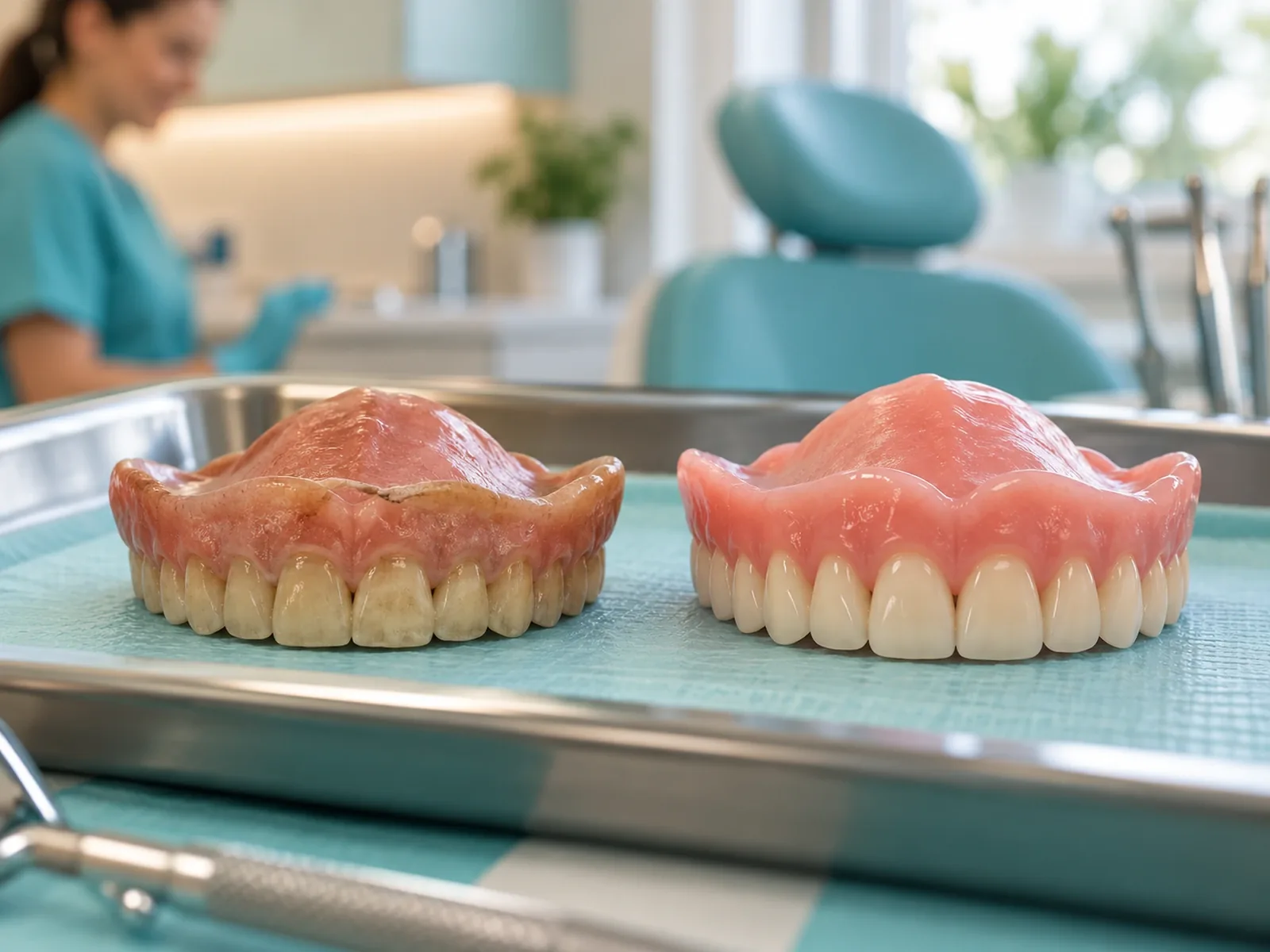
- Repair addresses damage: a cracked base, a tooth that popped off, a broken clasp. If the fit was fine before the break, denture repair usually restores it. Some repairs are quick; others go to a lab and need a return trip or mailing arrangement.
- Reline addresses fit. Gums and bone slowly shrink under a denture, so an appliance that was snug a few years ago starts to rock, trap food and rub. A reline adds new material to the inside surface so it matches your current ridge. It does not fix worn or broken teeth.
- Replacement is for when the teeth are worn flat, the base has been repaired several times, the bite has collapsed, or your mouth has changed enough that relining will not get a stable result. Our repair or replace guide lists the signs.
A photo of the break cannot tell us which of these you need, because the answer depends on your gums and bite as much as the plastic. That is why we ask you to come in, and why we try to make that one visit count.
Grouping appointments without cutting corners
Ask, before anything is scheduled, which steps can share a day. Realistic groupings for someone traveling in:
- Exam plus impressions on the same visit when a new denture is clearly needed.
- A hygiene visit for remaining teeth on the same day as a denture appointment, when you have a partial denture and natural teeth to care for.
- Delivery plus a first adjustment by scheduling delivery early in the day and a check later the same day if the office can accommodate it.
What cannot be compressed: the weeks of healing after extractions before a final reline, lab time between impressions and try-in, and the first few weeks of wearing a new denture before sore spots show themselves. Our adjusting to new dentures guide explains what is normal in that period and what deserves a call.
Caring for a denture between trips
A denture that is cleaned well lasts longer and rubs less. Take it out at night, brush it with a soft brush and denture cleaner rather than toothpaste, soak it, and brush your gums and tongue too. Never try to adjust, file or glue a denture at home; hardware-store adhesives ruin the acrylic and make professional repair harder. The full routine is in caring for dentures and the mouth underneath.
Surgical and restorative follow-up from a distance
If your plan includes extractions, an immediate denture or implants, there will be healing checks you should not skip. Ask for written after-care, the signs that mean "call now," and who answers the phone. For a crown or root canal, ask how the temporary is protected between visits and what to do if it comes loose.
If something goes wrong between visits
- During office hours, Monday through Thursday, 8:00 AM to 5:00 PM: call (817) 641-6261. We can usually tell you by phone whether to come in or wait.
- A sore spot: leave the denture out as much as possible, rinse with warm salt water, and call for an adjustment. Do not file it yourself.
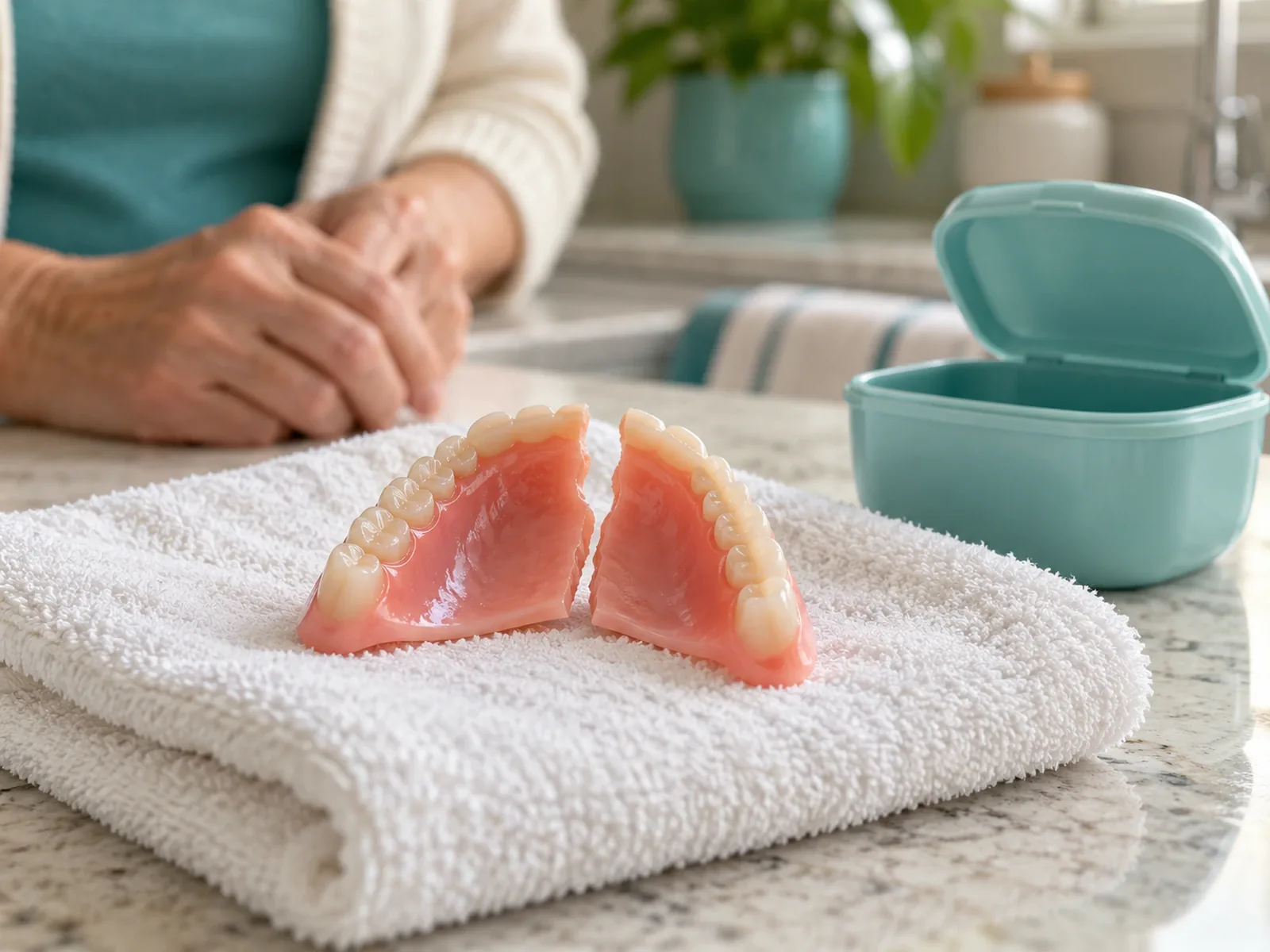
- A broken denture: keep all pieces in a bag; do not glue them.
- After hours: see our guide on after-hours dental problems.
- Go to the nearest emergency room or call 911 for trouble breathing or swallowing, swelling spreading toward the eye or neck, bleeding that will not stop with pressure, or serious facial injury. Do not make the trip to Cleburne for those.
Sources and further reading
- Texas State Historical Association, Handbook of Texas: Walnut Springs, TX
- Wikipedia: Walnut Springs, Texas (Bosque County, SH-144, 2020 census population)
- Texas Tribune Public Schools Explorer: Walnut Springs ISD
- MouthHealthy (ADA): Dentures
General information, not a diagnosis. Read how we create and review our dental guides.