
Whitney sits in Hill County at the junction of SH-22 and FM 933, a railroad town of just under 2,000 people at the 2020 census. The larger community is the lake: Lake Whitney, the long Brazos River reservoir to the west, with Lake Whitney State Park reached by FM 1244 and homes, RV parks and weekend places scattered along the shore. People in this area fall into two groups with different dental needs. Year-round residents want a dentist they can return to. Second-home owners, retirees who winter here, and campers want to know what treatment they can start and finish, or safely leave half-done, before they go.
Cleburne Dental has one office, at 302 N Ridgeway Dr, Cleburne, TX 76033. We do not have a Whitney or lake-area location, phone number or staff. Use the full address in your maps app from wherever you actually are; a house in town and a cabin on the far shore are very different starting points.
This page is mostly for the second group, because planning around a stay is where things go wrong. The advice applies just as well to anyone in Whitney who wants treatment organized rather than improvised.

Tell us your dates before anything starts
The most useful sentence you can say at a consultation is "I leave on this date." It determines what is safe to begin.
- Fits inside a short stay: exams and cleanings, fillings, a denture reline or repair, many single crowns.
- Needs a few weeks with follow-up: extractions with healing checks, a new conventional denture with adjustment visits, root canal treatment and its final crown.
- Needs months and a plan for who sees you in between: dental implants and anything full-arch.
If a longer treatment is the right one, starting it during a stay can still make sense, as long as the follow-up is arranged in advance rather than hoped for.
Temporary teeth are temporary wherever you are
Two options are often attractive to someone who wants to leave the area with teeth in place: an immediate denture, fitted the same day teeth are removed, and same-day implant teeth, a fixed temporary set placed on the day of implant surgery. Both work. Both are also designed to be adjusted and eventually replaced, because gums and bone change as they heal.
What that means in practice if you are at the lake or back home elsewhere:
- Expect sore spots in the first weeks. They are normal, and they need a dentist to relieve them; do not file the denture yourself. Our adjusting to new dentures guide covers what is routine and what is not.
- Eat as instructed, usually softer foods for longer than feels necessary, especially with implant temporaries.
- Know who will check healing and tighten or adjust components if you leave. That may be us at your next visit, or a dentist near your other home with notes from us.
- Plan a reline or the final teeth for your return. The implant treatment timeline shows where the final stage falls.
Arranging follow-up if you leave mid-treatment
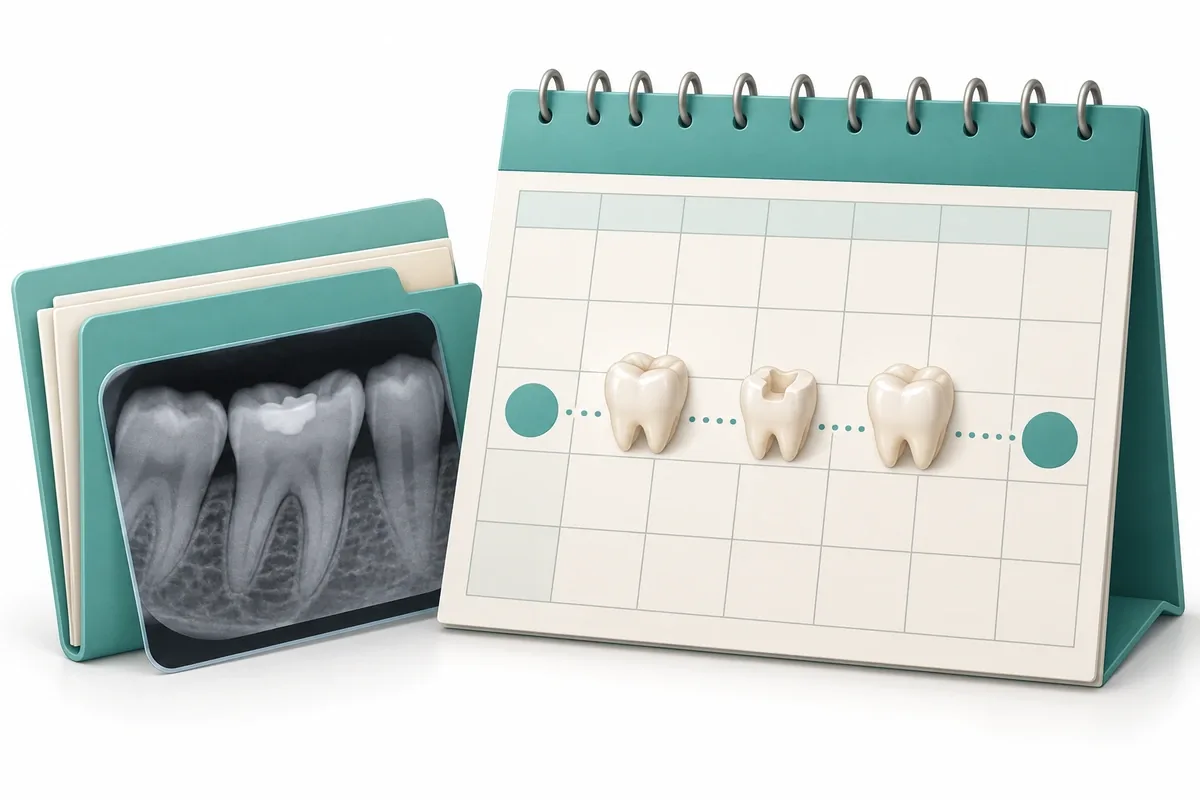
If you divide time between Whitney and another city, tell us the name of a dentist there before treatment begins. We can send a treatment summary, images and specific instructions so they can see you for a sore spot or healing check without starting from scratch. Ask us for your own copy of the records and X-rays as well; you have a right to them, and carrying them means no office is waiting on another. Our new patient page lists what to bring to the first visit, and the same list applies in reverse when you leave.
Matching the replacement to your routine
For lake-area patients the practical questions matter as much as the clinical ones. A removable denture is simple to care for anywhere. An implant-supported denture is far steadier but has attachment parts that wear and need replacing. Fixed full-arch teeth stay in but need careful cleaning underneath and periodic professional removal. For one or a few teeth, a bridge or partial denture may avoid surgery entirely. Think about where you will be when something needs service, and choose accordingly.
Emergencies at the lake
Being on the water is a long way from any dentist. Have a plan:
- During office hours (Mon–Thu, 8:00 AM–5:00 PM): call (817) 641-6261. We can usually tell you by phone whether it needs to be seen today.
- A knocked-out tooth from a dock or boat accident: handle it by the crown, rinse without scrubbing, put it back in the socket if you can or keep it in milk, and get to a dentist fast. See a knocked-out tooth.
- A broken tooth or lost crown: keep the piece, avoid chewing on that side, and call. Our emergency dentistry hub covers each situation.
- After hours: read what to do when a dental problem happens after hours.
- Go to the nearest emergency room or call 911 for trouble breathing or swallowing, swelling spreading toward the eye or neck, bleeding that will not stop with pressure, or serious facial injury. Do not drive to Cleburne for those.
Sources and further reading
- Texas State Historical Association, Handbook of Texas: Whitney, TX
- Wikipedia: Whitney, Texas (Hill County, SH-22 and FM 933, Lake Whitney, 2020 census population)
- Texas Parks and Wildlife: Lake Whitney State Park
- Texas Tribune Public Schools Explorer: Whitney ISD
- MouthHealthy (ADA): Dental emergencies
General information, not a diagnosis. Read how we create and review our dental guides.